SOAK: Policy Directions Unpredictable, Self-Developed E-liquids to Launch in March 2024

2Firsts EventsBusiness by 2FIRSTS
Dec.17.2023
SOAK: Policy Directions Unpredictable, Self-Developed E-liquids to Launch in March 2024
At the VAPE CLUB SHOW 2023 in Russia, Dmitry, representative of e-cigarette brand SOAK, discussed the future prospects of the Russian market.

On December 16th, Dmitry, representative of e-cigarette brand SOAK, engaged in a conversation with 2FIRSTS at the VAPE CLUB SHOW 2023 in Russia. During the discussion, Dmitry provided an in-depth analysis of the development prospects of the Russian market and the brand's future new plans.
SOAK: Policy Directions Unpredictable, Self-Developed E-liquids to Launch in March 2024
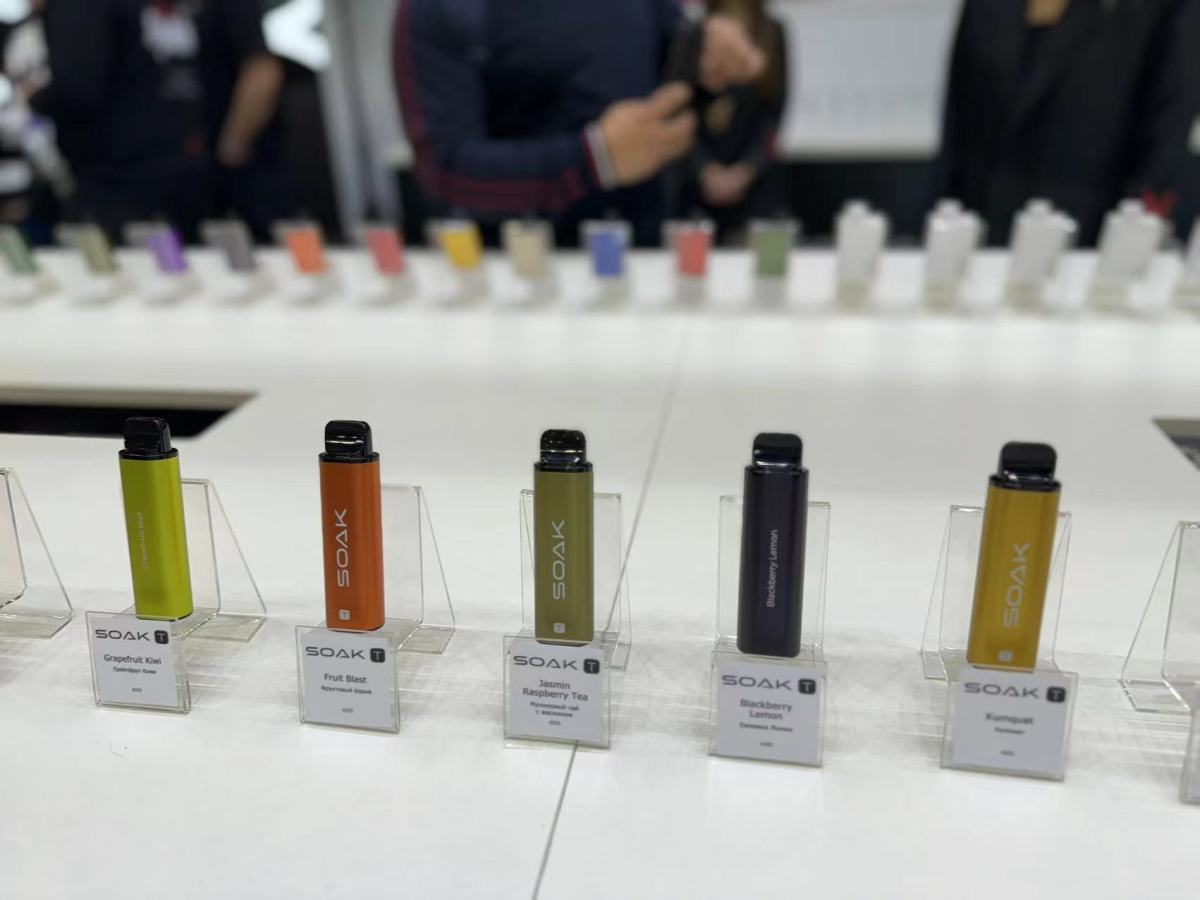
Product: Saok Image source: 2FIRSTS


The recently released e-cigarette regulatory policy by the Russian government has attracted widespread attention from the industry. Dmitry admitted that predicting the direction of the policy is exceptionally challenging.


He expressed that starting from March next year, Russia's ban on e-cigarette additives will be implemented, and the pace of strengthened regulation is astonishing. Unlike other countries, Russia has not reduced taxes but instead increased them by tenfold, posing significant challenges to the industry. However, he mentioned the example of Turkey where the sale of e-cigarettes is prohibited, yet e-cigarette stores are thriving, indicating that even under regulatory pressure, there is still enormous market potential for e-cigarettes.


Despite facing regulatory uncertainties, Dmitry remains optimistic about the prospects of the Russian market. He believes that the e-cigarette market in Russia is still expanding, with new products constantly emerging, indicating that the entire industry is still in its growth and upward phase.


Dmitry revealed that SOAK brand is considering launching a new product line in 2024 or 2025, which may include screen design. He emphasized that the brand remains committed to standing out from the crowd, focusing on unique design and independent research and development.


Dmitry mentioned that SOAK is set to launch a new product line in March next year, featuring their own in-house developed e-liquid blended with various natural flavors, promising a unique vaping experience.


In this innovative process, the support of a Chinese team has been obtained. SOAK will customize unique flavors based on the needs of users in the Russian region in order to meet the variations in consumer tastes in different areas.


Dmitry gives high praise to Chinese e-cigarette brands, stating that 99% of e-cigarettes are manufactured in Shenzhen, China. He believes that Chinese brands hold significant competitiveness in the market. He acknowledges customers' right to choose brands and expresses an open attitude towards Chinese brands as long as they do not affect SOAK's customers.


Dmitry shared the brand's marketing strategy, which involves developing through agency channels in Europe, the United States, and the Middle East. Additionally, increased investment will be allocated based on the performance in different regional markets. Logistics plays a crucial role in the expansion of the market, and SOAK plans to allocate substantial funds towards equipment and logistics to ensure the rapid and smooth delivery of products to the target markets.


We will allocate one million dollars for equipment and one and a half million dollars for logistics. This can still guarantee profitability. In Turkey, the cost of equipment logistics amounts to 23 dollars," Dmitry said.


In conclusion, Dmitry points out that an increasing number of people are recognizing the assistance e-cigarettes provide in quitting smoking. His personal experience also confirms this, as he quit smoking after 20 years and turned to using e-cigarettes. This further underscores the potential value of e-cigarettes in aiding smoking cessation.


At this exhibition, SOAK is looking forward to achieving even greater success in future market competition.


We welcome news tips, article submissions, interview requests, or comments on this piece.

Please contact us at info@2firsts.com, or reach out to Alan Zhao, CEO of 2Firsts, on LinkedIn


Notice

1.  This article is intended solely for professional research purposes related to industry, technology, and policy. Any references to brands or products are made purely for objective description and do not constitute any form of endorsement, recommendation, or promotion by 2Firsts.

2.  The use of nicotine-containing products — including, but not limited to, cigarettes, e-cigarettes, nicotine pouchand heated tobacco products — carries significant health risks. Users are responsible for complying with all applicable laws and regulations in their respective jurisdictions.

3.  This article is not intended to serve as the basis for any investment decisions or financial advice. 2Firsts assumes no direct or indirect liability for any inaccuracies or errors in the content.

4.  Access to this article is strictly prohibited for individuals below the legal age in their jurisdiction.


Copyright


This article is either an original work created by 2Firsts or a reproduction from third-party sources with proper attribution. All copyrights and usage rights belong to 2Firsts or the original content provider. Unauthorized reproduction, distribution, or any other form of unauthorized use by any individual or organization is strictly prohibited. Violators will be held legally accountable.

For copyright-related inquiries, please contact: info@2firsts.com


AI Assistance Disclaimer


This article may have been enhanced using AI tools to improve translation and editorial efficiency. However, due to technical limitations, inaccuracies may occur. Readers are encouraged to refer to the cited sources for the most accurate information.

We welcome any corrections or feedback. Please contact us at: info@2firsts.com

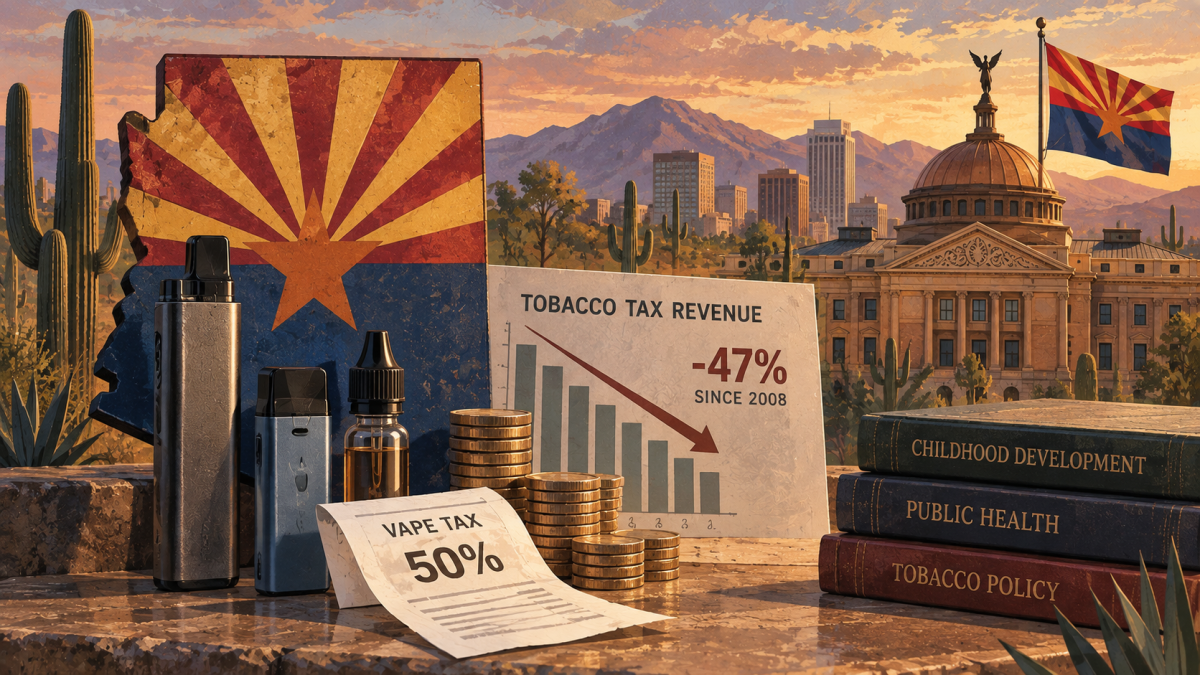
Arizona Turns to a 50% Retail Vape Tax as Tobacco Tax Revenue Falls 47% From 2008
Arizona's First Things First is pushing for an excise tax equal to 50% of the retail price of vaping products, estimating that the measure could generate about $100 million annually. The agency says its tobacco-tax revenue has fallen 47% from 2008 levels. Arizona has attempted to broaden its nicotine tax base in each of the past two years: a 2025 bill proposed a 50% wholesale-price tax, while a 2026 measure shifted to a 50% retail-price tax covering alternative nicotine products and vapor products. Separately, the state enacted HB 4001 this year to establish a new licensing and sales framework for alternative nicotine products.
Sep.21
2Firsts Hosts China Market Forum at InterTabac as Global Industry Attention to China’s Tobacco Sector Deepens
On September 16, 2Firsts hosted a China-focused industry forum during InterTabac in Dortmund, bringing together more than 30 participants from North America, Europe, India, South Korea and other markets. The session covered traditional tobacco, next-generation products, exports, technology, regulation and supply chains, while examining how China’s tobacco sector operates, where its transformation may be heading, and why its growing role matters increasingly to companies across the global tobacco and nicotine industry.
Sep.21
Cochrane 2026 Update Adds Nine Trials, Keeps High-Certainty Finding That Nicotine E-Cigarettes Improve Quit Rates Over NRT
Cochrane’s 2026 update of its living review on electronic cigarettes for smoking cessation included 80 randomized controlled trials involving 29,861 adult smokers, with nine trials added in this update. The review retained its high-certainty conclusion that nicotine e-cigarettes increase smoking cessation rates compared with nicotine replacement therapy. In absolute terms, about 10 in 100 people using nicotine e-cigarettes may quit smoking for at least six months, compared with about 6 in 100 using NRT. The review found no clear difference in serious adverse event rates between the two groups, while longer-term safety and the relative effectiveness of newer device types remain less certain.
Sep.07
Retail Case Study | Wisconsin Vape Market One Year After New Regulations: Johnny Vapes Reports 80% Sales Decline as Consumers Shift Online and Across State Lines
According to WNCY on August 24, 2026, some independent vape retailers in Wisconsin say they have faced significant business pressure one year after new vape regulations took effect. Johnny Vapes, a retailer operating in northeast Wisconsin, said its store count fell from seven locations to four, sales declined by about 80%, and roughly 90% of its inventory was affected. Retailers said some consumers have shifted to online purchases or traveled to neighboring Michigan to buy vape products. The case highlights how local regulations can reshape retail operations, inventory management and consumer purchasing patterns.
Aug.28
Product | VAPORESSO Launches PRIX MTL Pod, With NFC Version Linking Interchangeable Panels to On-Screen Animations
VAPORESSO introduced the PRIX MTL pod system in August 2026 in two versions, Filter and NFC. The Filter version allows users to switch between a conventional drip tip and a filter tip, while the NFC version links interchangeable panels to matching on-screen animations. PRIX features a 2,600mAh battery, a 5.5ml pod, a 0.87-inch TFT display and a maximum output of 40W, alongside Dual Mesh Impact Pods capable of operating at two resistance and power configurations. VAPORESSO's French website lists MSRP at $39.99 for the Filter version and $49.90 for the NFC version.
Market
Aug.24 by 2Firsts Perspectives
GSTHR Estimates 200 Million People Use Non-Combustible Nicotine Products as 28 Countries Show Rising Use Alongside Falling Smoking Rates
The Global State of Tobacco Harm Reduction, a project operated by Knowledge·Action·Change, estimates that about 200 million people worldwide use non-combustible nicotine products including vapes, heated tobacco, nicotine pouches and snus. Its 2026 report says use of these products rose alongside declining smoking rates in 28 countries it analyzed. The data do not establish that all 200 million users have quit smoking, nor do they prove a direct causal relationship. GSTHR also says regulatory restrictions on the products continue to expand in many markets.
Sep.10