Falmouth Community in Maine Bans Sale of Flavored Tobacco

Regulations by 2FIRSTS.ai
Nov.28.2023
Falmouth Community in Maine Bans Sale of Flavored Tobacco
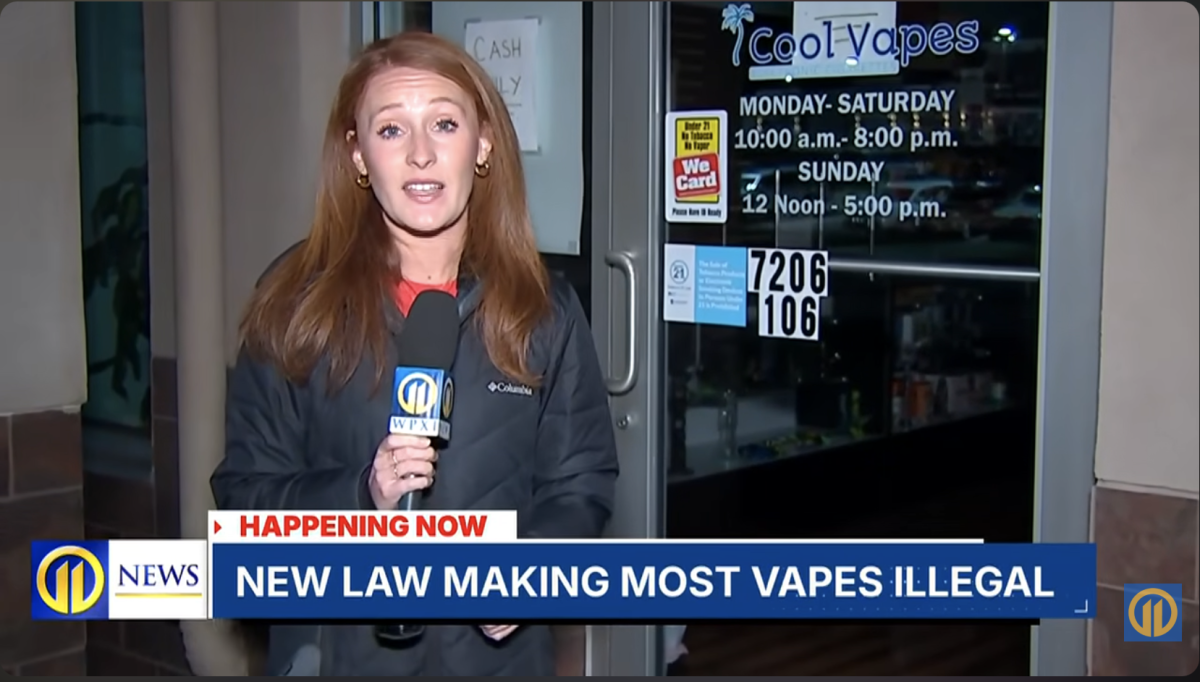
Falmouth, Maine becomes the latest community to ban flavored tobacco products, despite opposition from big tobacco companies.

According to a report from WGME, the Falmouth community in Maine, United States, is the latest area to decide on a ban on the sale of flavored tobacco products.


On Monday evening, there was a face-to-face discussion regarding this proposal.


According to the organization "Maine Keeps Kids from Flavored Tobacco," despite efforts by the legislative body in the state of Maine to push for a statewide ban on flavored tobacco, communities throughout the entire state have already begun taking proactive measures. Despite pushback from major tobacco companies throughout the process, leaders in small towns like Falmouth remain determined to protect the next generation from these products.


We welcome news tips, article submissions, interview requests, or comments on this piece.

Please contact us at info@2firsts.com, or reach out to Alan Zhao, CEO of 2Firsts, on LinkedIn


Notice

1.  This article is intended solely for professional research purposes related to industry, technology, and policy. Any references to brands or products are made purely for objective description and do not constitute any form of endorsement, recommendation, or promotion by 2Firsts.

2.  The use of nicotine-containing products — including, but not limited to, cigarettes, e-cigarettes, nicotine pouchand heated tobacco products — carries significant health risks. Users are responsible for complying with all applicable laws and regulations in their respective jurisdictions.

3.  This article is not intended to serve as the basis for any investment decisions or financial advice. 2Firsts assumes no direct or indirect liability for any inaccuracies or errors in the content.

4.  Access to this article is strictly prohibited for individuals below the legal age in their jurisdiction.


Copyright


This article is either an original work created by 2Firsts or a reproduction from third-party sources with proper attribution. All copyrights and usage rights belong to 2Firsts or the original content provider. Unauthorized reproduction, distribution, or any other form of unauthorized use by any individual or organization is strictly prohibited. Violators will be held legally accountable.

For copyright-related inquiries, please contact: info@2firsts.com


AI Assistance Disclaimer


This article may have been enhanced using AI tools to improve translation and editorial efficiency. However, due to technical limitations, inaccuracies may occur. Readers are encouraged to refer to the cited sources for the most accurate information.

We welcome any corrections or feedback. Please contact us at: info@2firsts.com

FDA 2025 NYTS: Youth E-Cigarette Use Declines but Unauthorized Disposables Remain Prominent; Nicotine Pouch Use Stays Low
The U.S. Food and Drug Administration (FDA) released its 2025 National Youth Tobacco Survey analysis, saying about 2.01 million U.S. middle and high school students currently used any tobacco product; among current youth e-cigarette users, unauthorized disposable brands including Geek Bar, Elf Bar, Lost Mary and Raz had high reported shares, potentially making them a focus for future enforcement.
Jun.24
Australia’s Daily Smoking Rate Falls to Record Low of 5.8% as Nicotine Use Patterns Shift
According to the Australian Institute of Health and Welfare’s National Drug Strategy Household Survey, daily smoking among Australians aged 18 and over fell to a record low of 5.8% in 2025. Health Minister Mark Butler said Australia now has around 500,000 fewer daily smokers than three years ago and credited the government’s vaping reforms as part of broader progress. Among people aged 14 and over, daily smoking declined from 8.3% in 2022-23 to 5.6% in 2025. Daily vaping rates stabilised at 3.6%, while the government also moved to further restrict access to nicotine pouches through unapproved therapeutic import pathways.
Jul.21
North Carolina Adds $1,000 Vape Shop Tax and 21+ Age Verification Requirement
North Carolina’s new state budget introduces additional vape retail regulations, including a $1,000 tax on vape shops and mandatory age verification requiring customers to be at least 21.
Jul.08
Sesh touts independence, 8VC backing and retail reach as it challenges tobacco-owned pouch brands
U.S. nicotine pouch brand Sesh has emphasized its independence from Altria, Philip Morris International and British American Tobacco, along with backing from investors including 8VC, celebrity supporters and a retail footprint of more than 7,500 stores, as it seeks to differentiate itself in a market where major pouch brands are owned by large tobacco companies.
Regulations
Jul.07 by 2Firsts Perspectives
PMI Q2 Revenue Rises 10.4% as IQOS and VEEV Expand, U.S. ZYN Growth Slows
Philip Morris International’s second-quarter net revenues rose 10.4% to a record $11.19 billion, as heated tobacco and e-vapor expanded across international markets. IQOS remained the main smoke-free growth engine, while VEEV shipments jumped 55.1%. In the United States, however, ZYN shipments increased just 1.8% and consumer offtake was broadly flat to slightly higher. Cigarette volumes also rose, showing that PMI’s transformation is advancing, but growth is becoming increasingly uneven across categories and markets.
PMI
Jul.22
Bringing Tax and Insurance Into Nicotine Regulation: Insights From a Tobacco Harm-Reduction Report
A smoke-free nicotine policy report argues that tobacco harm reduction should move beyond product bans and health warnings into tax policy, insurance pricing and risk-based regulation. While some projections remain open to debate, the report highlights a wider challenge: nicotine products, technologies and consumer behavior have changed sharply over the past decade, and regulatory systems may need new tools to better align tobacco control with harm-reduction goals.
Jun.08