Key Points
- During the “Studies of Adult Benefit” session, FDA officials including Amy L. Gross, Ph.D., stated that evaluation of flavored ENDS PMTAs is conducted under the statutory “Appropriate for the Protection of Public Health” (APPH) standard, requiring population-level assessment of potential adult benefit alongside youth risk.
- Officials stated that applicants seeking authorization for flavored products must provide reliable, product-specific evidence demonstrating “added benefit” relative to tobacco-flavored ENDS.
- FDA presenters said six-month follow-up is commonly used in cessation research and that switching evidence lasting fewer than four weeks may be insufficient to demonstrate sustained behavior change.
- The agency said it does not apply a fixed numeric switching threshold; evaluation considers study quality, absolute switching rates, relative differences, and the totality of evidence.
- Industry representatives questioned how modest differences in cigarette reduction are interpreted and raised concerns about conducting behavioral studies across large flavor portfolios.
- FDA officials said no single study design is mandated, though randomized designs provide stronger causal inference; bridging across similar flavor categories may be considered if supported by data and scientific rationale.
2Firsts, February 11, 2026
During Panel IV of the U.S. Food and Drug Administration’s (FDA) February 10 PMTA roundtable on electronic nicotine delivery systems (ENDS), agency officials outlined how “adult benefit” is evaluated in applications for flavored products under the statutory “Appropriate for the Protection of Public Health” (APPH) standard, while industry representatives sought clearer guidance on how switching evidence is interpreted in practice.

The session was moderated by Benjamin Apelberg, Ph.D., Deputy Director for Regulatory Science in the FDA’s Office of Science. Presentations were delivered by Amy L. Gross, Ph.D., M.H.S.; Sarah E. Johnson, Ph.D.; Mollie Miller, Ph.D.; and David B. Portnoy, Ph.D., M.P.H.
Industry participants included Dino Baccari of White Horse Vapor Stores, LLC; Eric N. Heyer, J.D., representing Maduro Distributors Inc. (LOON); Ryan Muckenthaler of Lotus Vaping Technologies; Bill Wikstrom of Vaporized & Paradigm; and Jessica Zdinak, Ph.D., Founder and Chief Research Officer of ARAC, who participated in the session on behalf of Glas.
Adult Benefit Within the APPH Framework
FDA officials stated that evaluation of adult benefit is conducted within the statutory “Appropriate for the Protection of Public Health” (APPH) framework. Under this standard, the agency assesses the likely impact of marketing a product on the population as a whole, including current tobacco users and non-users.
For flavored ENDS, officials said review focuses on whether applicants provide reliable, product-specific evidence demonstrating “added benefit” compared with tobacco-flavored ENDS. Such benefit may include complete switching from combustible cigarettes or meaningful reductions in cigarette consumption among adult smokers.
Slides presented during the session referenced high prevalence of flavored product use among youth ENDS users and indicated that potential adult switching benefits are weighed against youth-related risks in determining whether marketing a product would meet the APPH standard.
Officials emphasized that adult benefit evidence is integrated with findings from chemistry, toxicology, engineering, epidemiology, and behavioral science as part of a totality-of-evidence determination.
Study Design: Duration, Definitions, and Data Integrity
Amy Gross, Ph.D., described study designs that FDA considers informative for assessing switching behavior.
Randomized controlled trials (RCTs), she said, provide stronger causal inference when adult smokers are randomized to flavored versus tobacco-flavored ENDS groups. Inclusion of a tobacco-flavored comparator within the same study facilitates direct comparison of switching outcomes.
Gross noted that longitudinal cohort studies and actual use studies may also contribute relevant evidence. No single study design is mandated, officials said, but methodological rigor, clear exposure assessment, and appropriate handling of attrition are central to evaluation.
Regarding duration, Gross stated that six-month follow-up is commonly used in cessation research and provides more robust evidence of sustained switching than shorter intervals. Evidence of complete switching lasting fewer than four weeks, she said, may be insufficient to assess sustained behavior change.
She also addressed endpoint definitions. Complete switching is often defined using seven-day abstinence criteria, although some studies allow limited combustible use. Variation in how switching is defined, officials noted, can materially affect interpretation of outcomes.
In longer-term studies, handling of missing data is also evaluated. Gross referenced statistical approaches such as multiple imputation and “missing-as-smoking” assumptions when participants are lost to follow-up. Such analytic choices, officials indicated, can influence calculated switching rates and are therefore part of methodological review.
“Is One Cigarette Enough?”
A central exchange during the discussion focused on how modest differences between flavored and tobacco-flavored products are interpreted.
Eric Heyer, J.D., asked whether a flavored product that results in one fewer cigarette per day compared with a tobacco-flavored product would be sufficient to demonstrate added benefit.
FDA officials responded that there is no predefined numeric threshold or minimum switching percentage that automatically satisfies the adult benefit component of APPH.
Instead, officials said evaluation considers multiple factors, including:
- Study quality and methodological rigor
- Absolute switching rates observed among participants
- Relative differences between flavored and tobacco-flavored groups
- The broader evidentiary context within the totality-of-evidence framework
“There is not a set minimum percentage,” agency representatives said, emphasizing that determinations are product-specific and contextual.
Youth Trends and Comparative Weight
Heyer also questioned whether changes in youth ENDS use trends alter the comparative evidentiary burden for flavored products.
FDA officials said the agency continues to monitor emerging surveillance data and scientific literature. However, evaluation of flavored ENDS remains grounded in balancing potential adult switching benefits against youth-related risks within the APPH framework.
Large Flavor Portfolios and Bridging
Several industry participants raised concerns about the feasibility of conducting separate behavioral studies for extensive flavor portfolios.
FDA officials acknowledged that, ideally, switching evidence would be available for each product. However, bridging across similar flavor categories may be considered if applicants provide supporting data and a scientific rationale demonstrating that product differences do not materially affect switching behavior.
Bridging analyses, officials said, are evaluated case by case within the totality-of-evidence framework.
Study Investment and Regulatory Boundaries
Industry representatives expressed concern about the financial scale of long-term behavioral studies and uncertainty regarding regulatory interpretation.
FDA officials responded that pre-submission meetings may help clarify study design considerations but stated that the agency “cannot make business decisions” for applicants. Regulatory determinations, they said, depend on the robustness and relevance of product-specific evidence submitted.
Case-by-Case Determination
As the session concluded, FDA officials reiterated that adult benefit is one component of a broader APPH determination. Evaluation of flavored ENDS PMTAs involves balancing potential adult switching benefits against youth risks through integrated, multi-disciplinary review rather than application of a single numeric benchmark.
2Firsts will continue to follow the roundtable discussions and report further developments.
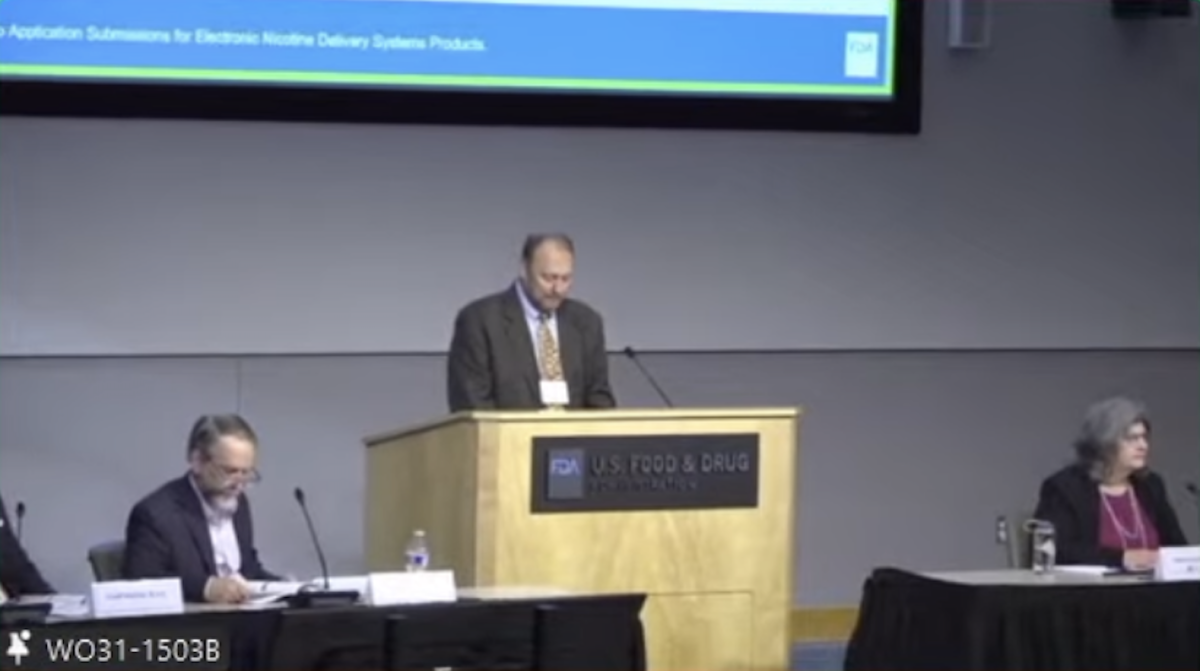
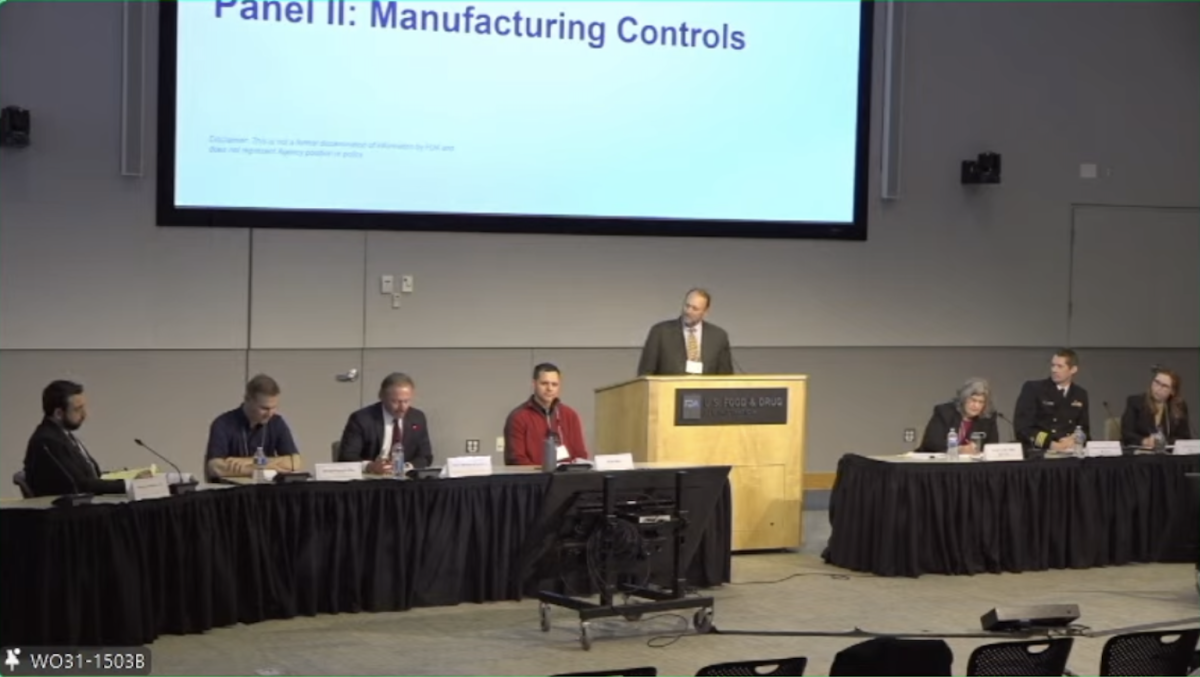
(The cover image is a screenshot from the FDA’s livestream of the PMTA roundtable.)

Click here to read the full coverage