According to a report from ABC News on December 30th, a federal judge recently issued a temporary restraining order delaying Utah's implementation of restrictions on flavored e-cigarettes, pending a ruling on complaints against the state and other entities.
Judge David Barlow approved the injunction on December 30, temporarily delaying the enforcement of restrictions that were originally set to take effect on January 1, 2025. This delay is in accordance with Senate Bill 61, the "E-Cigarette Amendment Act," which was passed during the 2024 legislative session and signed by Governor Spencer Cox in March.
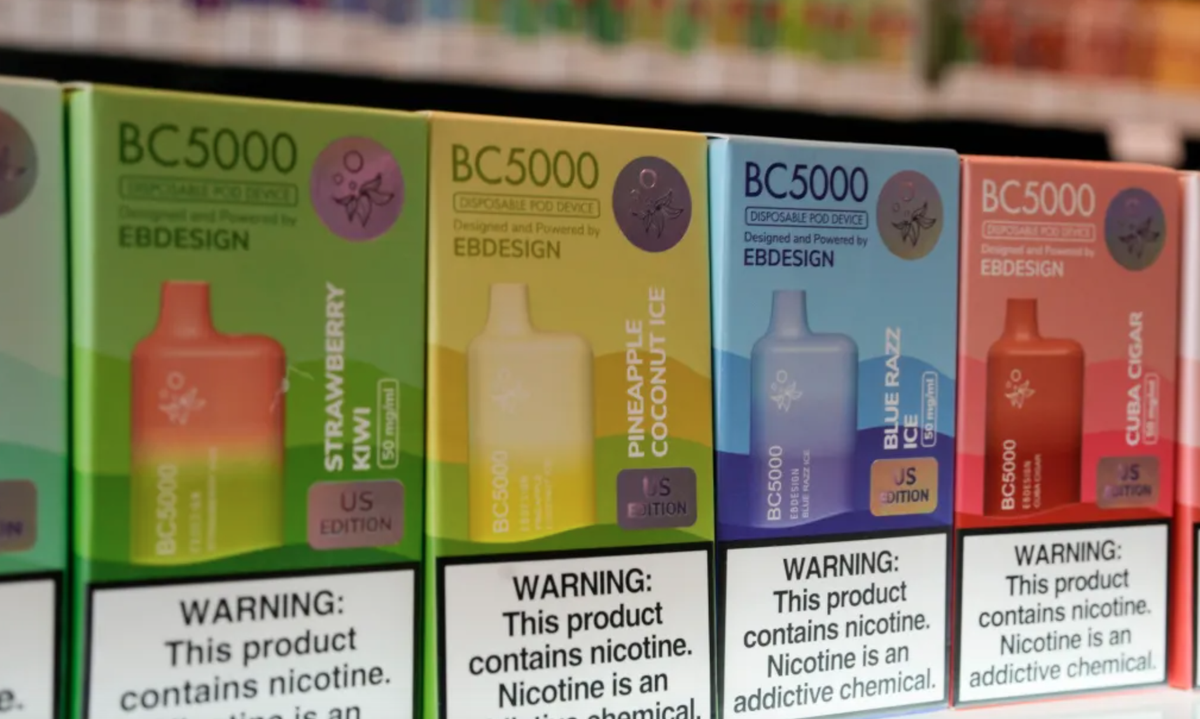
Amendment to e-cigarette Act" prohibits the sale of flavored e-cigarette products, as well as the sale of any e-cigarette products not authorized by federal officials.
According to one provision of the injunction, Utah is prohibited from implementing the provisions of S.B. 61 until a ruling on the December 12 litigation. Another provision specifically states that it is not illegal to manufacture, distribute, or sell e-cigarette products that are not authorized by the regulations before the ruling is issued.
The Utah Vapor Business Association and The Smoke House have been named as plaintiffs in a complaint filed on December 12th. The lawsuit involves the state of Utah, Governor Cox, Attorney General Sean Reyes, the Utah Department of Health and Public Service, and other entities in the state.
The lawsuit claims that flavored e-cigarettes are "limited and closely monitored" in supply, as they are only legally sold in retail tobacco specialty stores. The plaintiffs argue that banning the sale of flavored e-cigarettes will lead to people in Utah "inhaling more harmful combustible cigarettes, or being forced to obtain flavored e-cigarettes from out of state or through the black market," in addition, tobacco retailers will lose "the vast majority" of their business.
The plaintiff also argues that the injunction not only conflicts with federal law, but may also violate the constitutional rights of citizens.
We welcome news tips, article submissions, interview requests, or comments on this piece.
Please contact us at info@2firsts.com, or reach out to Alan Zhao, CEO of 2Firsts, on LinkedIn
Notice
1. This article is intended solely for professional research purposes related to industry, technology, and policy. Any references to brands or products are made purely for objective description and do not constitute any form of endorsement, recommendation, or promotion by 2Firsts.
2. The use of nicotine-containing products — including, but not limited to, cigarettes, e-cigarettes, nicotine pouchand heated tobacco products — carries significant health risks. Users are responsible for complying with all applicable laws and regulations in their respective jurisdictions.
3. This article is not intended to serve as the basis for any investment decisions or financial advice. 2Firsts assumes no direct or indirect liability for any inaccuracies or errors in the content.
4. Access to this article is strictly prohibited for individuals below the legal age in their jurisdiction.
Copyright
This article is either an original work created by 2Firsts or a reproduction from third-party sources with proper attribution. All copyrights and usage rights belong to 2Firsts or the original content provider. Unauthorized reproduction, distribution, or any other form of unauthorized use by any individual or organization is strictly prohibited. Violators will be held legally accountable.
For copyright-related inquiries, please contact: info@2firsts.com
AI Assistance Disclaimer
This article may have been enhanced using AI tools to improve translation and editorial efficiency. However, due to technical limitations, inaccuracies may occur. Readers are encouraged to refer to the cited sources for the most accurate information.
We welcome any corrections or feedback. Please contact us at: info@2firsts.com