Florida Environmental Committee Supports Measures to Regulate Smoking in State Parks

Regulations by 2FIRSTS.ai
Jan.22.2024
Florida Environmental Committee Supports Measures to Regulate Smoking in State Parks
Florida's Environment and Natural Resources Committee supports fines of $100 for first-time violations of smoking and vaping bans in state parks.

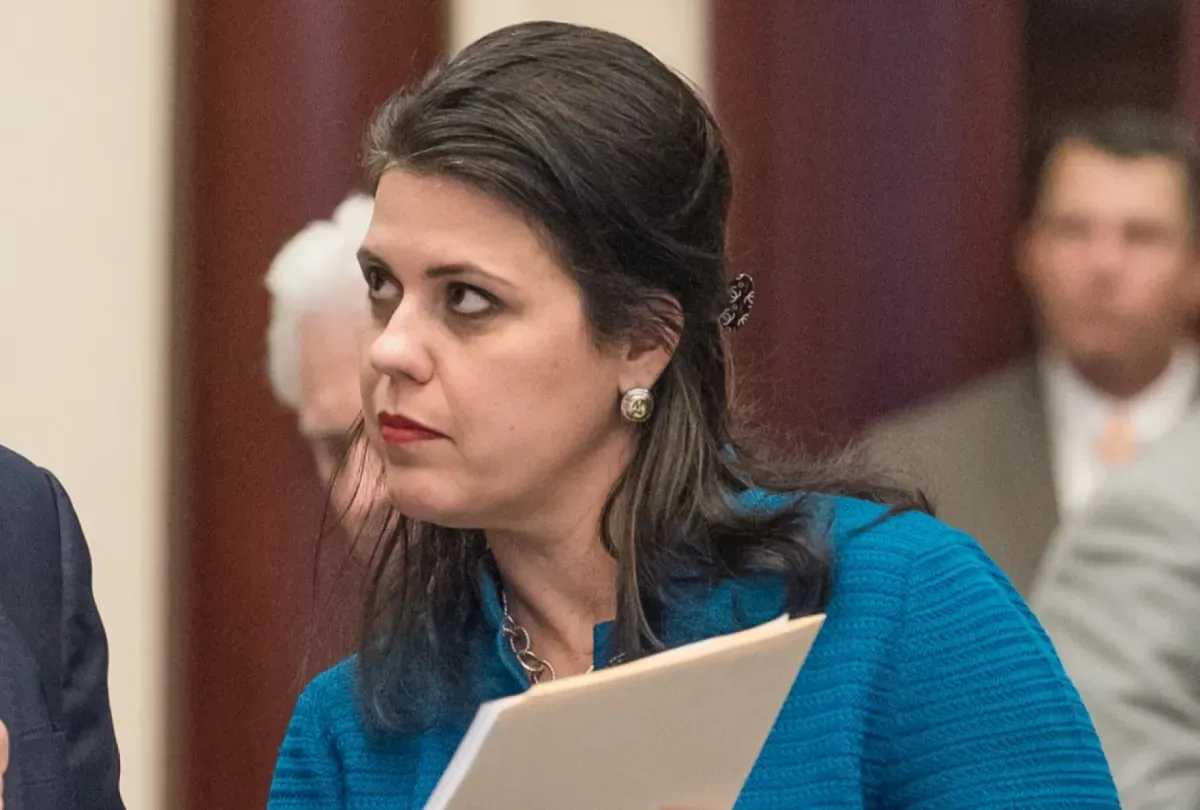
According to a report by WUSF, the Environmental and Natural Resources Commission of the state of Florida has given its support to a proposal put forth by Chairperson Ana Maria Rodriguez. Under this measure, a first-time violation will be subject to a fine of $100, with subsequent violations incurring fines of $500.


On Wednesday, a Senate committee approved a proposal to ban smoking and vaping e-cigarettes in state parks.


Most state park systems in Florida follow the Clean Indoor Air Act, which prohibits smoking inside buildings. However, Ellie R. Schiller Homosassa Springs Wildlife State Park stands as an exception, as smoking is prohibited within the premises. The park is regarded as a "congested area" due to its layout and high number of visitors.


The bill will next be presented to the Committee on Agriculture, Environment, and General Government Appropriations. A similar bill (HB 495) in the House has not yet undergone committee hearings. In 2022, lawmakers passed a measure allowing municipalities to restrict smoking on their owned beaches and parks.


We welcome news tips, article submissions, interview requests, or comments on this piece.

Please contact us at info@2firsts.com, or reach out to Alan Zhao, CEO of 2Firsts, on LinkedIn


Notice

1.  This article is intended solely for professional research purposes related to industry, technology, and policy. Any references to brands or products are made purely for objective description and do not constitute any form of endorsement, recommendation, or promotion by 2Firsts.

2.  The use of nicotine-containing products — including, but not limited to, cigarettes, e-cigarettes, nicotine pouchand heated tobacco products — carries significant health risks. Users are responsible for complying with all applicable laws and regulations in their respective jurisdictions.

3.  This article is not intended to serve as the basis for any investment decisions or financial advice. 2Firsts assumes no direct or indirect liability for any inaccuracies or errors in the content.

4.  Access to this article is strictly prohibited for individuals below the legal age in their jurisdiction.


Copyright


This article is either an original work created by 2Firsts or a reproduction from third-party sources with proper attribution. All copyrights and usage rights belong to 2Firsts or the original content provider. Unauthorized reproduction, distribution, or any other form of unauthorized use by any individual or organization is strictly prohibited. Violators will be held legally accountable.

For copyright-related inquiries, please contact: info@2firsts.com


AI Assistance Disclaimer


This article may have been enhanced using AI tools to improve translation and editorial efficiency. However, due to technical limitations, inaccuracies may occur. Readers are encouraged to refer to the cited sources for the most accurate information.

We welcome any corrections or feedback. Please contact us at: info@2firsts.com

The Spark of Reason| 2Firsts 2026 New Year Message
Looking ahead to 2026, we do so with genuine anticipation. This will be a milestone year—the dawn of a new era.
Jan.01
Michigan Senate Passes Bipartisan Bills Requiring Tobacco Retailer Licensing
The Michigan Senate has passed bipartisan legislation requiring tobacco retailers to be licensed statewide, aiming to strengthen enforcement against youth tobacco use. The bills introduce regular inspections, tougher penalties for sales to minors, regulation of online and delivery sales, and a ban on flash sales. The legislation now moves to the Michigan House for further consideration.
Dec.26 by 2FIRSTS.ai
Illegal Vape Suppliers Move Online After Queensland Crackdown
Less than two weeks after Queensland police raided and shut down tobacconists suspected of selling illegal e-cigarettes, at least one supplier has moved its business online. Flyers with QR codes advertising same-day delivery of vapes, tobacco, and nicotine pouches were found taped to electricity poles across the Gold Coast.
Dec.05 by 2FIRSTS.ai
South Korea Signs Agreement to Recycle PMK E-Cigarette Devices via Postal System
South Korea will introduce a postal-based collection system for electronic cigarette devices, allowing consumers to dispose of used devices through nationwide mailboxes or post office counters. Relevant government bodies and private partners have signed a cooperation agreement to address the lack of clear disposal standards for e-cigarette devices.
Dec.16 by 2FIRSTS.ai
Kazakhstan’s Astana Baikonur District Fines Illegal Smokeless Tobacco Sales Over USD 5,800
Authorities in Astana’s Baikonur District have intensified enforcement against illegal smokeless tobacco and related products in 2025. Police conducted 59 inspection raids, identifying 63 cases of illegal sales of smokeless tobacco (nasvay). Total fines imposed reached KZT 3,096,450(approximately USD 5,880). Officials said inspections and preventive outreach will continue.
Dec.29 by 2FIRSTS.ai
2FIRSTS Data Insight|China’s Vape Exports to the U.S. Hit a Record $590 Million: A Peak Driven by Enforcement Cycles, Not Real Demand
China’s vape exports to the U.S. surged to a record $590 million in October 2025—nearly double the usual monthly level and pushing the U.S. share above 50% of China’s global shipments.But the spike was not driven by demand. Instead, it reflected a temporary release created by tightened U.S. enforcement, a collapsed logistics pathway, and a bullwhip-style surge in replenishment.The peak signals more volatility ahead, not recovery.
Special Report
Nov.24