France Passes Law Regulating Influencer Advertising

Apr.06.2023
France Passes Law Regulating Influencer Advertising
France passes law to ban e-cigarette advertisements by "influencers". New legislation defines terms like "commercial influence activity" and "influencer".

On March 22nd, the French National Assembly passed a bill (Bill No. 1006) that legally defines terms such as "commercial influence activities," "influencers," and "influencer agents.


France will prohibit "influential individuals" from advertising e-cigarettes, in accordance with Amendment 96 of the ban on tobacco and e-cigarette promotion.


Reference:


France bans vaping advertising in influencer marketing.


Bill No. 1006


The 96th Amendment


Disclaimer

This article is provided solely for professional research, industry discussion, and informational purposes. Any references to brands, companies, products, technologies, or policies are made for factual reporting and analytical purposes only, and do not constitute endorsement, recommendation, promotion, or advertising by 2Firsts.

Nicotine-containing products, including but not limited to cigarettes, e-cigarettes, heated tobacco products, and nicotine pouches, carry significant health risks. Readers are responsible for complying with all applicable laws and regulations in their respective jurisdictions, including age restrictions and access limitations.

The information contained in this article should not be regarded as investment, legal, medical, regulatory, or commercial advice. While 2Firsts strives to ensure the accuracy and reliability of its content, it does not assume liability for any direct or indirect loss arising from errors, omissions, inaccuracies, or reliance on the information contained herein.

This article is not intended for individuals below the legal age for accessing tobacco or nicotine-related information in their jurisdiction.


Copyright Notice

This article is either original content produced by 2Firsts or content reproduced, translated, summarized, or adapted from third-party sources with attribution where applicable. The intellectual property rights of the original content remain with 2Firsts or the respective original rights holders.

No individual or organization may copy, reproduce, distribute, republish, modify, translate, or otherwise use this content without prior authorization. Any unauthorized use may result in legal action.

For copyright-related inquiries, corrections, or removal requests, please contact: info@2firsts.com.


AI-Assisted Translation and Editing Notice

Portions of this article may have been translated, edited, or reviewed with the assistance of artificial intelligence tools to improve efficiency and readability. Due to the limitations of AI-assisted translation and editing, discrepancies, omissions, or inaccuracies may exist when compared with the original source.

Where applicable, readers are advised to refer to the original source for the most complete and accurate information. If you identify any errors or believe that any content infringes upon your rights, please contact us at info@2firsts.com, and we will review and address the matter promptly.

BAT New Zealand Says Illicit Tobacco Trade Drove Nearly 29% Revenue Decline in 2025
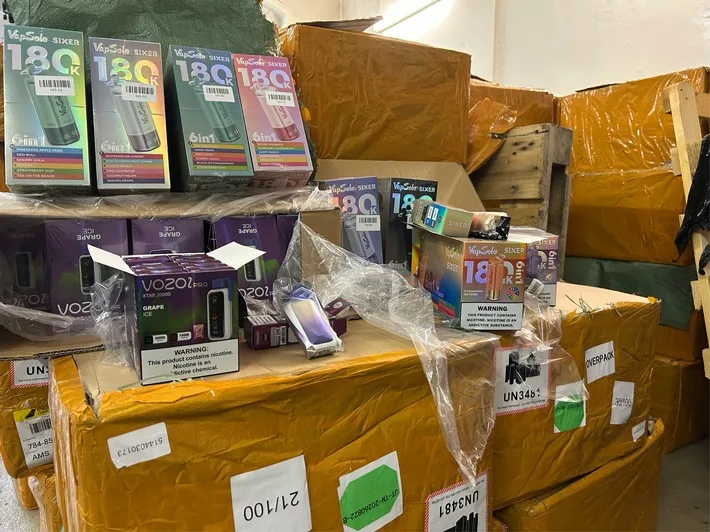
British American Tobacco New Zealand said the illicit tobacco trade is responsible for its profit halving and revenue falling between the 2024 and 2025 financial years. Financial results filed with the Companies Office show that BAT Holdings (New Zealand) recorded 2025 revenue of NZ$180.7 million, or about US$106.95 million based on the European Central Bank’s April 27, 2026 reference rates, down from NZ$254 million, or about US$150.33 million, in 2024.
Apr.28 by 2FIRSTS.ai
South Korea Set to Enforce Liquid Vape Ban in Smoke-Free Areas, but Welfare Ministry Abruptly Adds Two-Month Guidance Period
Local governments across South Korea recently issued press releases saying they would intensively crack down on the use of liquid e-cigarettes in smoke-free areas. Since the revised Tobacco Business Act, passed in December last year, included liquid e-cigarettes within the definition of tobacco and took effect on April 24, local authorities had prepared to begin enforcement immediately.
Apr.27 by 2FIRSTS.ai
  South Korea Reopens Cigarette Tax Debate as 63% Back Higher Tobacco Taxes
South Korea Reopens Cigarette Tax Debate as 63% Back Higher Tobacco Taxes
South Korea’s cigarette tax debate has resurfaced after the Ministry of Health and Welfare said tobacco price policy needed review, with a poll showing 63% of respondents support higher tobacco taxes.
Regulations
Jun.22
Ispire and Jincheng Pharma Form Joint Venture to Enter Global High-Growth Nicotine Pouch Market
Summary Ispire Technology announced a strategic joint venture with Chinese pharmaceutical company Jincheng Pharma to manufacture and commercialize nicotine pouch products. The partnership combines pharmaceutical-grade production capabilities with Ispire’s global regulatory infrastructure and distribution network as the company expands beyond vaping hardware into oral nicotine products.
Business
May.13
Malaysian Tobacco Control Groups Call for Annual 5% Tobacco Tax Hike
According to The Star and The Edge Malaysia, tobacco control groups in Malaysia have urged the government to raise tobacco taxes by at least 5% annually, saying the measure could reduce smoking rates and fund public health and social programmes.
News
May.26
AIR Shares Drop 18.6% in Nasdaq Debut, Testing Hookah’s Move Toward Public Markets
AIR Global’s Nasdaq debut under ticker AIIR ended with a 18.6% first-day decline, giving the global hookah industry a rare public-market reference point. Beyond one company’s share move, the listing raises a broader question: can a culturally rooted, fragmented and venue-based category evolve into a more scalable and investable consumer sector?
Special Report
May.19