Key points
- Judgment: The U.S. District Court for the Southern District of Georgia vacated the FDA’s final rule on graphic cigarette warnings.
- Legal basis: The rule did not violate the TCA, but it violated the Administrative Procedure Act (APA §706(2)(D)) due to procedural defects.
- Procedural flaw: During the notice-and-comment period, the FDA did not disclose key raw data, preventing stakeholders from meaningfully participating.
- Data dispute: Data disclosed during litigation indicated the existing Surgeon General’s carbon monoxide warning outperformed some of the FDA’s revised warnings on the “new information” measure, with no statistically significant difference compared with the agency’s final revised warnings.
- Parties: The plaintiffs were Philip Morris USA and the Georgia Association of Convenience Stores.
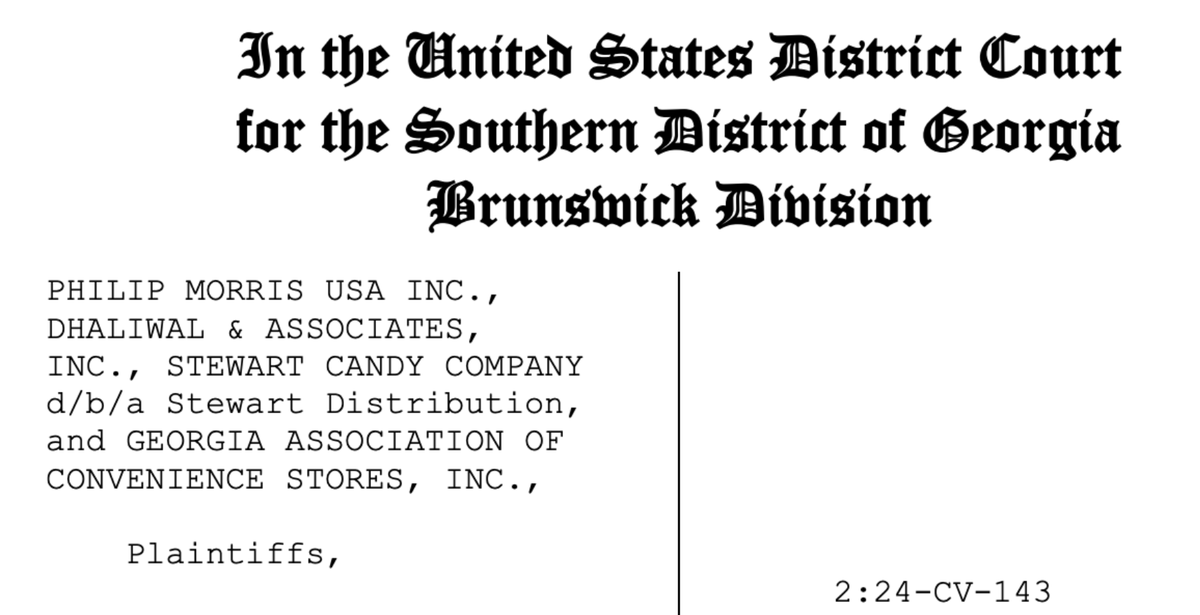
2Firsts, September 4, 2025 — The U.S. District Court for the Southern District of Georgia has issued an order in Philip Morris USA Inc., et al. v. U.S. Food & Drug Administration, et al., vacating the FDA’s final rule requiring graphic health warnings on cigarette packages and advertisements. The court stated that, on the merits, the rule did not violate the TCA and was not arbitrary or capricious, but it must be set aside because the agency failed to follow the procedures required by the APA during rulemaking.
The court emphasized that the FDA did not disclose the raw data it relied on during the notice-and-comment period, thereby preventing interested parties from participating effectively. Raw data disclosed in the litigation showed the existing Surgeon General’s carbon monoxide warning scored higher on the “new information” metric than some of the FDA’s revised warnings and did not differ significantly from the final revised warnings. The court held that even if these points might not have changed the FDA’s ultimate decision, they could have led the agency to adjust its rulemaking process, thus constituting a procedural violation under APA §706(2)(D).
Court’s conclusions:
No violation of the TCA,the FDA may add statements beyond the nine statutory warnings.
Violation of the APA due to failure to follow required procedures.
Accordingly, the court granted summary judgment for the plaintiffs and vacated the FDA’s final rule on graphic cigarette warnings. The case was filed in December 2024 by Philip Morris USA and Georgia convenience-store interests. The order was signed on August 29, 2025, and directed the clerk to close the case.
We welcome news tips, article submissions, interview requests, or comments on this piece.
Please contact us at info@2firsts.com, or reach out to Alan Zhao, CEO of 2Firsts, on LinkedIn
Notice
1. This article is intended solely for professional research purposes related to industry, technology, and policy. Any references to brands or products are made purely for objective description and do not constitute any form of endorsement, recommendation, or promotion by 2Firsts.
2. The use of nicotine-containing products — including, but not limited to, cigarettes, e-cigarettes, nicotine pouchand heated tobacco products — carries significant health risks. Users are responsible for complying with all applicable laws and regulations in their respective jurisdictions.
3. This article is not intended to serve as the basis for any investment decisions or financial advice. 2Firsts assumes no direct or indirect liability for any inaccuracies or errors in the content.
4. Access to this article is strictly prohibited for individuals below the legal age in their jurisdiction.
Copyright
This article is either an original work created by 2Firsts or a reproduction from third-party sources with proper attribution. All copyrights and usage rights belong to 2Firsts or the original content provider. Unauthorized reproduction, distribution, or any other form of unauthorized use by any individual or organization is strictly prohibited. Violators will be held legally accountable.
For copyright-related inquiries, please contact: info@2firsts.com
AI Assistance Disclaimer
This article may have been enhanced using AI tools to improve translation and editorial efficiency. However, due to technical limitations, inaccuracies may occur. Readers are encouraged to refer to the cited sources for the most accurate information.
We welcome any corrections or feedback. Please contact us at: info@2firsts.com