German Customs Seizes 400,000 Illegal Vapes Worth €500,000

Nov.27.2024
German Customs Seizes 400,000 Illegal Vapes Worth €500,000
Berlin Customs has cracked down on e-cigarette smuggling, detaining eight suspects and seizing 400,000 illegal vapes, resulting in a tax loss of €500,000.

On November 26, the Berlin-Brandenburg Customs Investigation Office announced that they, along with approximately 500 law enforcement officers from the Berlin Police Department, conducted searches at 35 addresses and multiple vehicles in the city. The operation was aimed at cracking down on the sale of disposable e-cigarettes to teenagers.


The police seized 400,000 untaxed e-cigarettes, 600 kilograms of waterpipe tobacco, and over 200,000 euros in cash. It is reported that the tax loss is at least 500,000 euros.


The investigation points to a group of eight suspects, ranging in age from 24 to 41. This group has been selling smuggled e-cigarettes to teenagers primarily through online advertisements since January 2024.


According to reports, these disposable e-cigarettes were brought into Germany by an unknown third party without going through customs and paying taxes. The suspects were aware of this, but they still sold the untaxed goods.


The investigation and assessment of the seized evidence are currently underway.


Starting from July 1, 2022, disposable e-cigarettes are included in the scope of tobacco tax as a tobacco alternative. It is important in tax regulations to consider the e-liquid content in disposable e-cigarettes. From January 1, 2024, the tobacco tax rate will be 0.20 euros per milliliter. According to the Youth Protection Act, disposable e-cigarettes containing nicotine and those without nicotine cannot be provided to children and adolescents, violators can be fined up to 50,000 euros.


We welcome news tips, article submissions, interview requests, or comments on this piece.

Please contact us at info@2firsts.com, or reach out to Alan Zhao, CEO of 2Firsts, on LinkedIn


Notice

1.  This article is intended solely for professional research purposes related to industry, technology, and policy. Any references to brands or products are made purely for objective description and do not constitute any form of endorsement, recommendation, or promotion by 2Firsts.

2.  The use of nicotine-containing products — including, but not limited to, cigarettes, e-cigarettes, nicotine pouchand heated tobacco products — carries significant health risks. Users are responsible for complying with all applicable laws and regulations in their respective jurisdictions.

3.  This article is not intended to serve as the basis for any investment decisions or financial advice. 2Firsts assumes no direct or indirect liability for any inaccuracies or errors in the content.

4.  Access to this article is strictly prohibited for individuals below the legal age in their jurisdiction.


Copyright


This article is either an original work created by 2Firsts or a reproduction from third-party sources with proper attribution. All copyrights and usage rights belong to 2Firsts or the original content provider. Unauthorized reproduction, distribution, or any other form of unauthorized use by any individual or organization is strictly prohibited. Violators will be held legally accountable.

For copyright-related inquiries, please contact: info@2firsts.com


AI Assistance Disclaimer


This article may have been enhanced using AI tools to improve translation and editorial efficiency. However, due to technical limitations, inaccuracies may occur. Readers are encouraged to refer to the cited sources for the most accurate information.

We welcome any corrections or feedback. Please contact us at: info@2firsts.com

GAO Audit Finds Nearly 132,000 FDA Tobacco Applications Waiting an Average 1,266 Days as Nicotine Pouch Pilot Practices Move Into Vape PMTA Reviews
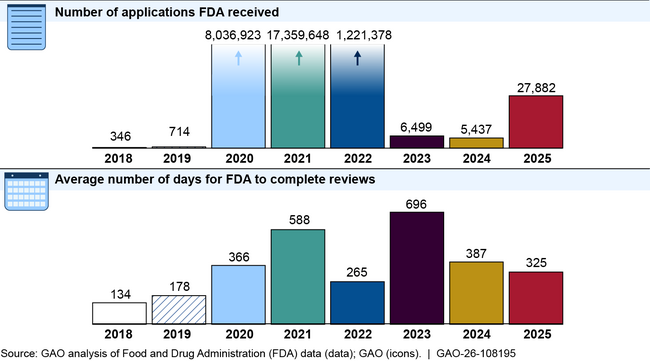
A U.S. Government Accountability Office audit found that 131,915 tobacco product applications submitted to the FDA since 2018 remained without a final review as of December 31, 2025, with pending applications waiting an average of 1,266 days. GAO also found FDA lacks the data needed to systematically determine whether scientific reviews meet applicable timelines. HHS agreed to upgrade the agency's tracking systems. At the same time, FDA has begun applying lessons from its nicotine pouch PMTA pilot to e-cigarette reviews, while changes to enforcement policy and electronic submissions are making the specific stage of a PMTA increasingly relevant to market access.
FDA
Oct.03
GSTHR Estimates 200 Million People Use Non-Combustible Nicotine Products as 28 Countries Show Rising Use Alongside Falling Smoking Rates
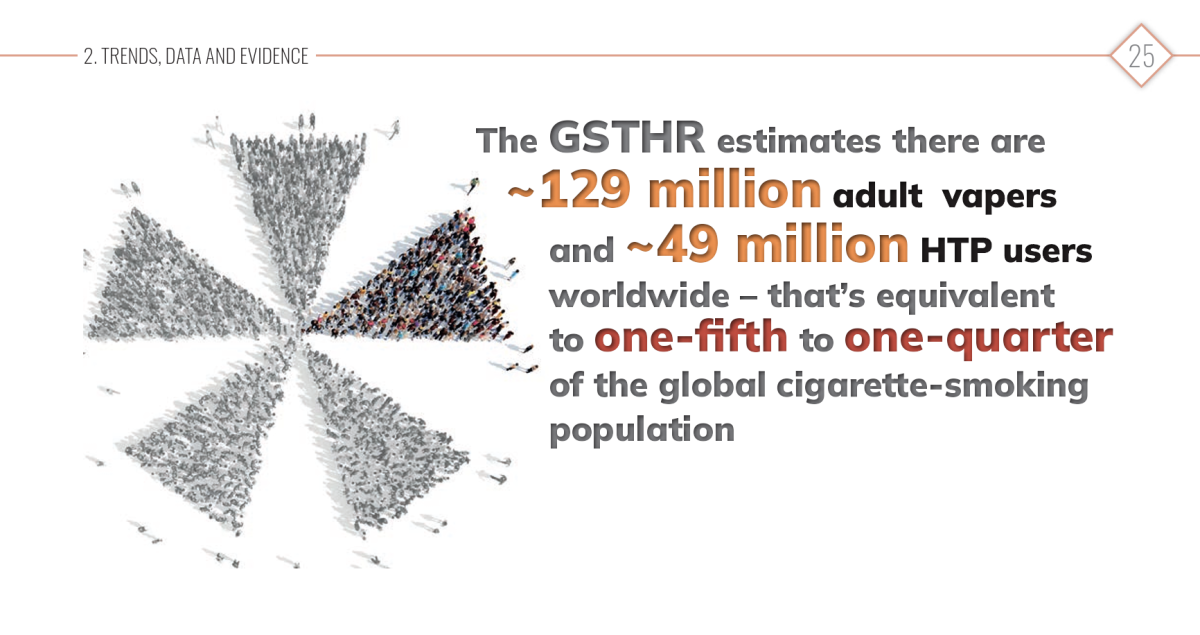
The Global State of Tobacco Harm Reduction, a project operated by Knowledge·Action·Change, estimates that about 200 million people worldwide use non-combustible nicotine products including vapes, heated tobacco, nicotine pouches and snus. Its 2026 report says use of these products rose alongside declining smoking rates in 28 countries it analyzed. The data do not establish that all 200 million users have quit smoking, nor do they prove a direct causal relationship. GSTHR also says regulatory restrictions on the products continue to expand in many markets.
Sep.10
2Firsts Interview | Cigarette Sales Fall as Smokeless Alternatives Gain in U.S. Convenience Stores, NACS Says
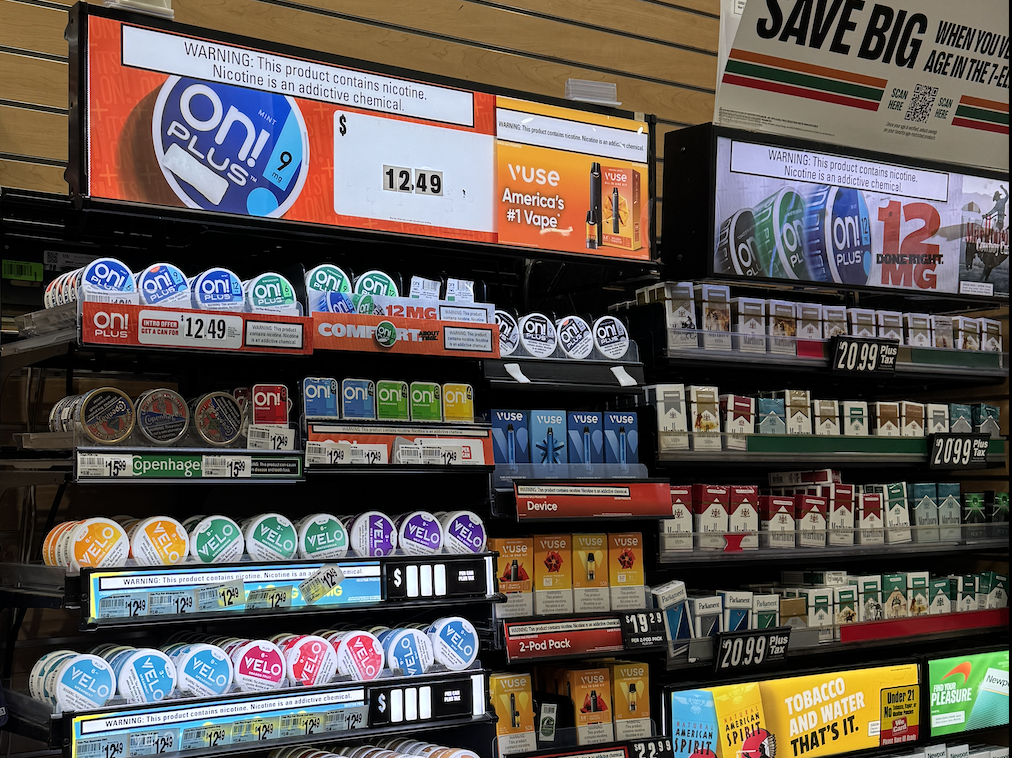
Ahead of the 2026 NACS Show, 2Firsts interviewed Chris Rapanick, NACS managing director of research, on changes reshaping the U.S. convenience-store tobacco and nicotine market. NACS data show cigarette sales declining while smokeless alternatives, including nicotine pouches, continue to grow. The interview also examines higher OTP margins, shifting backbar space, weaker store traffic, regulatory uncertainty and NACS’ outlook for 2027, offering a retailer-side view of one of the world’s largest nicotine markets.
Interview
Oct.03
JTI Makes Third Bet on South Korea as Ploom AURA Enters a Market Dominated by lil and IQOS
Japan Tobacco International is stepping up its heated tobacco push in South Korea with Ploom AURA. Since its official launch in April 2026, the device's limited First Edition and Glacier White version have sold out, while distribution has expanded across Seoul, Incheon, Gyeonggi Province and airport duty-free channels. The rollout marks JTI's third major attempt to build a stronger heated tobacco position in South Korea, following Ploom TECH in 2019 and Ploom X Advanced in 2024. At the group level, JT plans to invest about ¥800 billion, approximately $5 billion, in reduced-risk products from 2026 through 2028, with heated products and Ploom identified as its primary investment priority.
Aug.14
Kantar Study Finds More Than 93% of Vape Products in Ukraine Fail Regulatory Requirements
According to Interfax-Ukraine, a study conducted by market research firm Kantar Ukraine at the request of major tobacco companies found that more than 93% of vape products in Ukraine did not fully comply with regulatory requirements. The research examined product categories, brand distribution and consumer purchasing channels, showing that pod systems and disposable vapes represent major segments of the market, while offline retail remains the dominant purchasing channel. The findings highlight ongoing compliance challenges in Ukraine’s vape market.
Aug.26
JUUL Purchasers Ask Ninth Circuit to Preserve Antitrust Classes in Case Over Altria’s $12.8 Billion Investment
Private antitrust litigation stemming from Altria's 2018 $12.8 billion investment for a 35% economic interest in JUUL is advancing before the U.S. Court of Appeals for the Ninth Circuit. Direct purchasers, indirect purchasers and indirect resellers of JUUL products filed answering briefs this week seeking to preserve class certifications granted by a California federal court in February. Altria and JUUL argue that individual consumers and large distributors differ too much in purchasing terms to remain in a single direct-purchaser class, while a separate dispute concerns whether California antitrust law can apply to indirect purchasers across 27 jurisdictions. A September trial has been put on hold during the appeal.
Sep.23