German Health Official Calls for Further Restrictions on Smoking Behavior

Aug.01.2024
German Health Official Calls for Further Restrictions on Smoking Behavior
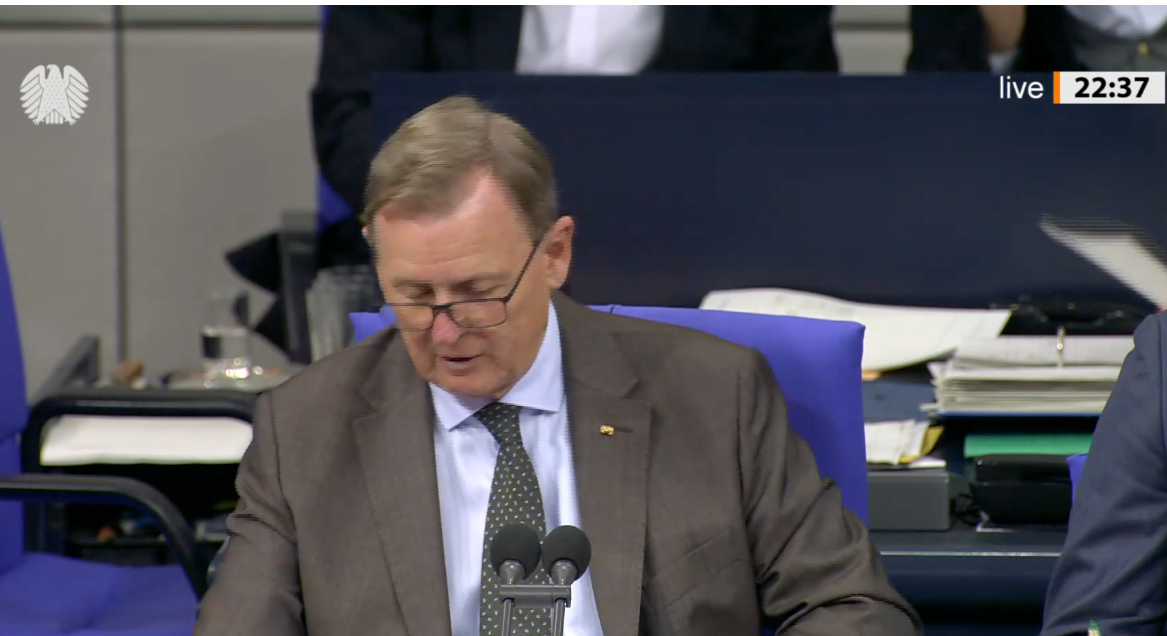
German Federal Health Ministry's drug policy commissioner Burkhard Blienert calls for further restrictions on smoking in Germany.

According to a report by Klamm on July 29th, Burkhard Blienert, the drug policy commissioner at the German Federal Ministry of Health, advocates for further restrictions on smoking behavior in Germany.


According to this Social Democratic Party politician, it is unacceptable to still see colorful tobacco and e-cigarette advertisements at gas stations or supermarket checkouts by 2024.


As early as the 2021 league agreement, the Red-Green Party had already reached stricter regulations on the marketing and sponsorship of nicotine products.


Briant pointed out that smoking is the cause of over 200 different diseases and results in nearly 100 billion euros of annual economic losses. He stated that he does not want to parent smokers, but advertising has enticing effects, especially on teenagers. Therefore, he is calling for stricter regulations in supermarkets and gas stations.


He also called for the quick restriction of the sale of disposable e-cigarettes.


Health organizations also called for a ban on the sale of tobacco products and e-cigarettes in supermarkets and gas stations, allowing sales only in licensed specialty stores and advocating for the use of plain packaging without prominent branding.


The German Tobacco Industry and New Products Federal Association pointed out that advertising opportunities have been restricted, such as the ban on posting e-cigarette posters since the beginning of the year.


Bryant called for urgent and serious action on the issue: banning advertisements, ending sponsorships, prohibiting disposable e-cigarettes, providing more consistent protection for non-smokers, especially children, and raising tobacco taxes.


We welcome news tips, article submissions, interview requests, or comments on this piece.

Please contact us at info@2firsts.com, or reach out to Alan Zhao, CEO of 2Firsts, on LinkedIn


Notice

1.  This article is intended solely for professional research purposes related to industry, technology, and policy. Any references to brands or products are made purely for objective description and do not constitute any form of endorsement, recommendation, or promotion by 2Firsts.

2.  The use of nicotine-containing products — including, but not limited to, cigarettes, e-cigarettes, nicotine pouchand heated tobacco products — carries significant health risks. Users are responsible for complying with all applicable laws and regulations in their respective jurisdictions.

3.  This article is not intended to serve as the basis for any investment decisions or financial advice. 2Firsts assumes no direct or indirect liability for any inaccuracies or errors in the content.

4.  Access to this article is strictly prohibited for individuals below the legal age in their jurisdiction.


Copyright


This article is either an original work created by 2Firsts or a reproduction from third-party sources with proper attribution. All copyrights and usage rights belong to 2Firsts or the original content provider. Unauthorized reproduction, distribution, or any other form of unauthorized use by any individual or organization is strictly prohibited. Violators will be held legally accountable.

For copyright-related inquiries, please contact: info@2firsts.com


AI Assistance Disclaimer


This article may have been enhanced using AI tools to improve translation and editorial efficiency. However, due to technical limitations, inaccuracies may occur. Readers are encouraged to refer to the cited sources for the most accurate information.

We welcome any corrections or feedback. Please contact us at: info@2firsts.com

PMI Expands U.S. ZYN Portfolio With New 1.5 mg and 8 mg Strengths, Moves Toward a Unified 20-Pouch-Per-Can Format
Philip Morris International is expanding its U.S. ZYN nicotine pouch portfolio with new 1.5 mg and 8 mg strengths and plans to move its core 3 mg and 6 mg dry-pouch products from 15 to 20 pouches per can in the fourth quarter of 2026. ZYN ULTRA is also commercially available, with FDA authorization covering 10 products at 9 mg and one 11 mg Smooth product. PMI U.S. lists the new 1.5 mg and 8 mg strengths as commercially available, but as of September 10 they do not appear on the FDA’s public authorization list. Public materials do not identify which PMTA submissions cover the two new strengths or their current review status.
Sep.11
U.S. Appeals Court Says BAT Must Face Class Action Over Cigarette Labels
A U.S. appeals court ruled that British American Tobacco (BAT) must continue facing a consumer class action lawsuit over cigarette labels. The ruling allows the case to proceed but does not determine that BAT violated the law or is liable for damages. The case highlights ongoing legal risks facing major tobacco companies related to product labeling, consumer disclosures and product liability claims.
Jul.31
Hunan China Tobacco Industry files heated tobacco device patent featuring adult-user identification through pressure sensing
China-based Hunan China Tobacco Industry Co., Ltd. and Shenzhen Baisha Technology Co., Ltd. have filed a patent application covering an adult-user identification mechanism for heated tobacco devices. The patent proposes using flexible pressure sensors installed in the device grip area to collect pressure distribution patterns generated when users hold the device. The system evaluates factors including effective contact area, grip shape and contact duration, and combines roller movement detection to determine whether unlocking conditions are met. The filing reflects exploration of device-level user recognition and smarter interaction technologies for heated tobacco products (HTPs).
Aug.05
2Firsts Data | China’s Vape-Related Exports Rise 16.5% in July 2026 as U.S.-Bound Shipments Jump 53.5%
China’s vape-related exports reached $1.047 billion in July 2026, up 16.5% year on year and the highest monthly total of the year. Growth was heavily concentrated in the U.S., where exports jumped 53.5% to $404 million and accounted for 94.9% of the overall increase. Exports to all other markets rose just 1.2%. By category, nicotine-containing non-combustible products—primarily vapes—under HS24041200 rose 24.7% and generated 95.5% of the total increase. Vape-device exports under HS85434000 fell 0.4%, while other nicotine-substitute products under HS24041990 grew 88.9% but remained comparatively small.
DATA
Aug.24
China’s Jiangsu Tobacco Monopoly Bureau and Drug Regulator Target Illegal Vape Sales Disguised as Medical Devices, Define Six Violations
China’s Jiangsu Tobacco Monopoly Bureau and Jiangsu Provincial Medical Products Administration have issued a joint notice targeting illegal production and sales of vape products disguised as medical devices. The notice identifies six categories of violations, including obtaining medical licenses through false materials, misusing medical device credentials, expanding production beyond approved scopes, and using medical device-related online platforms to promote or sell vape products. The action is based on China’s tobacco and medical device regulations and aims to strengthen vape oversight and consumer protection.
Aug.04
China Tobacco Hubei explores staged nicotine pouch delivery, using dynamic membranes to slow early release and gradient particles to sustain later delivery
China Tobacco Hubei Industrial Co., Ltd. disclosed several oral nicotine-related patent applications in August 2026, including two that approach staged nicotine release from different directions. One uses a high-viscosity membrane that forms inside the pouch after contact with saliva to slow rapid early release, while the other uses gradient particles with a faster-disintegrating outer layer and a slower core to create a fast-to-sustained release profile. Together, the filings explore how nicotine pouches could balance initial delivery with release later in use.
Sep.03