Hanoi Cracks Down on Vape Smuggling, Seizes 500 Illegal Items

Nov.18.2024
Hanoi Cracks Down on Vape Smuggling, Seizes 500 Illegal Items
Hanoi authorities intensify enforcement, seizing a large number of illegal vape products and temporarily detaining over 500 smuggled items.

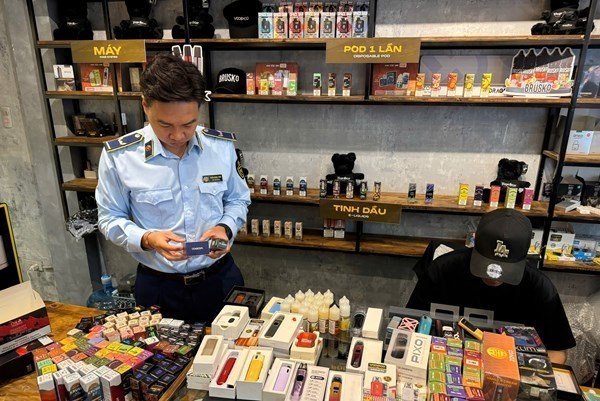
The Market Management Department in Hanoi, Vietnam, recently reported uncovering multiple cases of suspected smuggling involving vapes and heated tobacco products, according to B News.


The second team of the Market Management Department inspected a merchant. During the inspection, the authorities temporarily confiscated 80 items, including 50 disposable vape devices and 30 bottles of vape liquid. These products were found to lack invoices and certificates, and were deemed to be smuggled goods.


On the same day, authorities discovered another merchant selling 70 illegal items, including 50 disposable vape devices and 20 bottles of vape liquid. The inspection team has temporarily confiscated all the prohibited items for proper legal action to be taken.


Following this, authorities temporarily seized a total of 420 foreign-produced, unregistered disposable vapes and e-liquid products during increased inspections of vapes and heated tobacco products.


Currently, these cases are under investigation and verification to be handled according to the law.

 

FDA Unifies Tobacco Registration and Product Listing Form Across Product Categories
The U.S. FDA has consolidated two tobacco establishment registration and product listing forms into a redesigned Form FDA 3741 covering all regulated product categories, including e-cigarettes, heated tobacco products and nicotine pouches. The current requirements remain limited to domestic establishments. Separately, the FDA has proposed extending registration and product listing requirements to foreign manufacturers, signaling greater regulatory attention to manufacturing entities and product-level information across the tobacco and nicotine supply chain.
FDA
Sep.30
Russia's State Duma Passes Tobacco and Nicotine Ingredient Disclosure Bill, Targeting 2027 End to Trade-Secret Protection for Certain Harmful Ingredient Data
Russia's State Duma passed a government-sponsored amendment on November 11, 2026, by 414 votes to none, seeking to prevent businesses from classifying information on the presence and number of types of certain harmful ingredients in tobacco and nicotine-containing products as trade secrets. The measure covers ingredients capable of increasing nicotine dependence or exhibiting toxic, carcinogenic, mutagenic or reproductive toxicity, including substances that acquire such properties during heating or smoldering. Bill No. 1286415-8 would amend Article 5 of Federal Law No. 98-FZ on Commercial Secrets and is scheduled to take effect on January 1, 2027. The bill has cleared all three readings in the State Duma but has not completed the remaining legislative procedures.
Regulations
Nov.12 by 2Firsts Perspectives
Special Report | From Oversupply to Supply Gaps: Global Tobacco Leaf Markets Diverge Ahead of 2027
Global tobacco leaf markets diverged sharply in 2026, with India cutting authorised FCV production amid oversupply while Malawi faced a supply shortfall. U.S. demand improved in some leaf categories, but growers in Brazil, Colombia, Tanzania and Zimbabwe faced pressure from prices, buyer access, costs and weather. With nicotine consumption patterns also shifting, 2027 will test whether supply, demand and grower profitability can move back toward balance.
Oct.26
Product | PMJ Adds Bold Ruby to IQOS ILUMA i Lineup in Japan, Convenience-Store Rollout Starts Sept. 29
Philip Morris Japan (PMJ) launched Bold Ruby as a new regular color for the IQOS ILUMA i and IQOS ILUMA i ONE in Japan on September 16, 2026, priced at JPY 6,980 and JPY 3,980, respectively. Initial sales began through IQOS online and physical channels, with convenience stores and selected tobacco retailers set to follow from September 29. Bold Ruby is a regular rather than limited-edition colorway and is available for the ILUMA i and ILUMA i ONE, but not the ILUMA i PRIME. The release does not involve changes to the devices' core hardware or functions.
Sep.22
As Regulators Focus on Nicotine Pouch Child Safety, Safeguard Pursues an External Packaging Route
As regulators pay closer attention to child safety in nicotine pouches, manufacturers face a practical challenge: how to strengthen child-resistant packaging without unnecessarily reworking products, production lines and regulatory submissions already in place. In a written interview with 2Firsts, Chemular detailed Safeguard’s external packaging approach, its customer-specific testing requirements and possible PMTA pathways. The model remains early-stage, but it offers a new way to think about an increasingly important regulatory and manufacturing issue.
Industry Insight
Sep.19
South Korea's Tobacco Plan Excludes 6-Methyl Nicotine as Customs Tightens Import Controls and Analog Liquid Imports Fall 83%
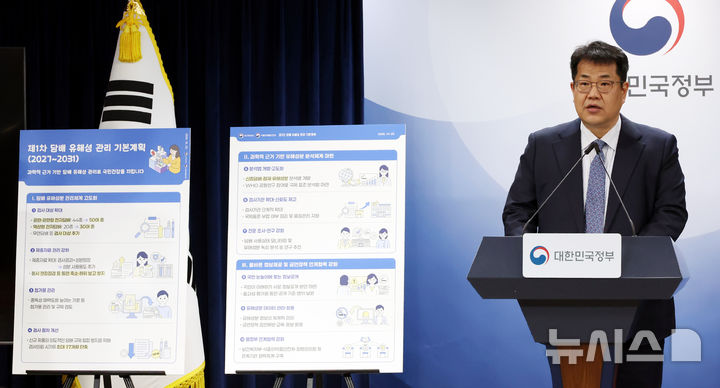
South Korea's government unveiled its first Tobacco Harm Management Basic Plan for 2027–2031 on October 29, 2026, proposing broader testing of vaping and heated tobacco products while excluding nicotine analogs such as 6-methyl nicotine. Synthetic nicotine came under tobacco regulation on April 24, and a June investigation found 6-methyl nicotine in 12 liquid inhalation products marketed as nicotine-free. Customs data released in September showed that imports of nicotine analog solutions fell 83.3%, from 12 metric tons in January–April to 2 metric tons in May–August. By September 20, imports had reached approximately 15 metric tons for the year, with 99.99% originating from China. Customs authorities have tightened pre-clearance testing and supply-chain documentation requirements, while the MFDS expects to complete its assessment of nicotine analog hazards by the end of 2026.
Regulations
Nov.04