Hawaii County Council Successfully Passes Bill to Ban Tobacco Imitations

Regulations by 2FIRSTS.ai
Jan.15.2024
Hawaii County Council Successfully Passes Bill to Ban Tobacco Imitations
Hawaii County Council passes bill banning flavored tobacco products in an effort to protect youth health.

According to a report by the Honolulu Star-Advertiser on January 12, the county council of Hawaii's Big Island has successfully passed a bill aimed at banning synthetic cigarettes, a move that is seen as a positive step in safeguarding the health of teenagers.


The legislation stipulates that retailers on Daishima Island will be banned from selling or promoting any tobacco or nicotine products other than those with tobacco or menthol flavors. The drafting of this bill was inspired by a similar regulation in Lake County last year, primarily driven by concerns for schoolchildren who have become addicted to various e-cigarettes that resemble candies.


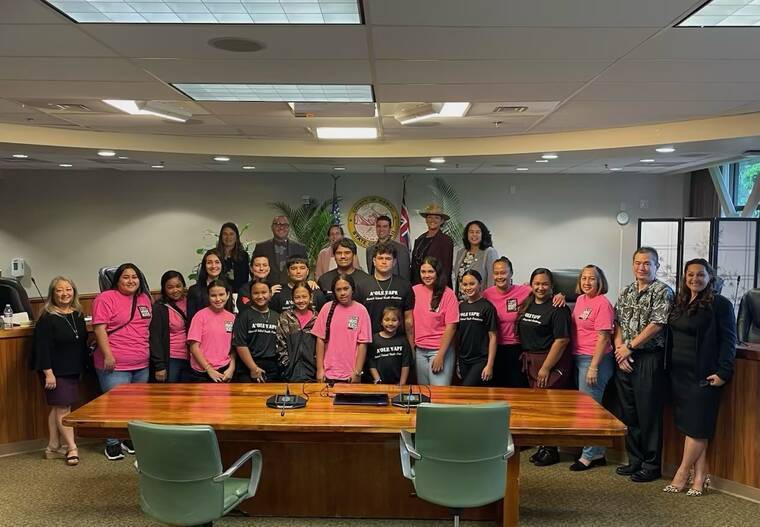
At the meeting, several children gave passionate speeches, urging the parliament to pass the bill. These children stated that many peers have been adversely affected both physically and mentally due to prolonged use of e-cigarettes with higher nicotine content. Zoe Gacayan from Kamehameha Schools Kapālama Campus in Hawaii expressed her belief that Hawaii's youth will be able to lead the nation into a "smoke-free" era.


Although the county council of Hawaii County has successfully passed the bill, it is not yet effectively implemented. This is because the bill changes the county-level tobacco regulations, which can only come into effect after the state regulations have been modified.


We welcome news tips, article submissions, interview requests, or comments on this piece.

Please contact us at info@2firsts.com, or reach out to Alan Zhao, CEO of 2Firsts, on LinkedIn


Notice

1.  This article is intended solely for professional research purposes related to industry, technology, and policy. Any references to brands or products are made purely for objective description and do not constitute any form of endorsement, recommendation, or promotion by 2Firsts.

2.  The use of nicotine-containing products — including, but not limited to, cigarettes, e-cigarettes, nicotine pouchand heated tobacco products — carries significant health risks. Users are responsible for complying with all applicable laws and regulations in their respective jurisdictions.

3.  This article is not intended to serve as the basis for any investment decisions or financial advice. 2Firsts assumes no direct or indirect liability for any inaccuracies or errors in the content.

4.  Access to this article is strictly prohibited for individuals below the legal age in their jurisdiction.


Copyright


This article is either an original work created by 2Firsts or a reproduction from third-party sources with proper attribution. All copyrights and usage rights belong to 2Firsts or the original content provider. Unauthorized reproduction, distribution, or any other form of unauthorized use by any individual or organization is strictly prohibited. Violators will be held legally accountable.

For copyright-related inquiries, please contact: info@2firsts.com


AI Assistance Disclaimer


This article may have been enhanced using AI tools to improve translation and editorial efficiency. However, due to technical limitations, inaccuracies may occur. Readers are encouraged to refer to the cited sources for the most accurate information.

We welcome any corrections or feedback. Please contact us at: info@2firsts.com

U.S. Health Groups Seek to Overturn FDA Enforcement Discretion for Pending PMTAs as Altria's Helix, NJOY and AVM Move to Intervene
American Vapor Manufacturers (AVM) and Altria subsidiaries Helix Innovations and NJOY filed separate motions on October 7, 2026, seeking to intervene on the FDA's side in a lawsuit challenging its enforcement guidance for certain e-cigarette and nicotine pouch products with pending premarket tobacco product applications (PMTAs). Seven public health and tobacco-control organizations, including the Campaign for Tobacco-Free Kids, sued the agency in July to overturn the policy. AVM argues that vacating the guidance could disrupt orders, inventory, retail distribution and investments in regulatory submissions.
Regulations
Oct.09
As JUUL2 Wins FDA Authorization, Harm Reduction Journal Highlights the Role of Real-World Evidence in Nicotine Product Regulation
A commentary published in the international open-access, peer-reviewed Harm Reduction Journal argues that randomized controlled trials remain central to evaluating smoking cessation efficacy but cannot alone capture real-world uptake, complete switching, longer-term use and population impact of non-combustible nicotine products such as e-cigarettes, heated tobacco and nicotine pouches. The authors frame impact as “reach × efficacy” and call for real-world evidence to complement RCTs. Three days after publication, the FDA authorized three JUUL2 products and highlighted complete switching among adult smokers in explaining its decision, providing a timely regulatory backdrop to the debate.
Sep.08
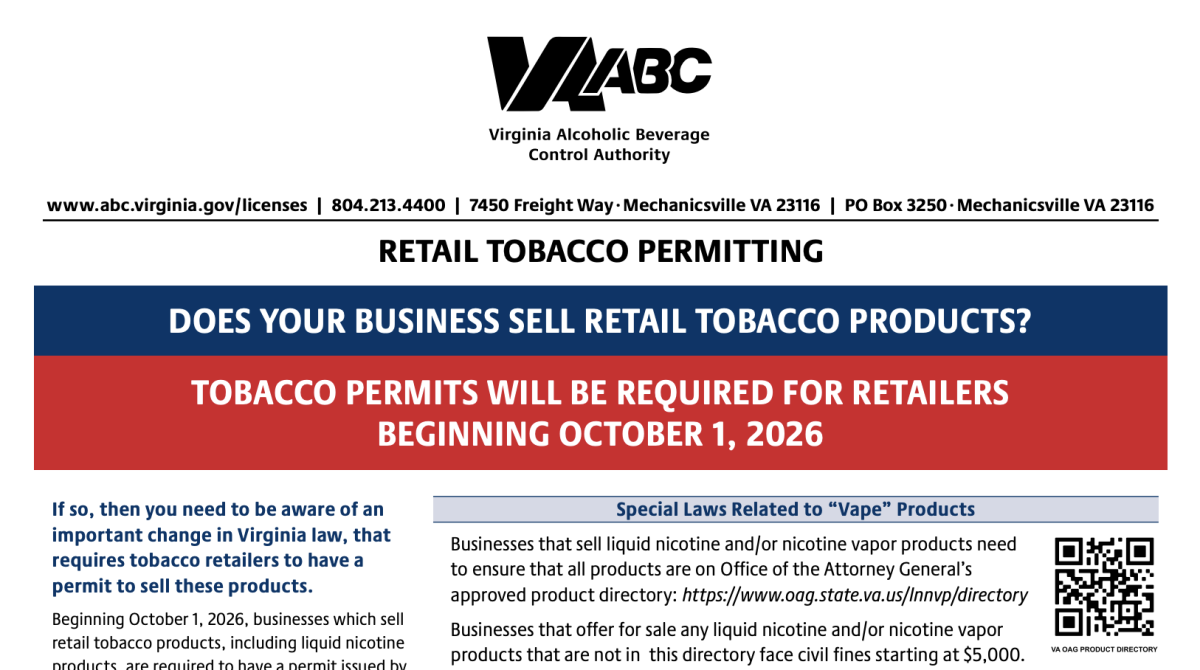
Virginia Tobacco Retail Permit Takes Effect October 1, Covering Vapes as More Than 3,000 Businesses Apply in September
Virginia's new retail tobacco permit system took effect October 1, requiring sellers of vapes, nicotine products and related devices and accessories to obtain a Retail Tobacco Permit for each business location. Virginia ABC said more than 3,000 businesses applied in September alone, creating a processing backlog. Qualifying applicants that filed before October 1 may temporarily operate under a Letter of Authorization. The new store-level permit also sits alongside Virginia's existing vape product directory, where sales of unlisted liquid nicotine or nicotine vapor products can trigger civil penalties starting at $5,000.
Regulations
Oct.03
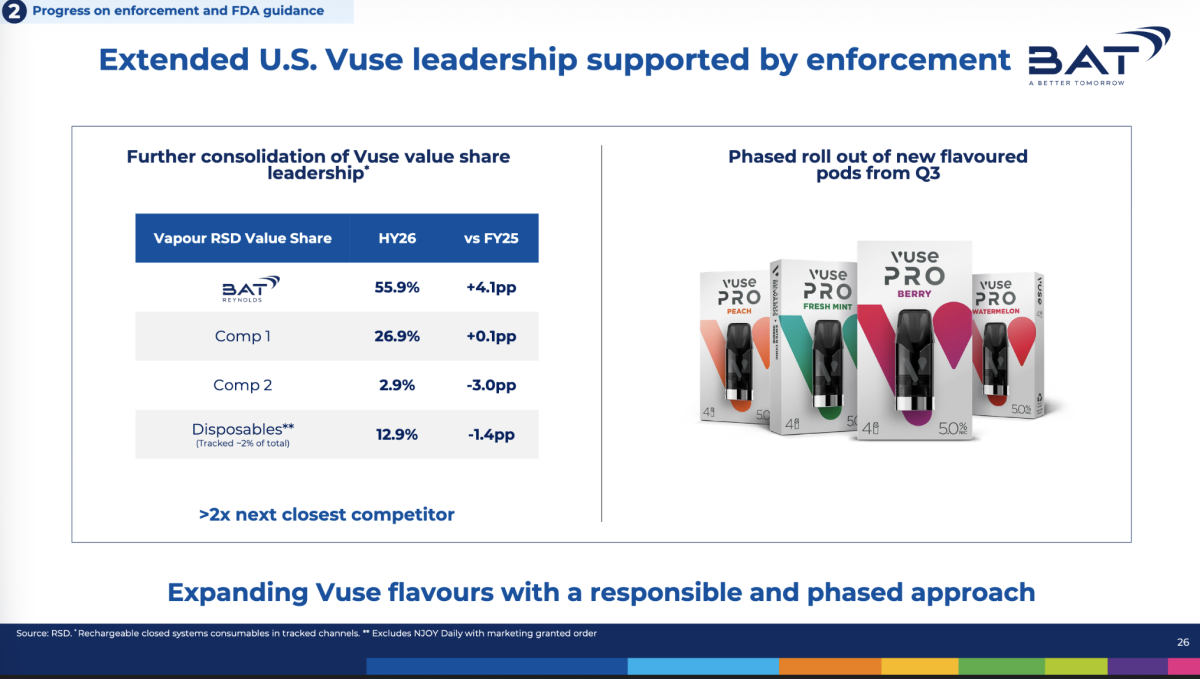
R.J. Reynolds Vapor Company Launches Flavored Vuse Pro Pods in U.S. Without FDA Marketing Authorization
R.J. Reynolds Vapor Company has begun selling four flavored Vuse Pro pods — Peach, Berry, Watermelon and Fresh Mint — in Ohio and selected other U.S. markets. According to the Vuse U.S. FAQ, Vuse Pro contains approximately 5.0% nicotine by weight, and Vuse Pro pre-filled pods are intended for use with Vuse Alto devices. Reynolds told 2Firsts that product labeling lists an e-liquid capacity of 2.0 mL per pod. The Vuse Alto Power Unit received FDA marketing authorization in 2024, while the new Vuse Pro pods themselves have not received marketing granted orders. The rollout follows the FDA’s May 2026 revision of enforcement priorities for certain unauthorized vaping products with qualifying pending applications.
BAT
Sep.10
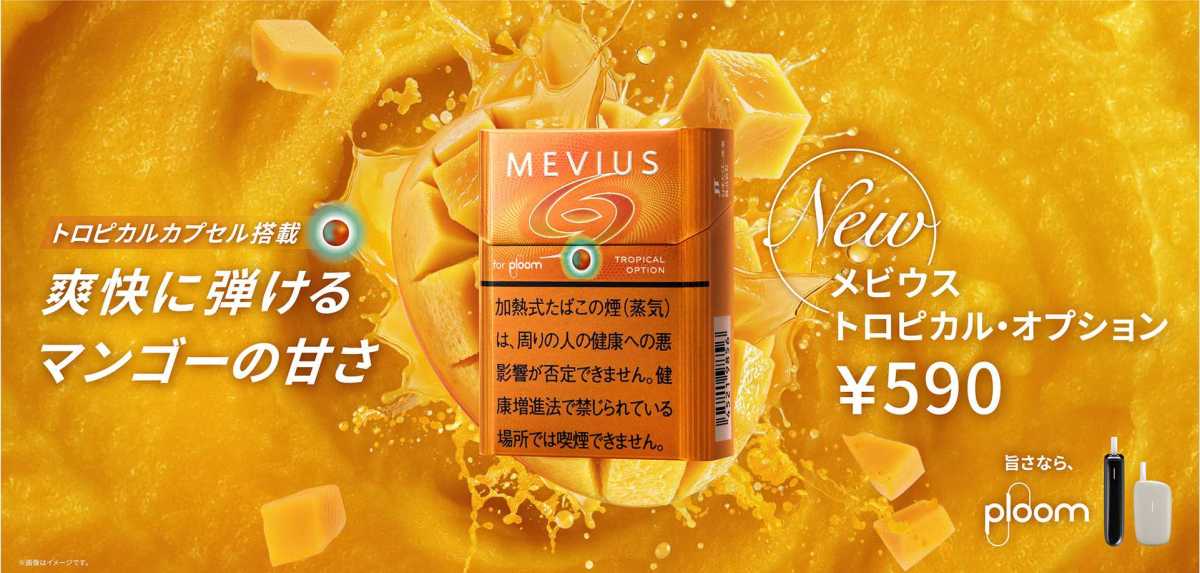
Product | JT to Launch MEVIUS Tropical Option in Japan, Expanding Ploom Tobacco Stick Lineup to 32
Japan Tobacco (JT) will launch MEVIUS Tropical Option, a new tobacco stick for Ploom, nationwide in Japan from October 6, 2026. The capsule-format product combines mango-oriented sweetness with menthol cooling, adding a tropical flavor to the MEVIUS Ploom tobacco-stick lineup for the first time. Each pack contains 20 sticks and will launch at JPY 590. The product is compatible with all Ploom devices, and its addition will expand the Ploom tobacco-stick portfolio to 32 variants.
Sep.08
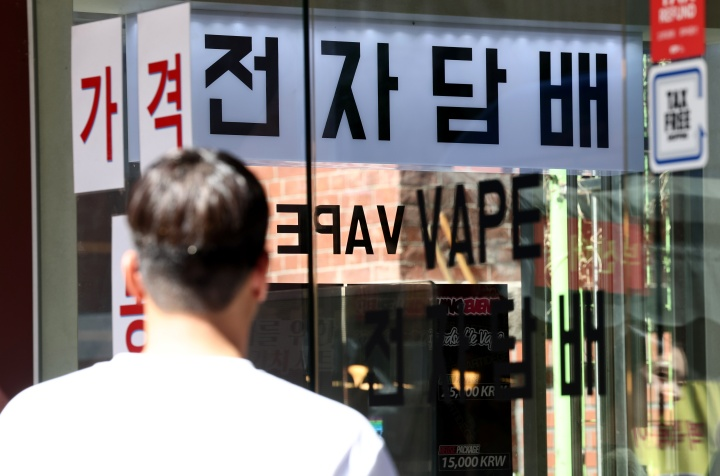
South Korea Extends Vape Rules to Unmanned Stores After Bringing Synthetic Nicotine Under Tobacco Law
South Korea's Ministry of Gender Equality and Family said on September 14 that it plans to designate unmanned e-cigarette stores as businesses where minors are prohibited from entering or working. Operators would be required to verify customers' ages and display notices restricting access by minors. The proposal is open for public comment through October 6. The move follows an April expansion of South Korea's statutory tobacco definition that brought products made with natural or synthetic nicotine under the Tobacco Business Act. Nicotine-free liquids and products using nicotine analogues such as 6-methylnicotine, however, remain an emerging regulatory issue.
Sep.21