Heaven Gifts Releases Whitepaper: More than 30 Million Users in over 100 Markets

Business by 2FIRSTS.ai
Mar.20.2024
Heaven Gifts Releases Whitepaper: More than 30 Million Users in over 100 Markets
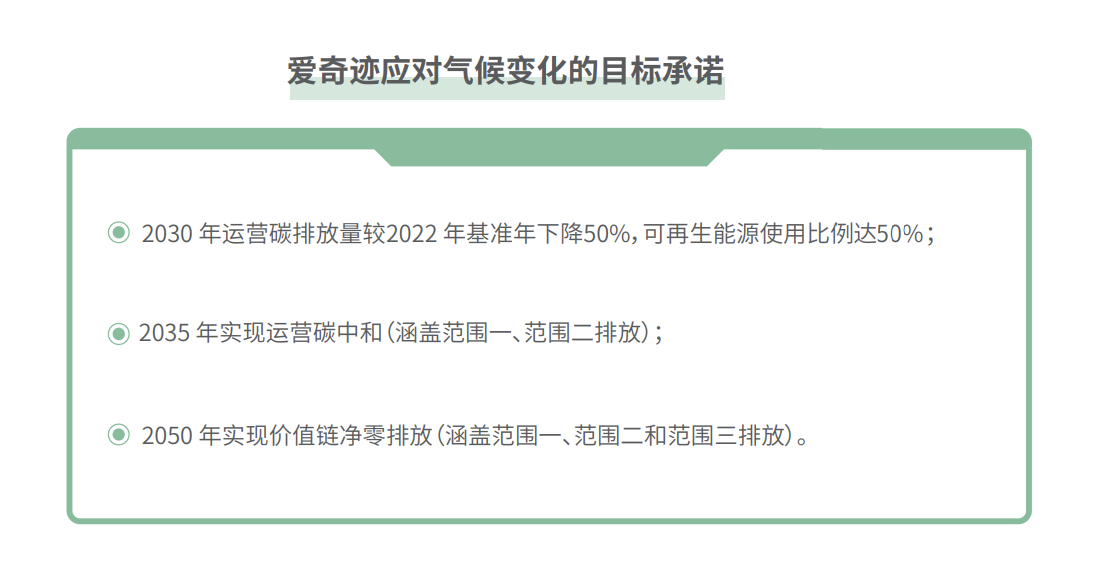
Heaven Gifts unveils climate change white paper, committing to carbon neutrality in 2035 and net zero emissions by 2050.

On March 20, Heaven Gifts released a White Paper on its official website, detailing the company's thoughts on addressing climate change, carbon emission baseline, and goals.
Heaven Gifts Releases Whitepaper: More than 30 Million Users in over 100 Markets
Image source: Heaven Gifts


The White Paper mentions that Heaven Gifts operates in over 100 markets worldwide, serving more than 30 million users. The company has local offices in China, Hong Kong, United Arab Emirates, United Kingdom, France, Germany, Italy, Malaysia, Indonesia, and other locations.


In the White Paper, Heaven Gifts claimed to have completed its first carbon assessment of the company's entire value chain business activities and pledged to achieve operational carbon neutrality by 2035 and net zero emissions in the value chain by 2050.


Heaven Gifts has announced that the company has successfully started using sea freight for transporting some materials in its logistics operations. Additionally, the company plans to implement measures such as reducing weight and using low-carbon materials as replacements to optimize product design and packaging in order to reduce carbon emissions.


We welcome news tips, article submissions, interview requests, or comments on this piece.

Please contact us at info@2firsts.com, or reach out to Alan Zhao, CEO of 2Firsts, on LinkedIn


Notice

1.  This article is intended solely for professional research purposes related to industry, technology, and policy. Any references to brands or products are made purely for objective description and do not constitute any form of endorsement, recommendation, or promotion by 2Firsts.

2.  The use of nicotine-containing products — including, but not limited to, cigarettes, e-cigarettes, nicotine pouchand heated tobacco products — carries significant health risks. Users are responsible for complying with all applicable laws and regulations in their respective jurisdictions.

3.  This article is not intended to serve as the basis for any investment decisions or financial advice. 2Firsts assumes no direct or indirect liability for any inaccuracies or errors in the content.

4.  Access to this article is strictly prohibited for individuals below the legal age in their jurisdiction.


Copyright


This article is either an original work created by 2Firsts or a reproduction from third-party sources with proper attribution. All copyrights and usage rights belong to 2Firsts or the original content provider. Unauthorized reproduction, distribution, or any other form of unauthorized use by any individual or organization is strictly prohibited. Violators will be held legally accountable.

For copyright-related inquiries, please contact: info@2firsts.com


AI Assistance Disclaimer


This article may have been enhanced using AI tools to improve translation and editorial efficiency. However, due to technical limitations, inaccuracies may occur. Readers are encouraged to refer to the cited sources for the most accurate information.

We welcome any corrections or feedback. Please contact us at: info@2firsts.com

Rethinking Nicotine Harm Reduction: A Neuroscientist’s Perspective on Scientific Gaps and Future Directions — By Dr. Xin-an Liu
After France’s ANSES report on nicotine products and harm reduction, Dr. Xin-an Liu wrote to 2Firsts reassessing the field’s foundations. She argues the debate reveals gaps in evidence on long-term behavioral substitution, addiction pathways and neurobiological impacts, and calls for longitudinal research, integrated behavioral science and neuroimaging, clearer risk assessment and stronger transparency to ensure policy and next-generation product development rest on solid evidence.
Industry Insight
Feb.24
China Tobacco International (HK) Announces FY2025 Results: Revenue Reaches HK$14.58 Billion, Up 11.5% Year-on-Year
China Tobacco International (HK) Company Limited announced its audited results for the year ended December 31, 2025. Revenue was HK$14.58 billion, profit before taxation was HK$1.28 billion, and profit attributable to owners of the Company was HK$0.98 billion, with basic and diluted EPS of HK$1.42. The Board proposed a final dividend of HK$0.33 per share; together with an interim dividend of HK$0.19 per share, the full-year dividend totaled HK$0.52 per share.
Mar.06 by 2FIRSTS.ai
Philippines DOH reiterates: vaping is not safer than smoking, citing irreversible health risks
The Philippine Department of Health reiterated Saturday that vaping should not be promoted as an alternative to cigarette smoking, Health Secretary Teodoro “Ted” Herbosa said in a radio interview, according to the Tribune. Herbosa said both vaping and smoking pose irreversible health risks and cited E-cigarette or Vaping Product Use-Associated Lung Injury (EVALI), claiming it led to the death of a 22-year-old male with no smoking history in 2025.
Feb.28 by 2FIRSTS.ai
European survey: current e-cigarette use among 15–19-year-olds rises from 14% (2019) to 22% (2024)
A European study cited in the report says the share of young people aged 15 to 19 who are current e-cigarette users increased from 14% in 2019 to 22% in 2024, with Italy reflecting the broader European pattern. Over the same period, conventional cigarette smoking among young people is described as declining, with the proportion of students who have smoked at least once in their lifetime falling sharply from 1995 to 2024, and the largest drop occurring between 2019 and 2024.
Feb.12 by 2FIRSTS.ai
Singapore detected 59 large-scale vape smuggling cases in 2025, seizing about 230,000 items
Singapore’s Ministry of Health said on Feb. 3 that authorities detected 59 large-scale vape smuggling cases in 2025 and seized about 230,000 vapes and accessories. Over the past two years, more than 10,000 online vape sale advertisements were removed, with about 99% linked to overseas platform posts. Enforcement includes bot-driven surveillance, public tip-offs, and site-blocking with partner agencies.
Feb.04 by 2FIRSTS.ai
Russia’s Duma Deputy Speaker Davankov calls for a total vape ban, citing drug sales disguised as vapes
Vladislav Davankov, deputy speaker of Russia’s State Duma, urged a nationwide ban on vapes, arguing it would help prevent drugs being sold under the cover of vaping products, including near schools. The remarks come as Russia prepares to enforce a separate ban on vape sales at public transport stops starting Sept. 1, 2026.
Feb.09 by 2FIRSTS.ai