Idaho Schools Funded for E-Cigarette Detector Program

Regulations by 2FIRSTS.ai
Apr.19.2024
Idaho Schools Funded for E-Cigarette Detector Program
Idaho school districts and charter schools to receive funding for e-cigarette detectors in popular areas like bathrooms and locker rooms.

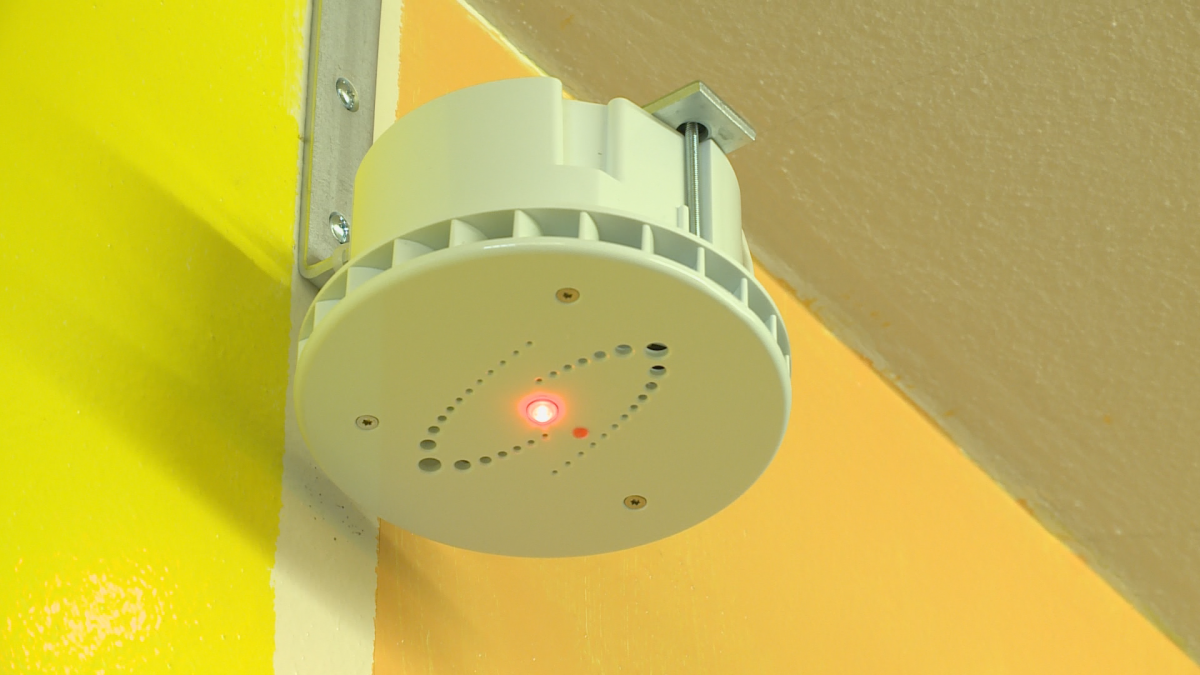
According to KTVB on April 18, 31 school districts and charter schools in Idaho will receive funding for a program that tests and detects e-cigarettes. These detectors will be installed in popular areas for e-cigarette use, such as bathrooms and locker rooms.


According to a press release from the Idaho Department of Education (IDE), the funding is provided by the Idaho Millennium Fund and managed by IDE.


Currently, there are 59 applicants who meet the funding criteria, with a total of 31 local educational institutions ultimately receiving the funds.


We welcome news tips, article submissions, interview requests, or comments on this piece.

Please contact us at info@2firsts.com, or reach out to Alan Zhao, CEO of 2Firsts, on LinkedIn


Notice

1.  This article is intended solely for professional research purposes related to industry, technology, and policy. Any references to brands or products are made purely for objective description and do not constitute any form of endorsement, recommendation, or promotion by 2Firsts.

2.  The use of nicotine-containing products — including, but not limited to, cigarettes, e-cigarettes, nicotine pouchand heated tobacco products — carries significant health risks. Users are responsible for complying with all applicable laws and regulations in their respective jurisdictions.

3.  This article is not intended to serve as the basis for any investment decisions or financial advice. 2Firsts assumes no direct or indirect liability for any inaccuracies or errors in the content.

4.  Access to this article is strictly prohibited for individuals below the legal age in their jurisdiction.


Copyright


This article is either an original work created by 2Firsts or a reproduction from third-party sources with proper attribution. All copyrights and usage rights belong to 2Firsts or the original content provider. Unauthorized reproduction, distribution, or any other form of unauthorized use by any individual or organization is strictly prohibited. Violators will be held legally accountable.

For copyright-related inquiries, please contact: info@2firsts.com


AI Assistance Disclaimer


This article may have been enhanced using AI tools to improve translation and editorial efficiency. However, due to technical limitations, inaccuracies may occur. Readers are encouraged to refer to the cited sources for the most accurate information.

We welcome any corrections or feedback. Please contact us at: info@2firsts.com

WSJ: White House Pushes for More Flavored Vape Approvals as FDA Commissioner Makary Blocks Move
According to The Wall Street Journal, the White House is pushing to allow more flavored vape products onto the market for the first time in years, but FDA Commissioner Marty Makary opposes the move and has blocked the plan. The report said a memo from Makary’s office prevented authorization of several flavors from vape maker Glas, even after FDA scientific reviewers had supported them.
Apr.20 by 2FIRSTS.ai
PMI’s Smoke-Free Business Accounts for 43% of Net Revenues in Q1 as Full-Year EPS Guidance Rises
On April 22, 2026, Philip Morris International released its first-quarter 2026 results. The report showed net revenues of $10.146 billion, up 9.1% year on year; adjusted diluted EPS of $1.96, up 16.0%; and smoke-free products accounting for 43% of total net revenues. Based on first-quarter performance, the company raised its 2026 full-year adjusted diluted EPS forecast to $8.36 to $8.51, or $8.11 to $8.26 excluding currency.
Apr.23 by 2FIRSTS.ai
China Tobacco Yunnan Patent Describes Cigar Flavor Granules With Encapsulation Rate Above 77%
According to public records from China’s National Intellectual Property Administration, a patent application filed by China Tobacco Yunnan Industrial Co., Ltd. for “cigar flavor granules” was published on May 12, 2026. The filing proposes purifying an ethanol extract of cigar tobacco leaves using LX-8 macroporous resin, followed by encapsulation with maltodextrin and sucrose fatty acid ester to improve smoking comfort, reduce dryness and enhance aroma release stability in reconstituted tobacco.
Jun.10
 FDA Begins Review of 22nd Century’s VLN MRTP Renewal Applications
FDA Begins Review of 22nd Century’s VLN MRTP Renewal Applications
The U.S. Food and Drug Administration (FDA) has initiated scientific review of renewal applications for 22nd Century Group’s VLN reduced-nicotine cigarettes under the Modified Risk Tobacco Product (MRTP) pathway, with current authorizations set to expire in December 2026.
News
May.13
CBP and FDA Seize 18 Million Illegal Vapes Worth $175 Million in Maritime Cargo Operation
U.S. Customs and Border Protection (CBP) announced that more than 18 million illegal e-cigarettes valued at over $175 million were seized during “Operation Red Mist,” a joint enforcement initiative involving the U.S. Coast Guard and the FDA. The operation primarily targeted maritime vape shipments originating from China and focused on combating illicit importation, transportation, and distribution activities.
Regulations
May.14
Nicotine Beyond Tobacco? Cell Study Signals Emerging Shift in Production Systems
Researchers at the Chinese Academy of Sciences reconstructed nicotine biosynthesis in non-tobacco plants and yeast systems, highlighting how advances in synthetic biology could gradually reshape future nicotine production technologies and challenge regulatory frameworks built around tobacco-derived definitions.
Special Report
May.07