Special statement:
This article is intended for internal research and exchange within the industry, and does not make any brand or product recommendations. Minors are prohibited from accessing it.
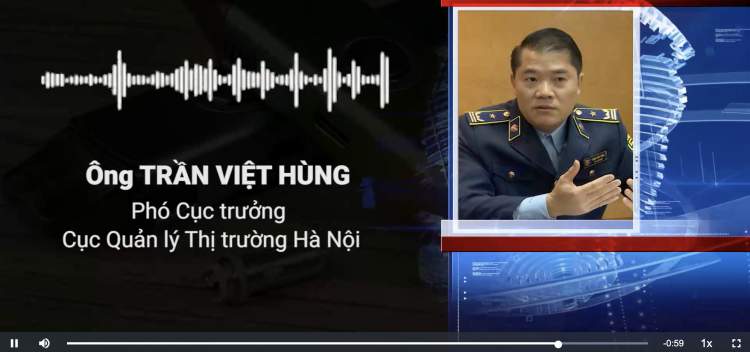
On June 5th, the Vietnamese Labor newspaper released a video report titled "Electronic Cigarettes and Counterfeit Products Sold in Schools". According to the report, despite Vietnam's ban on electronic cigarette products, smuggled e-cigarettes are being disguised as fun toys and sold in shops near schools.
2FIRSTS discovered through its video that in addition to some attractive "disguised" electronic cigarettes, there are also "normal" packaged electronic cigarette products, including products with the RELX, SMOK, aspire, OXVA and other brand names printed on the packaging.
In the video, an exquisite and adorable packaged electronic cigarette product is seen. Source: Vietnamese Labor Newspaper.
The video features a line of attractively packaged and adorable e-cigarette products. Image source: Vietnam's "Labor Newspaper".
The products and display cases marked with the "RELX Yueke" logo featured in the video | Image source: Vietnamese Labor newspaper.
The video depicted products labeled with "OXVA" and display cabinets or counters featuring drawings labeled with "aspire" | Image source: Vietnamese Labor Newspaper.
The promotional guide featuring the "OXVA" logo seen in the video | Image source: Vietnam Labor Newspaper
In the video, employees wearing T-shirts with the word "SMOK" are seen cooperating with law enforcement personnel. | Image source: Vietnamese "Labor Newspaper".
The video showcases a product box with the "aspire" name and a vaping product as seen in the photo source from the Vietnamese publication "Labor News".
Related Policy:
The Vietnamese government has not given new tobacco products legal status under the law. According to the tobacco control law currently in place in Vietnam - the Tobacco Harm Prevention and Control Law (published in 2021), tobacco is defined as products made entirely or partially of tobacco ingredients, including cigarettes, cigars, tobacco, pipes, or other forms. The law specifies that tobacco use refers to smoking, chewing, sniffing, inhaling, or sucking tobacco products, but it is not clear whether this provision includes e-cigarettes.
However, the business practices of the new generation tobacco companies are categorized as smuggling in Vietnam, as they do not possess the necessary permits to operate. Therefore, selling these products in the market is in violation of Vietnam's Anti-Smuggling Law.
Disclaimer
This article is provided solely for professional research, industry discussion, and informational purposes. Any references to brands, companies, products, technologies, or policies are made for factual reporting and analytical purposes only, and do not constitute endorsement, recommendation, promotion, or advertising by 2Firsts.
Nicotine-containing products, including but not limited to cigarettes, e-cigarettes, heated tobacco products, and nicotine pouches, carry significant health risks. Readers are responsible for complying with all applicable laws and regulations in their respective jurisdictions, including age restrictions and access limitations.
The information contained in this article should not be regarded as investment, legal, medical, regulatory, or commercial advice. While 2Firsts strives to ensure the accuracy and reliability of its content, it does not assume liability for any direct or indirect loss arising from errors, omissions, inaccuracies, or reliance on the information contained herein.
This article is not intended for individuals below the legal age for accessing tobacco or nicotine-related information in their jurisdiction.
Copyright Notice
This article is either original content produced by 2Firsts or content reproduced, translated, summarized, or adapted from third-party sources with attribution where applicable. The intellectual property rights of the original content remain with 2Firsts or the respective original rights holders.
No individual or organization may copy, reproduce, distribute, republish, modify, translate, or otherwise use this content without prior authorization. Any unauthorized use may result in legal action.
For copyright-related inquiries, corrections, or removal requests, please contact: info@2firsts.com.
AI-Assisted Translation and Editing Notice
Portions of this article may have been translated, edited, or reviewed with the assistance of artificial intelligence tools to improve efficiency and readability. Due to the limitations of AI-assisted translation and editing, discrepancies, omissions, or inaccuracies may exist when compared with the original source.
Where applicable, readers are advised to refer to the original source for the most complete and accurate information. If you identify any errors or believe that any content infringes upon your rights, please contact us at info@2firsts.com, and we will review and address the matter promptly.