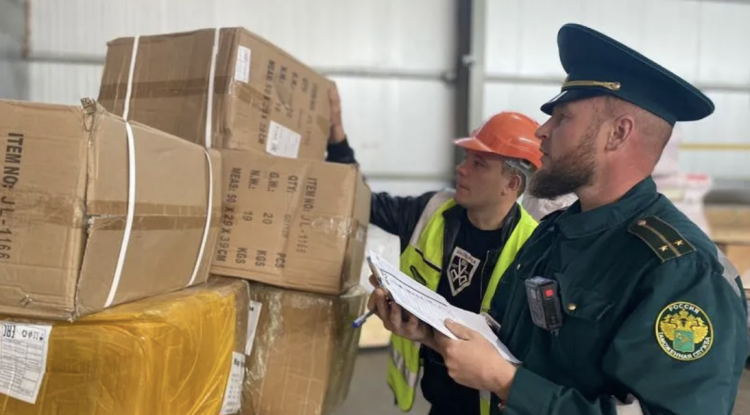
A report from the website "Stop Illegal Tobacco" reveals that during a raid in the Krasnodar Territory, the Krasnodar Customs and FSB discovered an underground counterfeit tobacco factory. Law enforcement found a production line, a tobacco raw material stockpile, and a finished product warehouse. Preliminary estimates suggest that the cost of the illegal cigarettes uncovered during the investigation alone exceeded 11 million rubles (approximately 1.3 million RMB), not including the cost of raw materials and production equipment.
According to a source familiar with the activities of the security forces, a workshop containing a cigarette production line, several tons of tobacco raw materials, and more than 10 packages of counterfeit cigarettes ready for transport was discovered in the Krasnodar border region of Leningrad.
This underground factory specializes in producing tobacco brands that have not been officially manufactured in Russia, such as Родопи, Опал, ВТ, "Silver," "Ростовтабак," and other illegal tobacco products.
The official websites of the Krasnodar Customs and the Southern Customs Management, including the Krasnodar Customs, did not provide any official information about the raid on their website "Stop Illegal Tobacco".
Cigarette cutaway image source: MKRU" (This is already in standard journalistic English.)
According to the National Science Capability Center (NCC), the Southern Federal District has seen the highest increase in illegal tobacco market share in the Russian Federation. This year, the illegal cigarette turnover in the Southern Federal District increased to 19.4%, up from 18.9% in 2021, which caused damage of 12.8 billion rubles to the federal budget. On average, the proportion of illegal cigarettes in Russia increased to 12.1% in 2022, with an estimated quantity of 1.3 billion packs, according to experts. In the Krasnodar Territory, the proportion of illegal tobacco turnover this year was 14.4%, compared to 10.4% last year.
This action is an example of effective collaboration between law enforcement agencies to combat the illegal trade of tobacco products. With the growing illegal market in southern Russia and throughout the country, it is necessary to strengthen cooperation between law enforcement departments. Furthermore, efforts must be made to encourage regions to crack down on illegal tobacco trafficking and improve regulatory frameworks to enhance the capacity of law enforcement and oversight agencies.
For years, the federal committee, accounting department, and department of industry and trade have been urging governors to combat illegal financial gain from the sale of tobacco products. The more effective the crackdown on illegal trafficking in specific areas, the more funds will be transferred to regional budgets from the consumption tax revenues. An effective market administration will provide additional income to different regions and prevent a shortage in the federal budget's consumption tax revenues. However, according to experts, significantly reducing the market share of the black market will require years of systematic and consistent work.
Statement:
This article is compiled from third-party information and is intended solely for industry professionals to exchange and learn from.
This article does not represent the views of 2FIRSTS, and 2FIRSTS cannot confirm the authenticity and accuracy of the article's contents. The translation of this article is only intended for industry-related exchange and research purposes.
Due to limitations in translation abilities, this article may not fully capture the original meaning of the text. Please refer to the original text for accuracy.
The stance and statements of 2FIRSTS align completely with the Chinese government on any domestic, Hong Kong, Macau, Taiwan, and foreign issues.
The copyright of the compiled information belongs to the original media and authors. If there is any infringement, please contact us to have it removed.
Disclaimer
This article is provided solely for professional research, industry discussion, and informational purposes. Any references to brands, companies, products, technologies, or policies are made for factual reporting and analytical purposes only, and do not constitute endorsement, recommendation, promotion, or advertising by 2Firsts.
Nicotine-containing products, including but not limited to cigarettes, e-cigarettes, heated tobacco products, and nicotine pouches, carry significant health risks. Readers are responsible for complying with all applicable laws and regulations in their respective jurisdictions, including age restrictions and access limitations.
The information contained in this article should not be regarded as investment, legal, medical, regulatory, or commercial advice. While 2Firsts strives to ensure the accuracy and reliability of its content, it does not assume liability for any direct or indirect loss arising from errors, omissions, inaccuracies, or reliance on the information contained herein.
This article is not intended for individuals below the legal age for accessing tobacco or nicotine-related information in their jurisdiction.
Copyright Notice
This article is either original content produced by 2Firsts or content reproduced, translated, summarized, or adapted from third-party sources with attribution where applicable. The intellectual property rights of the original content remain with 2Firsts or the respective original rights holders.
No individual or organization may copy, reproduce, distribute, republish, modify, translate, or otherwise use this content without prior authorization. Any unauthorized use may result in legal action.
For copyright-related inquiries, corrections, or removal requests, please contact: info@2firsts.com.
AI-Assisted Translation and Editing Notice
Portions of this article may have been translated, edited, or reviewed with the assistance of artificial intelligence tools to improve efficiency and readability. Due to the limitations of AI-assisted translation and editing, discrepancies, omissions, or inaccuracies may exist when compared with the original source.
Where applicable, readers are advised to refer to the original source for the most complete and accurate information. If you identify any errors or believe that any content infringes upon your rights, please contact us at info@2firsts.com, and we will review and address the matter promptly.