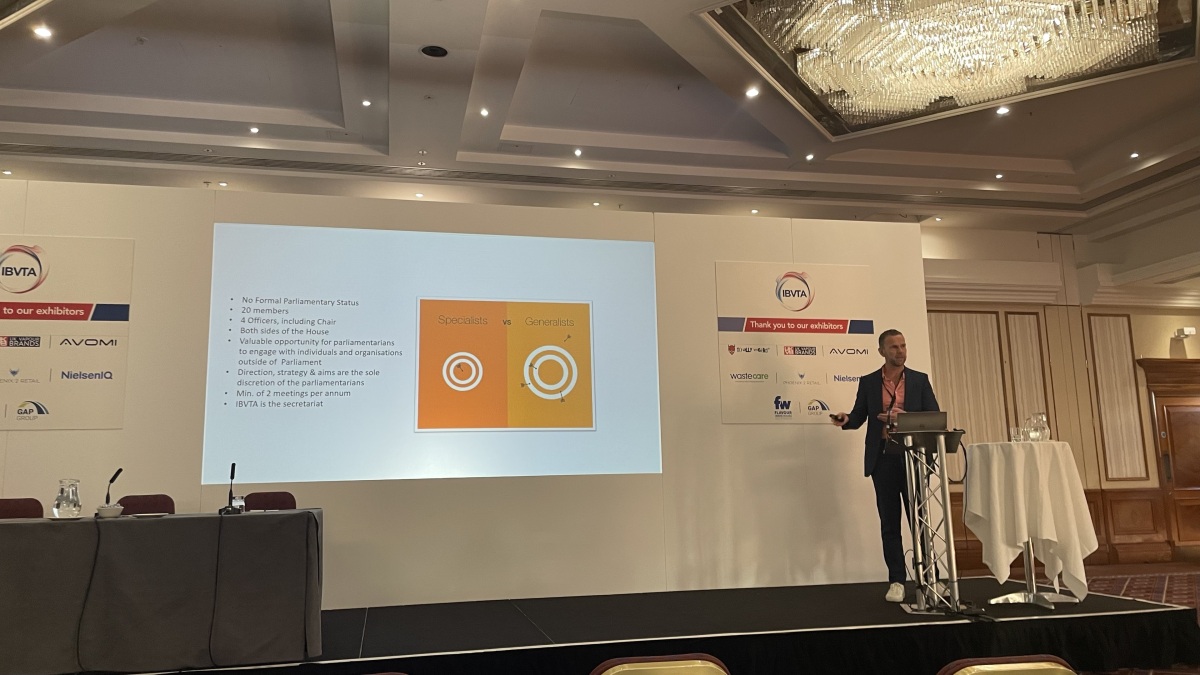
Marcus Saxton, Chairman of the Independent British Vape Trade Association (IBVTA), shared his insights on the current status, market trends, risks and future development challenges facing the e-cigarette industry in the UK at the IBVTA 24 Forum on 22 October. Saxton's comments came during a discussion with 2Firsts, the event's media partner.
While e-cigarettes are seen as safer, vape shop staff lack professional expertise
Marcus emphasised that the e-cigarette industry is providing a safer alternative for smokers, helping thousands of tobacco users to reduce or quit traditional cigarettes.
"The positive impact of the e-cigarette industry is clear, especially in helping smokers switch to safer alternatives," said Marcus.
In light of the current market environment in the UK, he pointed out that with the rapid growth of the industry, companies need to take greater responsibility for ensuring operational compliance and paying attention to the complexity of the market.
He called on all industry professionals to prioritise safety and responsibility in order to work together to ensure the sustainable development of the industry.
"The threat posed by compliance issues and illegal products requires a collective effort from our entire industry to ensure consumer safety," he said.
He explained the current structure of the e-cigarette market, highlighting the significant dominance of disposable e-cigarette products.
He pointed out that disposable e-cigarettes account for around 80% of the market share in supermarkets and convenience stores, but staff in these channels often lack expertise and are unable to provide adequate advice to consumers.
In contrast, specialised e-cigarette shops tend to sell rechargeable and reusable products, such as brands like Vaporesso and OXVA. These shops can provide consumers with more professional advice and after-sales support.
Over-innovation in products could pose risks, especially with loosely regulated nicotine pouches
The UK market is currently experiencing a surge in "innovative" e-cigarette products that use "2+10" and "N in 1" designs, add features such as screens to the packaging, and are sold to the market in compliance with the regulations.
Marcus emphasised the importance of innovation in the e-cigarette industry, but warned that excessive innovation could lead to unnecessary risks. For example, while some devices offer more powerful features (such as displays and high power output), these complex products may not be suitable for all consumers, especially those who are transitioning from disposable e-cigarettes to rechargeable devices.
He believes that overly complex features not only fail to meet the needs of the public, but can also attract excessive attention from regulators, which can have a negative impact on the industry. He therefore advocates that the industry should strike a balance between innovation and user experience, ensuring that products meet consumer demands without triggering regulatory issues.
Marcus believes that "innovation must therefore be balanced with user needs, rather than just pursuing technological breakthroughs".
Discussing emerging nicotine products such as nicotine pouches, Marcus said that these products have the potential to reduce health risks, but their regulation is far less stringent than that of e-cigarettes.
He called on the government to speed up the regulation of these new products to ensure that their market growth is safe and orderly. He also pointed out that while nicotine pouches do not pose a direct threat to the e-cigarette industry, they may provide an alternative choice for consumers who are not comfortable using e-cigarettes, such as in public places or on flights.
Dual challenges: Intense market competition and regulatory pressure
Marcus believes that market competition and regulatory pressure are the two biggest challenges currently facing the e-cigarette industry.
While competition has driven down prices and spurred innovation, it has also led some companies to overlook compliance in their rush to gain market share, even cutting corners on product safety standards. In particular, he noted that companies must follow legal market access procedures when entering the market and ensure that wholesalers and importers fulfil their responsibilities to ensure that products sold to consumers are safe.
Marcus expressed strong concerns about illegal products, particularly non-compliant e-cigarettes.
He pointed out that despite strict regulation of e-cigarette products in the UK, there are still many non-compliant products entering the market through illegal channels, threatening the survival of legitimate businesses. He called for further efforts to crack down on these products to ensure fairness and compliance in the market.
Establishing a consulting committee is a positive move.
Recently in the UK market, LostMary and ELFBAR set up an advisory board, and Marcus shared his insights on this development.
He mentioned that establishing a consulting committee is a positive initiative. This committee should consist of experts with specialized knowledge and independent opinions, who can provide objective information and guidance for the industry. This will not only help the industry develop in a more regulated manner but also keep companies on the right track.
He pointed out that IBVTA serves as a bridge between the industry and policymakers. One of the association’s goals is to gather accurate information and facilitate dialogue between manufacturers and regulators to ensure the best outcomes.
This process should not only consider the growth of the industry but also address any accompanying negative issues. He explained that many trusted relationships within the industry are built through years of cooperation, and IBVTA will continue to play a role in supporting responsible, independent businesses to help them maintain control and compliance in a competitive market.
He specifically highlighted that the involvement of expert scholars is crucial for the positive development of the industry. IBVTA will continue to encourage experts to offer independent insights and help identify and address key issues the industry faces. Through such collaboration, the industry can better meet challenges and drive positive outcomes.
Marcus also mentioned that IBVTA recently supported the All-Party Parliamentary Group (APPG) in the UK Parliament. 2Firsts previously learned that this group will continue to advocate on vaping-related issues in Parliament and has launched an inquiry into the role of vaping in the UK. He noted that the APPG’s public inquiry is expected to conclude by the end of this month.
Marcus expressed his continued optimism about the future of vaping in the UK, with regulations expected to further promote industry compliance and progress.
We welcome news tips, article submissions, interview requests, or comments on this piece.
Please contact us at info@2firsts.com, or reach out to Alan Zhao, CEO of 2Firsts, on LinkedIn
Notice
1. This article is intended solely for professional research purposes related to industry, technology, and policy. Any references to brands or products are made purely for objective description and do not constitute any form of endorsement, recommendation, or promotion by 2Firsts.
2. The use of nicotine-containing products — including, but not limited to, cigarettes, e-cigarettes, nicotine pouchand heated tobacco products — carries significant health risks. Users are responsible for complying with all applicable laws and regulations in their respective jurisdictions.
3. This article is not intended to serve as the basis for any investment decisions or financial advice. 2Firsts assumes no direct or indirect liability for any inaccuracies or errors in the content.
4. Access to this article is strictly prohibited for individuals below the legal age in their jurisdiction.
Copyright
This article is either an original work created by 2Firsts or a reproduction from third-party sources with proper attribution. All copyrights and usage rights belong to 2Firsts or the original content provider. Unauthorized reproduction, distribution, or any other form of unauthorized use by any individual or organization is strictly prohibited. Violators will be held legally accountable.
For copyright-related inquiries, please contact: info@2firsts.com
AI Assistance Disclaimer
This article may have been enhanced using AI tools to improve translation and editorial efficiency. However, due to technical limitations, inaccuracies may occur. Readers are encouraged to refer to the cited sources for the most accurate information.
We welcome any corrections or feedback. Please contact us at: info@2firsts.com