Interview with IJOY: The Spanish Vaping Market on a Decline, New Brands Struggle to Survive under TPD Regulations

Jun.04.2023
Interview with IJOY: The Spanish Vaping Market on a Decline, New Brands Struggle to Survive under TPD Regulations
Chinese e-cigarette companies entering Spanish market due to oversupply. However, regulations and market saturation limit growth.

Special announcement:

This article is for internal industry research and communication only and does not endorse any specific brand or product. Minors are prohibited from accessing it.


At 10:00 am on June 3rd, according to Madrid time (4:00 pm Beijing time), the Vapexpo, an electronic cigarette exhibition, was officially inaugurated at the Pabellón de Cristal exhibition center in Madrid, Spain.


Spain, located in southwestern Europe, lags behind countries such as the UK, France, and Germany in terms of electronic cigarette sales. According to data from statistics website Statista, the country's total revenue from electronic cigarettes is expected to reach $194.6 million by 2023. However, 2FIRSTS learned from a recent electronic cigarette trade show that an increasing number of Chinese electronic cigarette manufacturers have entered the Spanish market.


The electronic cigarette market in Spain has more supply than demand.


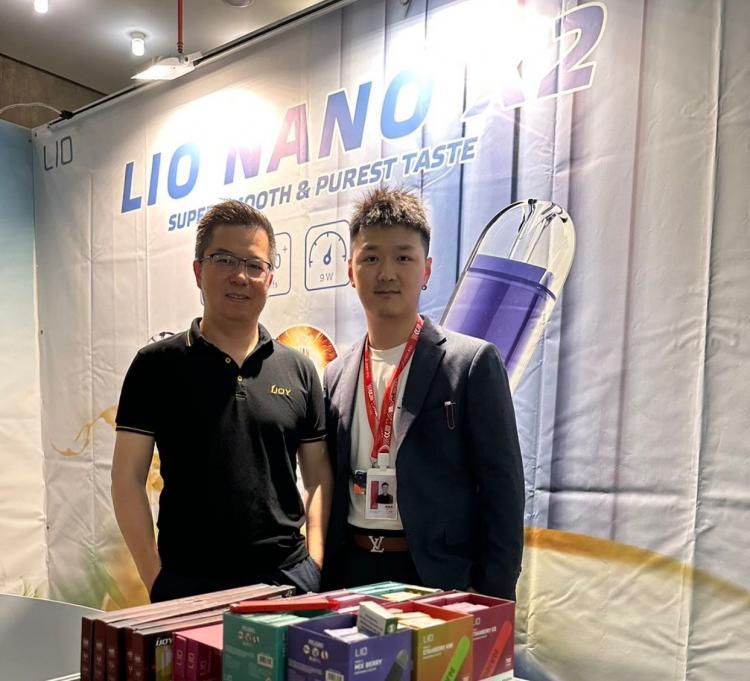
The head of IJOY's Netherlands branch, Zhu Zhihui, has stated that Spain will experience a boom in the electronic cigarette industry starting from July 2022. Zhu believes that new brands will enter the market and attempt to gain a competitive edge by lowering prices, in an effort to attract new users.


He said, "Nowadays, the competition in the Spanish market is not about a specific product or flavor.


Secondly, and most importantly, IJOY has chosen to establish its European subsidiary headquarters in the Netherlands due to the country's leading position in European logistics. Furthermore, there is currently an excess of e-cigarette inventory in the market compared to the demand.


Zhu Zhihui stated:


Absolute supply exceeds demand.


In order to expand their markets, many electronic cigarette brands have resorted to risky tactics in Spain, evading regulations and even selling electronic cigarettes with a capacity of up to 8000 puffs to retailers.


According to regulations in Spain, the sale of e-cigarette products in the market is only allowed if their capacity is below 2ml (equivalent to approximately 600 puffs).


These actions have led to increased government regulation, with Spain introducing a series of policies to strengthen e-cigarette regulation starting from the end of 2022.


In reality, electronic cigarette vendors in Spain are not deliberately breaking the law by selling their products. The 600-puff limit allowed by the European Tobacco Products Directive (TPD) has discouraged consumers from purchasing compliant products and instead turned to buying illegal ones. With an oversaturated market, sellers have resorted to competing based on high quantities.


Indeed, this is a reflection of market demand. Consumers have little interest in the 600 product.


The market is declining.


According to Zhu Zhihui, the electronic cigarette market in Spain is declining. Under restrictive regulations, all manufacturers are competing within a limited range of 600 units, with price being the sole determinant of market value.


He gave an example that, if a product were to be sold at a price of 1 yuan to the market, as long as someone helped him clear the stock, it would be fine. However, the cost of customs clearance and logistics would already be between 0.3-0.4 euros.


I too can create a brand, and I can even abandon my brand for someone else to take up.


Manufacturers are struggling to maintain profit margins in the face of high costs and fierce price competition. When introducing new products, they are immediately met with competition from similar companies. As a variety of products flood the market, lesser-known small and medium-sized brands lack the recognition to establish dominance, ultimately leading to a lack of visibility for new products in the market.


Zhu Zhihui said to 2FIRSTS:


Currently, it is actually quite difficult to launch new products.


He and his team participated in the Madrid Electronic Cigarette Exhibition in Spain with the aim of expanding their customer base and increasing brand recognition.


2FIRSTS will continue to report on the latest developments from the exhibition. Stay tuned for updates.


Background:


On May 15th, 2FIRSTS and VAPEXPO SPAIN announced a partnership as media collaborators aimed at promoting the development and exchange of the global electronic cigarette industry.


Vapexpo Spain is the largest and most important exhibition for the vaping industry in Spain, bringing together manufacturers, suppliers, retailers, and industry experts from around the world. As a global technology media and think tank, 2FIRSTS shines a spotlight on hot topics and trends in the global vaping market, dedicated to promoting information and communication in the global e-cigarette industry and leveraging media influence to support the development of the vaping industry worldwide.


*This article is an original article of 2FIRSTS Technology Co., Ltd. The copyright and license rights belong to the company. Any entity or individual shall make link and credit 2FIRSTS when taking actions to copy, reprint or distribute the original article. The company retains the right to pursue its legal responsibility.

Product | Philip Morris Korea Launches TEREA Limona Pearl, Expanding Fresh Blend Capsule Lineup to Five
Philip Morris Korea launched TEREA Limona Pearl in South Korea on August 31, 2026, expanding the TEREA Fresh Blend capsule tobacco stick lineup from four variants to five. Designed for the IQOS ILUMA series, the new stick combines a capsule with what the company calls a Fresh Filter. Philip Morris Korea describes the product as offering an aromatic, refreshing flavor profile with a cooling sensation, with an additional fresh note released when the capsule is crushed. The recommended retail price is KRW 4,800 per pack, with sales through IQOS stores and convenience stores nationwide. No reliable evidence has been found that the same Limona Pearl SKU was previously officially launched in another major IQOS market.
Sep.01
Charlie’s Says 30 PACHA Vape SKUs Tentatively Identified for FDA’s Non-Priority Enforcement Public List
Charlie’s Holdings said the U.S. Food and Drug Administration notified the company on June 23, 2026, that 30 PACHA vape SKUs with submitted PMTAs had been tentatively identified for inclusion on a planned public-facing FDA webpage. Under enforcement guidance issued by FDA in May, the webpage is intended to identify certain unauthorized products for which the agency generally does not intend to prioritize enforcement of premarket authorization requirements. Charlie’s disclosed the development alongside second-quarter revenue of $3.8 million, up 116% year over year.
Aug.25
Earnings Analysis | CTIHK H1 2026 Revenue Falls 26.9% as Core Businesses Diverge and New Growth Drivers Remain to Be Proven
China Tobacco International (HK) reported a 26.9% revenue decline in H1 2026, while gross profit fell only 9.5%, revealing sharp divergence across its businesses. Tobacco leaf imports contracted, while leaf exports and Brazil operations expanded strongly. Cigarette exports faced China duty-free market transition, and new tobacco products remained small. Meanwhile, CTIHK continues to strengthen its role as an investment and financing platform, though major external deals have yet to emerge. 2Firsts examines what these shifts mean for its next growth drivers.
Capital Markets
Aug.24
PMI Global R&D Chief Meets Chinese Tobacco Regulator as China Advances Heated Cigarette Standards
Philip Morris International’s global R&D chief Michele Cattoni met Liu Sanjiang, deputy director of China’s State Tobacco Monopoly Administration, in Beijing on Aug. 27. The meeting comes as China advances mandatory standards for heated cigarettes and nicotine pouches, laying groundwork for their domestic introduction. Cattoni has held senior roles in PMI’s heated tobacco development, while China’s draft standard covers multiple heating architectures, including systems similar in principle to PMI’s IQOS ILUMA technology.
Aug.27
Malaysia Withdraws Appeal Against Liquid Nicotine Ruling as Vape Regulation Framework Enters New Phase
Malaysia’s government has withdrawn its appeal against a High Court ruling concerning the regulatory status of liquid nicotine used in vape and e-cigarette products, according to reports by New Straits Times, Free Malaysia Today and CodeBlue on August 18, 2026. The Kuala Lumpur High Court ruled on May 15 that the government’s decision to remove liquid nicotine from the scheduled poisons list under the Poisons Act 1952 was irrational and made without proper consultation with the Poisons Board. The withdrawal ends the government’s appeal process, while the future regulatory framework for nicotine vape products remains under discussion.
Aug.21
China Tobacco Hubei explores staged nicotine pouch delivery, using dynamic membranes to slow early release and gradient particles to sustain later delivery
China Tobacco Hubei Industrial Co., Ltd. disclosed several oral nicotine-related patent applications in August 2026, including two that approach staged nicotine release from different directions. One uses a high-viscosity membrane that forms inside the pouch after contact with saliva to slow rapid early release, while the other uses gradient particles with a faster-disintegrating outer layer and a slower core to create a fast-to-sustained release profile. Together, the filings explore how nicotine pouches could balance initial delivery with release later in use.
Sep.03