Investors Inquire about Jinjia's Plan for Domestic E-cigarette Sales

Business by 2FIRSTS.ai
May.15.2024
Investors Inquire about Jinjia's Plan for Domestic E-cigarette Sales
Investors inquire about Jinjia (002191) applying to sell its own e-cigarette brand domestically this year, company plans overseas sales.

Recently, investors inquired on the investor interaction platform about whether Jinjia Group (002191) has plans to reapply for domestic sales of its own e-cigarette brand this year.

Investors Inquire about Jinjia's Plan for Domestic E-cigarette Sales
Question and Answer | Image source: Interactive Easy


In response, Jingjia Corporation stated that, based on the relevant e-cigarette regulations in China and considering market conditions, the company's own brand of e-cigarette products are not sold domestically and are primarily marketed towards overseas regions.


We welcome news tips, article submissions, interview requests, or comments on this piece.

Please contact us at info@2firsts.com, or reach out to Alan Zhao, CEO of 2Firsts, on LinkedIn


Notice

1.  This article is intended solely for professional research purposes related to industry, technology, and policy. Any references to brands or products are made purely for objective description and do not constitute any form of endorsement, recommendation, or promotion by 2Firsts.

2.  The use of nicotine-containing products — including, but not limited to, cigarettes, e-cigarettes, nicotine pouchand heated tobacco products — carries significant health risks. Users are responsible for complying with all applicable laws and regulations in their respective jurisdictions.

3.  This article is not intended to serve as the basis for any investment decisions or financial advice. 2Firsts assumes no direct or indirect liability for any inaccuracies or errors in the content.

4.  Access to this article is strictly prohibited for individuals below the legal age in their jurisdiction.


Copyright


This article is either an original work created by 2Firsts or a reproduction from third-party sources with proper attribution. All copyrights and usage rights belong to 2Firsts or the original content provider. Unauthorized reproduction, distribution, or any other form of unauthorized use by any individual or organization is strictly prohibited. Violators will be held legally accountable.

For copyright-related inquiries, please contact: info@2firsts.com


AI Assistance Disclaimer


This article may have been enhanced using AI tools to improve translation and editorial efficiency. However, due to technical limitations, inaccuracies may occur. Readers are encouraged to refer to the cited sources for the most accurate information.

We welcome any corrections or feedback. Please contact us at: info@2firsts.com

US ITC Judge Finds Glas Infringed Two JUUL Vape Patents, Recommends Restrictions on Related Imports——Glas Received FDA Marketing Authorization for Four Vape Pods in May 2026; Proposed Restrictions Remain Under Commission Review
A U.S. International Trade Commission (USITC) administrative law judge issued an initial determination on October 20, 2026, finding that certain Glas vaping devices, cartridges and components infringed 12 claims across two patents asserted by JUUL, constituting a violation of Section 337 of the Tariff Act of 1930. The judge recommended a limited exclusion order and a cease and desist order against the Glas respondents. Five months earlier, the FDA authorized four Glas e-cigarette pods, including mango, blueberry and two menthol variants. The patent investigation concerns device and cartridge structures and is separate from FDA premarket review. The proposed import restrictions have not become final, and their product-level scope remains unresolved.
company
Nov.05
South Korea's Tobacco Plan Excludes 6-Methyl Nicotine as Customs Tightens Import Controls and Analog Liquid Imports Fall 83%
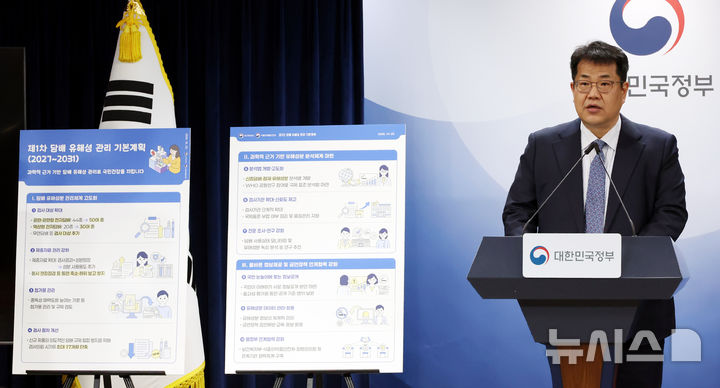
South Korea's government unveiled its first Tobacco Harm Management Basic Plan for 2027–2031 on October 29, 2026, proposing broader testing of vaping and heated tobacco products while excluding nicotine analogs such as 6-methyl nicotine. Synthetic nicotine came under tobacco regulation on April 24, and a June investigation found 6-methyl nicotine in 12 liquid inhalation products marketed as nicotine-free. Customs data released in September showed that imports of nicotine analog solutions fell 83.3%, from 12 metric tons in January–April to 2 metric tons in May–August. By September 20, imports had reached approximately 15 metric tons for the year, with 99.99% originating from China. Customs authorities have tightened pre-clearance testing and supply-chain documentation requirements, while the MFDS expects to complete its assessment of nicotine analog hazards by the end of 2026.
Regulations
Nov.04
FDA Authorizes 24 VELO Nicotine Pouches, Increasing U.S. Authorized Total by 56%
The U.S. FDA authorized 24 VELO nicotine pouch products from a British American Tobacco subsidiary, raising the total number of authorized products from 43 to 67, a 55.8% increase. The newly authorized 4 mg products include lime and passion fruit flavors and feature certified child-resistant packaging. VELO's first FDA marketing authorization adds BAT to a list previously limited to PMI and Altria products, while bringing the agency's nicotine pouch review pilot total to 47 authorized products.
Oct.30
Product | BAT Revises Japan's VELO Convenience Store Lineup, Adding ¥380 Mango Pouches as Selected SKUs Exit
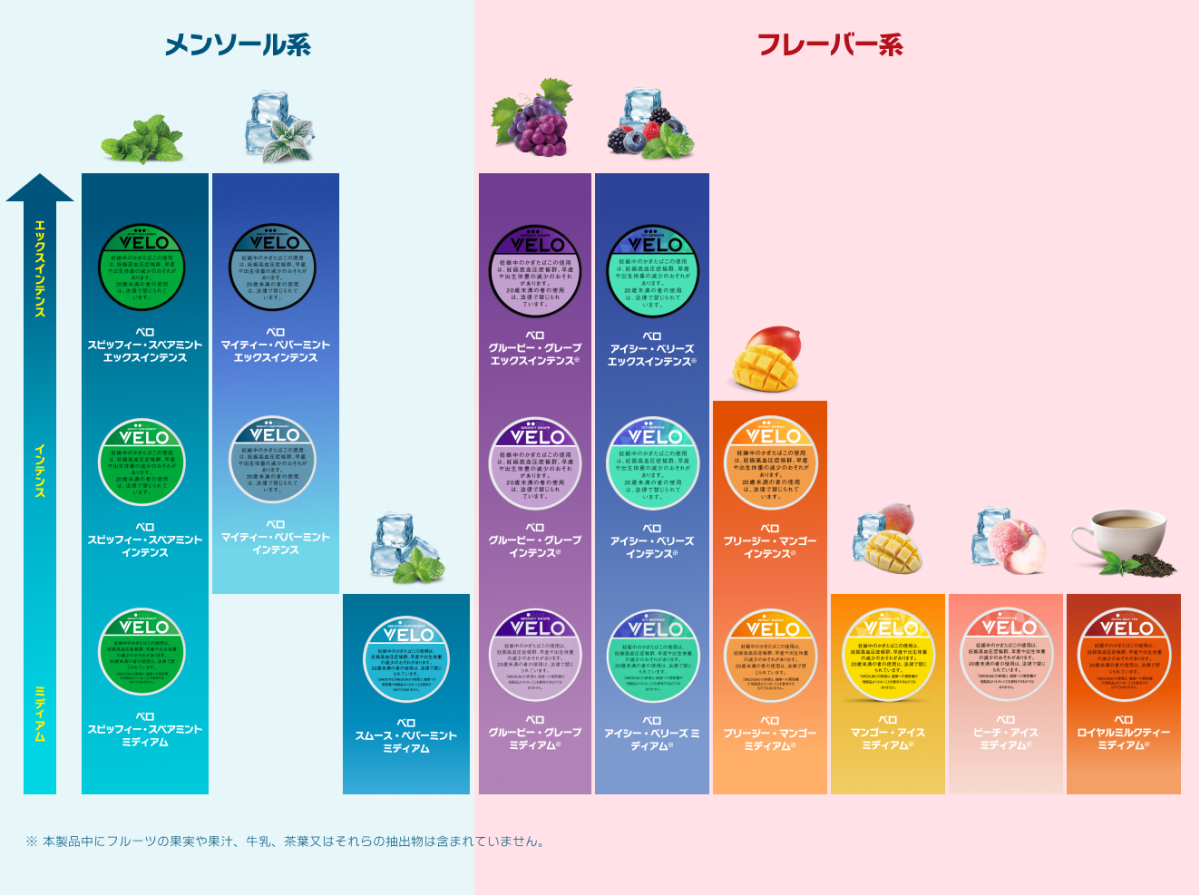
British American Tobacco's Japanese subsidiary, BAT Japan, launched VELO Mango Ice Medium on November 2, 2026, with distribution expanding to selected 7-Eleven, FamilyMart, NewDays and Seicomart stores from November 3. The new oral tobacco product contains 15 pouches per can and retails for ¥380, featuring a mango and cooling flavor profile at Medium intensity. At the same time, BAT Japan raised prices on multiple existing VELO products from ¥360 to ¥380 per can and withdrew selected SKUs from convenience store distribution without discontinuing them entirely. The changes affect product assortment, pricing and retail channel allocation.
product
Nov.04
EU Commission Clarifies Vaping, Smokeless Nicotine Use in Proposed Cardiovascular Checks
The European Commission has clarified to 2Firsts that its proposed cardiovascular health checks would assess smoking, vaping and the use of smokeless nicotine products as part of patients’ medical histories. The Commission also said Member States may organise additional checks within their healthcare systems. In the same response, it pointed to JRC research on e-cigarettes, heated tobacco products and nicotine pouches that has fed into the evaluation of EU tobacco legislation.
Nov.09
Ukraine Raises Excise Stamp Fees for Tobacco, Heated Tobacco and Vape Liquids by 30.5% as Parliament Backs E-Excise Delay to 2027
Ukraine's Cabinet of Ministers adopted Resolution No. 1259 on October 15, 2026, increasing excise stamp production fees for tobacco products and e-cigarette liquids by approximately 30.5%, from UAH 0.1643 to UAH 0.2144 per stamp. Fees for alcoholic beverages rose by about 30.2%. Separately, Ukraine's parliament passed Bill No. 15532 on October 13, proposing to postpone the full implementation of electronic excise stamps and traceability for alcohol, tobacco and e-cigarette liquids from November 1, 2026, to July 1, 2027. Parliament cited additional testing, configuration and integration requirements. The bill was sent to the president for signature on October 19.
Regulations
Oct.21