Irish Deputy Prime Minister Calls for Ban on Disposable e-cigarettes

Regulations by 2FIRSTS.ai
Jan.31.2024
Irish Deputy Prime Minister Calls for Ban on Disposable e-cigarettes
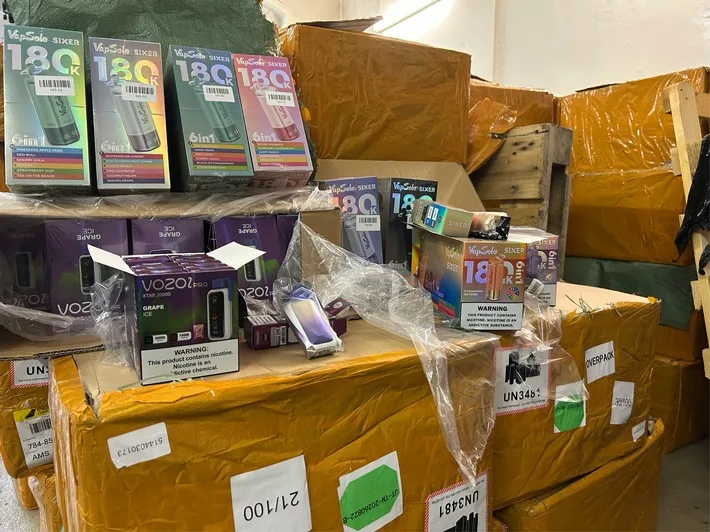
Irish Deputy Prime Minister, Micheál Martin, calls for a complete ban on disposable e-cigarettes to crack down on the industry.

According to the Belfast Telegraph, an Irish deputy prime minister, Micheál Martin, has called for a complete ban on disposable e-cigarettes in order to drastically crackdown on this industry.


This appeal comes after British Prime Minister Rishi Sunak considers banning disposable e-cigarettes to protect children's health. Martin strongly expressed his disdain for the e-cigarette industry and hopes that the Irish government will consider implementing a similar prohibition.


Despite the Irish government having passed laws prohibiting the sale of e-cigarettes to individuals below the age of 18, the trend of young people using these devices continues to rise, primarily due to the affordability and wide range of flavors offered by disposable e-cigarettes. Last month, a new law came into effect, further strengthening the age restrictions on the sale of e-cigarettes.


Martin criticized the marketing tactics of e-cigarette companies, accusing them of using various flavors and colors to attract children. He believes that these companies have not thoroughly examined the impact of their products on children and calls for a more in-depth health analysis of e-cigarettes.


He expressed his strong disapproval of e-cigarettes, stating, "I am extremely disgusted by e-cigarettes. Having them placed next to candy at the counters is already tempting, and now they come in various flavors. It is clear that their target audience is children." Martin welcomes any measures aimed at cracking down on the e-cigarette industry, as he is shocked by the increasing number of young people turning to e-cigarettes and emphasizes that they appear to have become a substitute for traditional tobacco.


We welcome news tips, article submissions, interview requests, or comments on this piece.

Please contact us at info@2firsts.com, or reach out to Alan Zhao, CEO of 2Firsts, on LinkedIn


Notice

1.  This article is intended solely for professional research purposes related to industry, technology, and policy. Any references to brands or products are made purely for objective description and do not constitute any form of endorsement, recommendation, or promotion by 2Firsts.

2.  The use of nicotine-containing products — including, but not limited to, cigarettes, e-cigarettes, nicotine pouchand heated tobacco products — carries significant health risks. Users are responsible for complying with all applicable laws and regulations in their respective jurisdictions.

3.  This article is not intended to serve as the basis for any investment decisions or financial advice. 2Firsts assumes no direct or indirect liability for any inaccuracies or errors in the content.

4.  Access to this article is strictly prohibited for individuals below the legal age in their jurisdiction.


Copyright


This article is either an original work created by 2Firsts or a reproduction from third-party sources with proper attribution. All copyrights and usage rights belong to 2Firsts or the original content provider. Unauthorized reproduction, distribution, or any other form of unauthorized use by any individual or organization is strictly prohibited. Violators will be held legally accountable.

For copyright-related inquiries, please contact: info@2firsts.com


AI Assistance Disclaimer


This article may have been enhanced using AI tools to improve translation and editorial efficiency. However, due to technical limitations, inaccuracies may occur. Readers are encouraged to refer to the cited sources for the most accurate information.

We welcome any corrections or feedback. Please contact us at: info@2firsts.com

Global Tobacco Control Faces Regional Adaptation Test as Nicotine Markets Evolve, Asian Specialist Says
As e-cigarettes, heated tobacco products and nicotine pouches expand across global markets, a central question is gaining urgency: can tobacco control rely on a universal policy model? In an interview with 2Firsts, Asian public health and addiction medicine specialist Dr. Rashidi Mohamed bin Pakri Mohamed says Western experience remains relevant, but policies must be adapted to local culture, healthcare systems, enforcement capacity, illicit markets and clinical evidence.
Jul.08
JT Plans ¥800 Billion Investment in Heated Tobacco Over Three Years, Betting on Ploom as Second Growth Engine
Japan Tobacco Inc. (JT) CEO Takehiko Tsutsui said the company plans to invest about ¥800 billion (approximately US$5.4 billion) in heated tobacco products over three years through 2028, aiming to establish Ploom as a second growth engine after combustible cigarettes. Tsutsui said Ploom AURA helped JT increase its share of Japan’s heated tobacco market to 15.8% in the first quarter of 2026. Ploom products are now available in 29 markets, with Ploom AURA sold in 25 markets including Japan. JT also plans to continue its cigarette business while positioning its food operations, particularly frozen noodle products in North America, as another growth opportunity.
Jul.23
Reuters Tracks Big Tobacco’s Shift Beyond Cigarettes as Nicotine Pouches Vie for the Next Growth Curve
As cigarette markets face long-term pressure, major tobacco companies are increasingly turning to nicotine pouches in search of growth beyond combustible tobacco. Reuters has examined whether nicotine pouches can become the next strategic growth platform for companies including Philip Morris International, British American Tobacco and Japan Tobacco. PMI strengthened its position through the acquisition of Swedish Match and its ZYN brand, while BAT and JTI continue expanding their own nicotine pouch portfolios. The category has gained attention because of its smoke-free, device-free format, but regulation, youth-use concerns and market scale will determine whether it can become a long-term growth engine.
Regulations
Aug.18 by 2Firsts Perspectives
Product | BAT Japan Launches virto Bright Peach Click in Japan, Expanding glo Hilo’s Capsule-Based Flavor Portfolio
British American Tobacco Japan (BAT Japan) has introduced virto Bright Peach Click, a new heated tobacco stick designed for the glo Hilo system. The product expands the existing virto consumable lineup with a combination of tobacco, menthol and ripe peach flavors, featuring a capsule mechanism that releases additional fruit flavor when activated. The product launched in Japan on July 27, 2026, through glo official online channels, convenience stores and tobacco retailers.
Aug.03
2Firsts Hosts U.S. Market Mid-Year Briefing: Companies Need to Reassess Product and Market-Access Strategies
2Firsts held its 2026 U.S. Market Compliance and Development Mid-Year Briefing in Shenzhen, China, on July 28. The discussion examined how state-level requirements, proposed foreign-establishment registration rules and expanding supply-chain responsibilities are changing product and investment decisions in the U.S. tobacco and nicotine market.
Jul.29
U.S. Appeals Court Says BAT Must Face Class Action Over Cigarette Labels
A U.S. appeals court ruled that British American Tobacco (BAT) must continue facing a consumer class action lawsuit over cigarette labels. The ruling allows the case to proceed but does not determine that BAT violated the law or is liable for damages. The case highlights ongoing legal risks facing major tobacco companies related to product labeling, consumer disclosures and product liability claims.
Jul.31