Jinjia responds to investor's suggestion on e-cigarette stores

Aug.16.2022
Jinjia responds to investor's suggestion on e-cigarette stores
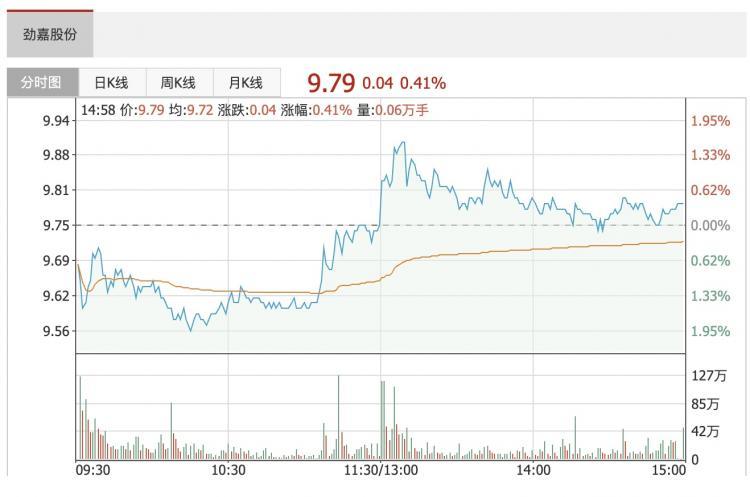
Jingjia plans to sell its e-cigarettes in retail stores domestically and abroad, but has no plans for a chain.

An investor has suggested to Jinjia Co. Ltd. (002191) that they should develop a national chain of electronic cigarette retail stores, similar to Yooz.


The company responded by saying, "Thank you for your interest and suggestions! Your feedback has been forwarded to our management team and relevant business departments. In China, we will sell our products through retail stores that have obtained e-cigarette sales licenses. Overseas, our products have been sold to countries such as Japan and Southeast Asia through subsidiaries. The company will continue to devote itself to stable operations and performance improvement, striving to reward our valued investors. Thank you!


This article contains excerpts or reprints from third-party sources. The copyrights belong to the original media and authors. If there is any infringement, please contact us for deletion. Any individual or entity wishing to reproduce or reprint must contact the author, and must not do so directly.


Disclaimer

This article is provided solely for professional research, industry discussion, and informational purposes. Any references to brands, companies, products, technologies, or policies are made for factual reporting and analytical purposes only, and do not constitute endorsement, recommendation, promotion, or advertising by 2Firsts.

Nicotine-containing products, including but not limited to cigarettes, e-cigarettes, heated tobacco products, and nicotine pouches, carry significant health risks. Readers are responsible for complying with all applicable laws and regulations in their respective jurisdictions, including age restrictions and access limitations.

The information contained in this article should not be regarded as investment, legal, medical, regulatory, or commercial advice. While 2Firsts strives to ensure the accuracy and reliability of its content, it does not assume liability for any direct or indirect loss arising from errors, omissions, inaccuracies, or reliance on the information contained herein.

This article is not intended for individuals below the legal age for accessing tobacco or nicotine-related information in their jurisdiction.


Copyright Notice

This article is either original content produced by 2Firsts or content reproduced, translated, summarized, or adapted from third-party sources with attribution where applicable. The intellectual property rights of the original content remain with 2Firsts or the respective original rights holders.

No individual or organization may copy, reproduce, distribute, republish, modify, translate, or otherwise use this content without prior authorization. Any unauthorized use may result in legal action.

For copyright-related inquiries, corrections, or removal requests, please contact: info@2firsts.com.


AI-Assisted Translation and Editing Notice

Portions of this article may have been translated, edited, or reviewed with the assistance of artificial intelligence tools to improve efficiency and readability. Due to the limitations of AI-assisted translation and editing, discrepancies, omissions, or inaccuracies may exist when compared with the original source.

Where applicable, readers are advised to refer to the original source for the most complete and accurate information. If you identify any errors or believe that any content infringes upon your rights, please contact us at info@2firsts.com, and we will review and address the matter promptly.


Nearly Half of Seoul Vape Vending Machines Bypassed by Fake IDs, Raising Youth Access Concerns
Seoul city authorities inspected 339 tobacco vending machines at e-cigarette retailers and found that 168, or 49.5%, allowed purchases using fake IDs, showing that unmanned retail terminals and adult-verification systems remain a major enforcement gap after e-cigarettes were brought under tobacco regulation.
Market
Jul.03 by 2Firsts Perspectives
JTI Makes Third Bet on South Korea as Ploom AURA Enters a Market Dominated by lil and IQOS
Japan Tobacco International is stepping up its heated tobacco push in South Korea with Ploom AURA. Since its official launch in April 2026, the device's limited First Edition and Glacier White version have sold out, while distribution has expanded across Seoul, Incheon, Gyeonggi Province and airport duty-free channels. The rollout marks JTI's third major attempt to build a stronger heated tobacco position in South Korea, following Ploom TECH in 2019 and Ploom X Advanced in 2024. At the group level, JT plans to invest about ¥800 billion, approximately $5 billion, in reduced-risk products from 2026 through 2028, with heated products and Ploom identified as its primary investment priority.
Aug.14
KT&G’s Lil Strengthens Market Lead in Korea as Heated Tobacco Share Reaches 47.4%
According to South Korea’s UpKorea, KT&G’s heated tobacco brand Lil reached a 47.4% share of Korea’s heated tobacco stick market in the first quarter of 2026. The company is expanding its next-generation products (NGP) business through product development, technology investment and overseas growth. KT&G reported NGP sales of 890.1 billion won (approximately US$650 million) in 2025, up significantly from 279.3 billion won in 2020. Lil products are now available in 34 markets, while KT&G continues building its technology portfolio through patents and multiple product platforms.
Jul.23
Putin Signs Russia’s Tobacco and Nicotine Product Licensing Law, Banning Unlicensed Sales From 2027
Russian President Vladimir Putin has signed a law introducing mandatory licensing for wholesale and retail trade in tobacco and nicotine-containing products, with the system taking effect on October 1, 2026, and unlicensed operations banned from March 1, 2027, while vape and e-liquid retail may also face uncertainty from temporary regional sales-ban powers.
Jul.01
JAMA Issues First U.S. Clinical Guidance on Vaping for Smoking Cessation, Urging Complete Switch From Cigarettes
JAMA has published a Special Communication offering systematic recommendations for U.S.-based clinicians on the use of nicotine e-cigarettes in adult smoking cessation. Developed by the Harm Reduction Workgroup of the Society for Research on Nicotine and Tobacco’s Treatment Research Network, the paper recommends including e-cigarettes alongside FDA-approved cessation medications in risk-benefit discussions. It cites high-certainty evidence that nicotine e-cigarettes achieve higher quit rates than nicotine replacement therapy and evidence suggesting efficacy comparable to highly effective medications such as varenicline and cytisine. For adults who choose vaping to quit, the authors recommend FDA-authorized products, sufficient nicotine delivery and a rapid, complete transition away from cigarettes rather than prolonged dual use.
Aug.13
Vape Industry Group Loses Alabama Court Fight as State Tightens Rules on Imported Products
The Alabama Supreme Court affirmed a lower court’s refusal to issue a preliminary injunction blocking the state’s 2025 electronic nicotine delivery systems law, allowing rules requiring covered products to be U.S.-made or FDA-authorized to remain in effect.
Jul.10