JUUL Labs Reaches Settlement with Thousands of Plaintiffs

Dec.07.2022
JUUL Labs Reaches Settlement with Thousands of Plaintiffs
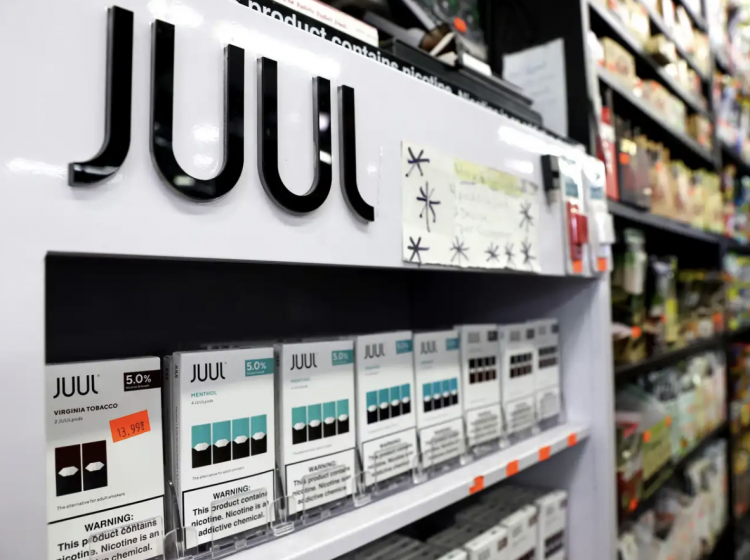
JUUL Labs reaches settlement with thousands of plaintiffs in federal multi-district litigation over e-cigarette use.

JUUL Labs, a troubled electronic cigarette manufacturer, announced on Tuesday evening that they have reached a settlement with thousands of plaintiffs in various cases.


The company stated that the settlement of the federal multidistrict litigation, consolidated in the Northern District of California, represents a global resolution that covers "over 5,000 cases brought by approximately 10,000 plaintiffs against Juul Labs and its executives and directors.


Over the past year, Juul Labs has reached settlements with 37 states and territories, and we are still in discussions with other significant stakeholders to resolve remaining lawsuits," the company said in a statement. "As announced by the company in November, Juul Labs has taken a series of measures to stabilize its business operations and address past legal issues.


The terms of the settlement were not disclosed.


In almost constant litigation, an e-cigarette company allegedly associated with Altria (MO) narrowly avoided bankruptcy in early November.


2FIRSTS will continue to report on this topic and provide updates on the '2FIRSTS APP'. Scan the QR code below to download the app.


Disclaimer

This article is provided solely for professional research, industry discussion, and informational purposes. Any references to brands, companies, products, technologies, or policies are made for factual reporting and analytical purposes only, and do not constitute endorsement, recommendation, promotion, or advertising by 2Firsts.

Nicotine-containing products, including but not limited to cigarettes, e-cigarettes, heated tobacco products, and nicotine pouches, carry significant health risks. Readers are responsible for complying with all applicable laws and regulations in their respective jurisdictions, including age restrictions and access limitations.

The information contained in this article should not be regarded as investment, legal, medical, regulatory, or commercial advice. While 2Firsts strives to ensure the accuracy and reliability of its content, it does not assume liability for any direct or indirect loss arising from errors, omissions, inaccuracies, or reliance on the information contained herein.

This article is not intended for individuals below the legal age for accessing tobacco or nicotine-related information in their jurisdiction.


Copyright Notice

This article is either original content produced by 2Firsts or content reproduced, translated, summarized, or adapted from third-party sources with attribution where applicable. The intellectual property rights of the original content remain with 2Firsts or the respective original rights holders.

No individual or organization may copy, reproduce, distribute, republish, modify, translate, or otherwise use this content without prior authorization. Any unauthorized use may result in legal action.

For copyright-related inquiries, corrections, or removal requests, please contact: info@2firsts.com.


AI-Assisted Translation and Editing Notice

Portions of this article may have been translated, edited, or reviewed with the assistance of artificial intelligence tools to improve efficiency and readability. Due to the limitations of AI-assisted translation and editing, discrepancies, omissions, or inaccuracies may exist when compared with the original source.

Where applicable, readers are advised to refer to the original source for the most complete and accurate information. If you identify any errors or believe that any content infringes upon your rights, please contact us at info@2firsts.com, and we will review and address the matter promptly.


As JUUL2 Wins FDA Authorization, Harm Reduction Journal Highlights the Role of Real-World Evidence in Nicotine Product Regulation
A commentary published in the international open-access, peer-reviewed Harm Reduction Journal argues that randomized controlled trials remain central to evaluating smoking cessation efficacy but cannot alone capture real-world uptake, complete switching, longer-term use and population impact of non-combustible nicotine products such as e-cigarettes, heated tobacco and nicotine pouches. The authors frame impact as “reach × efficacy” and call for real-world evidence to complement RCTs. Three days after publication, the FDA authorized three JUUL2 products and highlighted complete switching among adult smokers in explaining its decision, providing a timely regulatory backdrop to the debate.
Sep.08
PMI Expands Colorado Investment to $1.2 Billion to Boost ZYN Nicotine Pouch Production
Philip Morris International (PMI) is expanding its investment in its Golden, Colorado campus, bringing total investment to approximately $1.2 billion to support its smoke-free products business. The investment will strengthen PMI’s research, production and innovation capabilities in smoke-free products. As one of the world’s largest tobacco companies, PMI has continued advancing its “Smoke-Free Future” strategy through heated tobacco, oral nicotine and other reduced-risk product categories.
PMI
Jul.28
Indiana’s Foreign-Made Vape Ban Takes Effect, Forcing Brands and Retailers to Adjust Supply Chains
A new Indiana law restricting the sale of foreign-made vape products has taken effect, requiring retailers to adjust inventory and sourcing practices. According to The Sun, WDRB and other reports, some local vape shops are reviewing product origins and supplier information to comply with the new requirements. The measure represents a broader shift in U.S. vape regulation, with oversight expanding beyond product authorization and sales rules toward manufacturing origin and supply-chain management.
Jul.24
Cochrane 2026 Update Adds Nine Trials, Keeps High-Certainty Finding That Nicotine E-Cigarettes Improve Quit Rates Over NRT
Cochrane’s 2026 update of its living review on electronic cigarettes for smoking cessation included 80 randomized controlled trials involving 29,861 adult smokers, with nine trials added in this update. The review retained its high-certainty conclusion that nicotine e-cigarettes increase smoking cessation rates compared with nicotine replacement therapy. In absolute terms, about 10 in 100 people using nicotine e-cigarettes may quit smoking for at least six months, compared with about 6 in 100 using NRT. The review found no clear difference in serious adverse event rates between the two groups, while longer-term safety and the relative effectiveness of newer device types remain less certain.
Sep.07
UK PM Andy Burnham Shifts Business Rates Policy, Supporting Hospitality While Raising Pressure on Vape Shops
UK Prime Minister Andy Burnham’s government is adjusting business rates policy to support hospitality businesses while some other sectors, including vape retailers, face higher operating cost pressures. According to Streamline Feed, AJ Bell and other reports, the policy shift reflects a redistribution of business rate burdens as the government seeks to support sectors facing economic pressure. For UK vape shops, the change comes amid a broader regulatory environment shaped by the disposable vape ban, the upcoming Vaping Products Duty and increased compliance requirements.
News
Jul.24
Australian Coalition Taskforce Calls for 80% Tobacco Tax Cut to Combat Illicit Market
According to SGST on August 26, 2026, Australia’s Coalition Illegal Tobacco Taskforce released a report recommending an up to 80% cut in tobacco excise to reduce the appeal of the illicit tobacco market. The report claimed organised crime groups now control about 80% of Australia’s tobacco market and argued that high excise rates have widened the price gap between legal and illegal products. The recommendation remains a policy proposal and has not been adopted by the Australian government, which said its focus remains on enforcement, compliance and additional resources.
Aug.27