Authorities in Kazakhstan Seize Over 53,000 Illegal Vape Products in Pavlodar

Dec.25.2025
Authorities in Kazakhstan Seize Over 53,000 Illegal Vape Products in Pavlodar
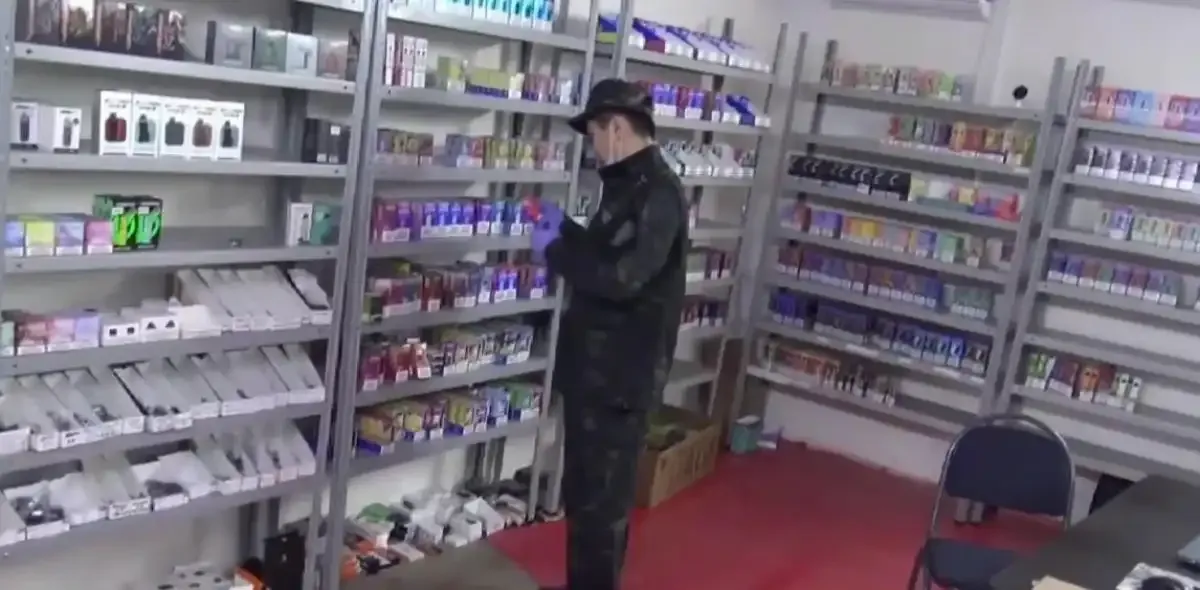
Kazakhstan’s Financial Monitoring Agency in Pavlodar Region has concluded an investigation into an organised group involved in the illegal sale of vaping products. The group operated through three Telegram-based online shops and used courier delivery services. Authorities seized more than 53,000 items, with a total value exceeding 400 million tenge. The investigation found that students were the primary consumers. Four suspects have been placed in custody and multiple assets have been seized.

Key Poins


  • Pavlodar regional authorities completed an investigation into illegal vape distribution;
  • Products were sold via three Telegram online stores using courier delivery;
  • More than 53,000 illegal vape-related items were seized, valued at over 400 million tenge (approximately US$880,000);
  • School and university students were identified as the main consumer group;
  • Courts ordered the seizure of three vehicles and detained four suspects.


2Firsts, December 25, 2025 – According to Elordainfo.kz, the Pavlodar Regional Department of Kazakhstan’s Financial Monitoring Agency has completed an investigation into an organised criminal group engaged in the illegal sale of vaping products.


The group distributed non-combustible tobacco products, vaping devices, flavourings and e-liquids through three Telegram-based online shops, using courier services for delivery.


As a result of enforcement actions, authorities seized more than 53,000 items removed from illegal circulation, with a total estimated value exceeding 400 million tenge (approximately US$880,000).


Investigators said the suspects used financial “droppers” to launder proceeds from illegal sales, opening bank accounts in third-party names. The primary consumers of the vaping products were identified as school pupils and university students.


With court approval, authorities seized three vehicles purchased using criminal proceeds: a Toyota Land Cruiser, a Toyota Highlander and a Chevrolet Camaro.


Four members of the group have been placed in pre-trial detention. In accordance with Article 201 of Kazakhstan’s Criminal Procedure Code, no further details are being disclosed.


Image source: Screenshot from a video by the Kazakhstan Financial Monitoring Agency.


We welcome news tips, article submissions, interview requests, or comments on this piece.

Please contact us at info@2firsts.com, or reach out to Alan Zhao, CEO of 2Firsts, on LinkedIn


Notice

1.  This article is intended solely for professional research purposes related to industry, technology, and policy. Any references to brands or products are made purely for objective description and do not constitute any form of endorsement, recommendation, or promotion by 2Firsts.

2.  The use of nicotine-containing products — including, but not limited to, cigarettes, e-cigarettes, nicotine pouchand heated tobacco products — carries significant health risks. Users are responsible for complying with all applicable laws and regulations in their respective jurisdictions.

3.  This article is not intended to serve as the basis for any investment decisions or financial advice. 2Firsts assumes no direct or indirect liability for any inaccuracies or errors in the content.

4.  Access to this article is strictly prohibited for individuals below the legal age in their jurisdiction.


Copyright


This article is either an original work created by 2Firsts or a reproduction from third-party sources with proper attribution. All copyrights and usage rights belong to 2Firsts or the original content provider. Unauthorized reproduction, distribution, or any other form of unauthorized use by any individual or organization is strictly prohibited. Violators will be held legally accountable.

For copyright-related inquiries, please contact: info@2firsts.com


AI Assistance Disclaimer


This article may have been enhanced using AI tools to improve translation and editorial efficiency. However, due to technical limitations, inaccuracies may occur. Readers are encouraged to refer to the cited sources for the most accurate information.

We welcome any corrections or feedback. Please contact us at: info@2firsts.com

On-Site Report | CTP Details PMTA Backlog, 180-Day Review Goal and sPMTA Process
FDA’s Center for Tobacco Products detailed new PMTA review data and process changes at the 2026 FDLI conference. Pending PMTAs fell from about 450,000 at the start of 2025 to 135,000 by September 2026. CTP also discussed its 180-day review goal, current sPMTA pilot, alternate-supplier planning, more than 50,300 pending SE reports, and lessons from the nicotine pouch pilot already being applied to ENDS review.
Regulations
Oct.07
Special Report | Vape bans and tougher rules: the South Caucasus takes different paths
Azerbaijan's sweeping e-cigarette ban has raised concerns over enforcement errors and the emergence of illicit sales, while neighboring Armenia is tightening technical rules and preparing higher excise taxes. Georgia, meanwhile, has resisted calls for broader vape restrictions and introduced preferential taxes for some domestically produced cigarettes. The divergent approaches across the South Caucasus highlight a regional policy dilemma: how to curb nicotine use and protect public health without encouraging black markets or creating unintended economic consequences for businesses and consumers.
Nov.03
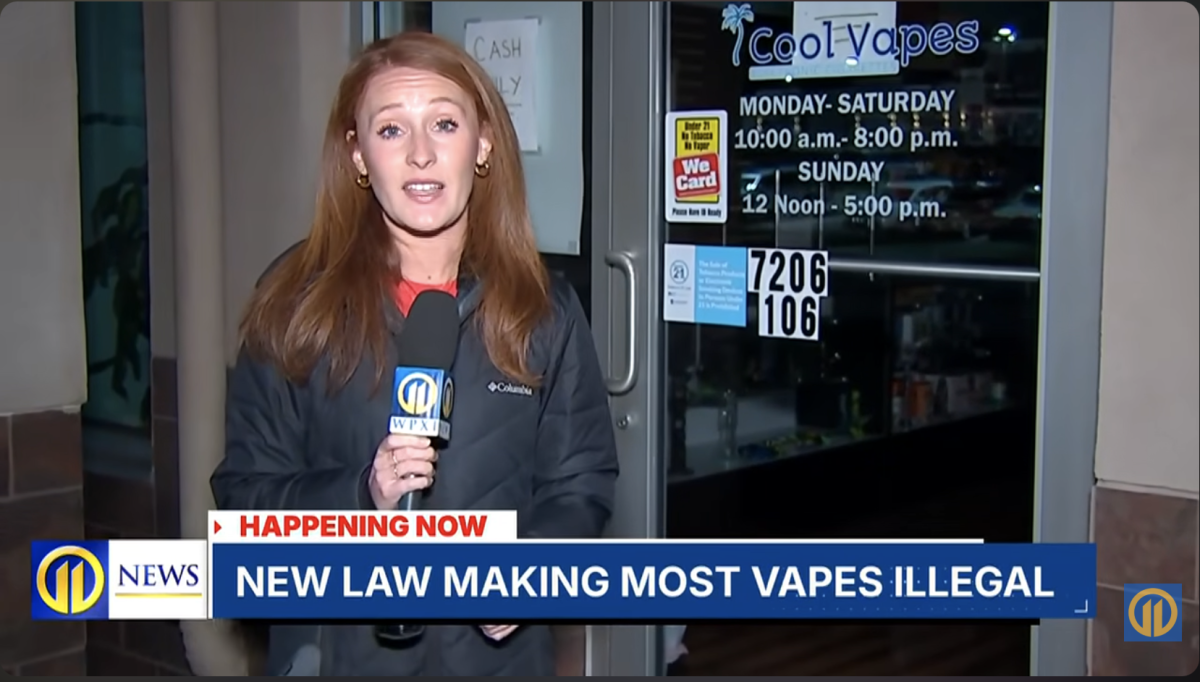
Pennsylvania Lists 163 Vape Products Eligible for Sale, Including Vuse and JUUL; Previously Pending Chinese Brands Such as OXBAR Remain Absent, While Unlisted Products Including Geek Bar Face Enforcement From October 19
Pennsylvania begins enforcing its electronic nicotine delivery system (ENDS) directory restrictions on October 19, 2026. The October 18 directory contained 163 product records from seven manufacturers, including Vuse, JUUL, NJOY, Logic and Naked 100. Geek Bar, RAZ and Lost Mary were absent. BAT, Altria, Japan Tobacco and JUUL collectively accounted for 112 records, or 68.7%, while Imperial Brands' blu had no listings. The directory included 15 disposable vape records, 40 bottled e-liquids and 10 products labeled 0mg, but no open-system refillable devices. Twenty-two manufacturer certifications remained under review. Four Logic models corresponding to Smoore's pending records were listed under the brand owner, while LYCO, OXBAR and Boulder/Rock had no approved directory entries.
Regulations
Oct.19
PMI Plans $71 Million Philippine Smoke-Free Expansion: BLENDS Production Established, Batangas Plant Exports to 18 Markets
Philip Morris International (PMI) plans to invest approximately PHP 4.5 billion ($71 million) to expand its existing smoke-free manufacturing facility in Tanauan, Batangas, in the Philippines. The expansion is expected to be completed in 2027, with additional capacity serving domestic and export markets. The facility began manufacturing heated tobacco consumables in April 2024, including BLENDS sticks for the BONDS by IQOS platform. Philippine business media reported in October 2026 that products from the Batangas plant were being exported to 18 markets across Asia and Europe. PMI says it has invested more than $2 billion in the Philippines since 2010. The expansion adds to the country's existing manufacturing and export role within PMI's international supply chain.
company
Nov.16
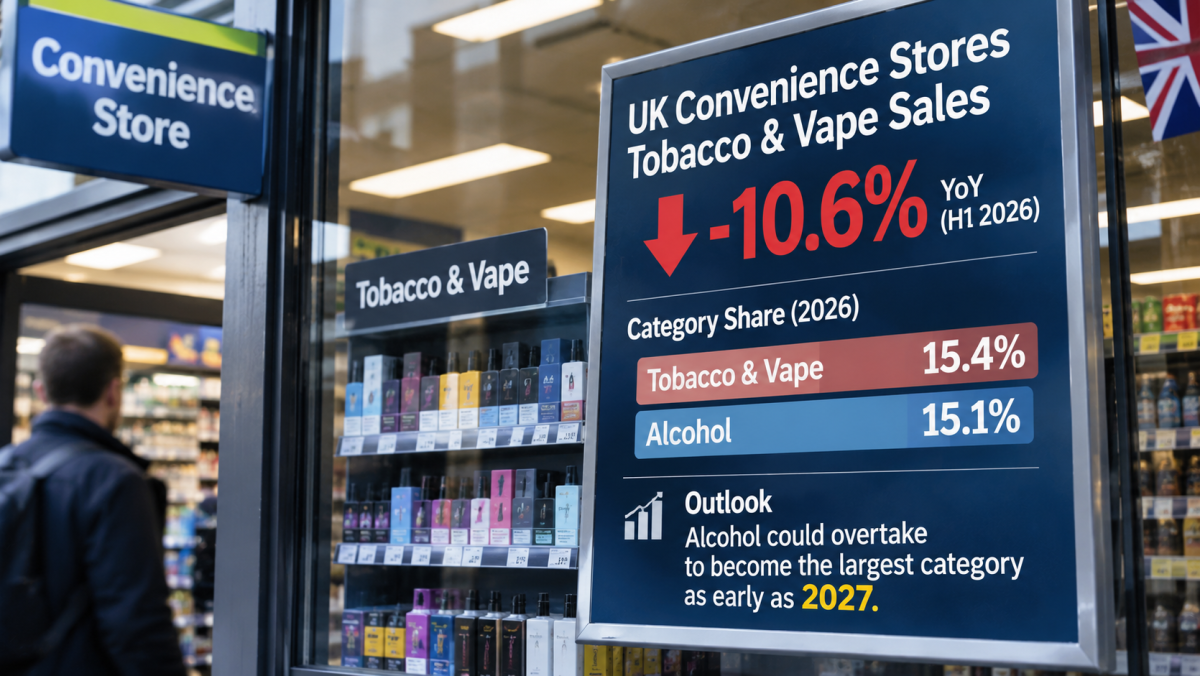
DATA|UK Retail Research Group IGD Says Convenience Tobacco and Vape Sales Fell 10.6%, With 15.4% Market Share Versus Alcohol's 15.1%; Top Rank at Risk in 2027
Combined tobacco and vaping sales in UK convenience stores fell 10.6% year over year in the first half of 2026, making the category a major drag on channel performance, according to retail research organization IGD. Total convenience sales declined 1.2%, while sales excluding tobacco and vaping increased 0.7%. IGD's 2026 category-share figures show tobacco and vaping accounting for 15.4% of convenience sales, compared with 15.1% for alcohol. The organization forecasts alcohol could overtake tobacco and vaping as the largest category by sales value as early as 2027 if current trends continue. IGD expects the convenience market to increase from £48.6 billion in 2026 to £54.9 billion in 2031, a 2.5% compound annual growth rate, or 3.4% excluding tobacco and vaping.
DATA
Nov.11
South Korea's Synthetic Nicotine Tax Take Estimated at Just 1.3% of Forecast as Imports Plunge Nearly 97%
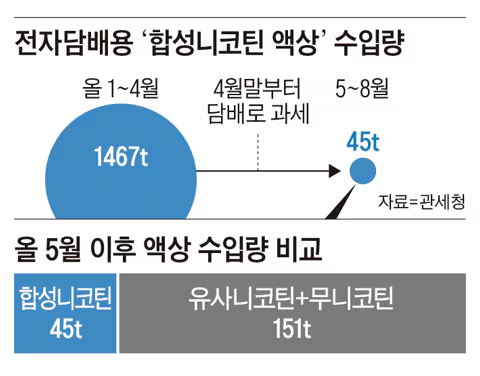
After synthetic nicotine was placed under tobacco regulation on April 24, 2026, South Korea’s tax collections from synthetic-nicotine vaping products fell far short of government projections. The Chosun Ilbo reported on November 18 that Ministry of Health and Welfare data showed national health promotion charges on synthetic-nicotine liquid e-cigarettes totaled 765 million won from April 24 through September. Using statutory rates, the newspaper estimated combined major taxes and charges at about 2.622 billion won—on a monthly basis roughly 1.3% of an earlier forecast after temporary tax reductions. Customs data showed synthetic-nicotine imports dropped from about 1,467 metric tons in January–April to 45 metric tons in May–August, a nearly 97% decline. Imports of nicotine-analog and nicotine-free liquids totaled 151 metric tons in May–August, exceeding synthetic-nicotine imports in the same period, though both categories were also below January–April volumes.
Regulations
Nov.19