Kazakhstan Bans E-cigarette Sales and Imposes Criminal Penalties

Jul.19.2024
Kazakhstan Bans E-cigarette Sales and Imposes Criminal Penalties
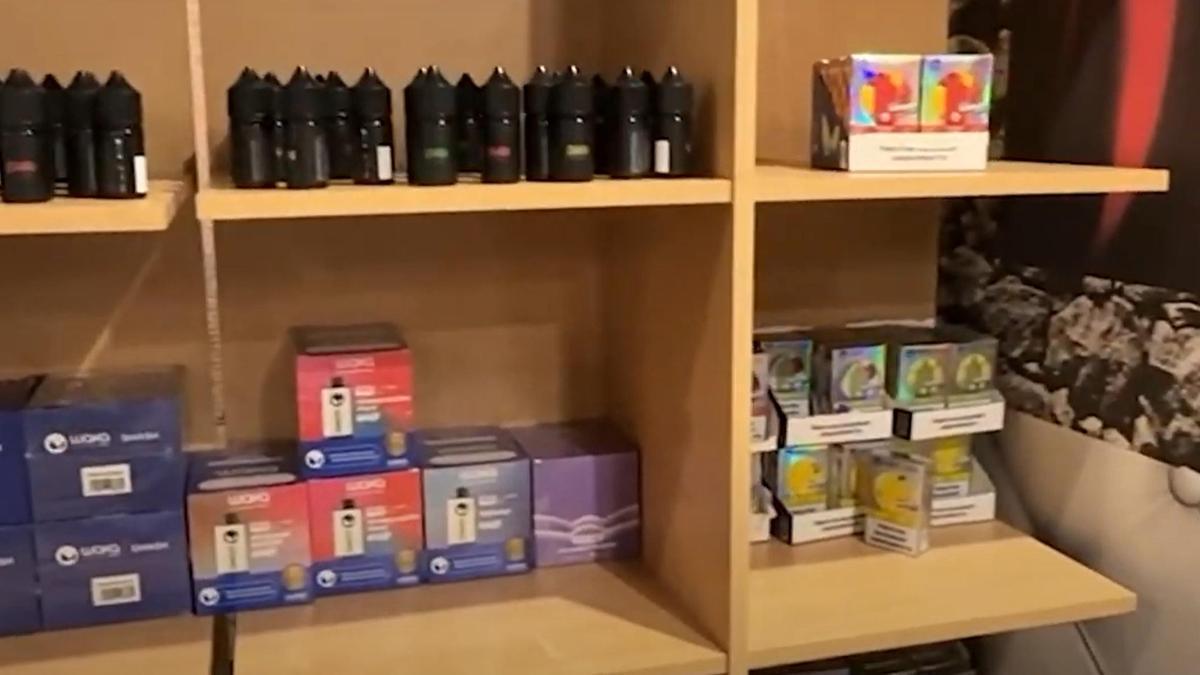
Kazakh police seize 8,000 e-cigarettes in Almaty, cracking down on illegal sales of banned products under new law.

According to a report from NUR.KZ on July 18th, the police in Almaty, Kazakhstan confiscated 8000 e-cigarettes in one day, involving the WAKA brand.


According to Kuatbek Nauatov, Deputy Minister of the Almaty Police Department, official stores that used to sell e-cigarettes have now been closed, but illegal sales on online platforms are rampant.


The defendant accepts orders through instant messaging apps, receives information on the quantity of goods and shipping address, and uses courier services to deliver the goods to customers. After taking measures to investigate, it was found that these so-called e-cigarette shipping points are mainly located in the basements of luxury apartments or computer clubs, where illegal business is conducted in secret.


In Kazakhstan, starting from June 20th, the distribution of smokeless tobacco products, e-cigarettes, spices, and vaping liquids has been prohibited and classified as a criminal offense. The production, import, sale, and distribution of these products now carry criminal liabilities.


According to relevant laws, individuals involved in the sale and distribution of non-tobacco products, electronic consumption systems (e-cigarettes), flavors, and e-liquids can be fined up to 738,500 hryvnias (approximately $1,541.17), sentenced to equivalent community service, up to 200 hours of community service, or up to 50 days of imprisonment. Those engaged in the manufacturing or import of non-tobacco products, e-cigarettes, flavors, and their e-liquids can face a fine of up to 7.4 million hryvnias (approximately $15,443), equivalent community service, up to 600 hours of community service, up to two years of restricted freedom, or imprisonment for the same amount of time, with potential confiscation of property as a consequence.


If the following conditions are met, such as being part of a criminal group, making significant profits, or committing multiple crimes, the maximum fine (up to 18.4 million kroner [38,398 US dollars]), or an equivalent amount of community service, or a maximum of 1200 hours of community service, or a maximum of five years of freedom restriction, or an equivalent amount of imprisonment, may be imposed, and confiscation of property may also follow.


We welcome news tips, article submissions, interview requests, or comments on this piece.

Please contact us at info@2firsts.com, or reach out to Alan Zhao, CEO of 2Firsts, on LinkedIn


Notice

1.  This article is intended solely for professional research purposes related to industry, technology, and policy. Any references to brands or products are made purely for objective description and do not constitute any form of endorsement, recommendation, or promotion by 2Firsts.

2.  The use of nicotine-containing products — including, but not limited to, cigarettes, e-cigarettes, nicotine pouchand heated tobacco products — carries significant health risks. Users are responsible for complying with all applicable laws and regulations in their respective jurisdictions.

3.  This article is not intended to serve as the basis for any investment decisions or financial advice. 2Firsts assumes no direct or indirect liability for any inaccuracies or errors in the content.

4.  Access to this article is strictly prohibited for individuals below the legal age in their jurisdiction.


Copyright


This article is either an original work created by 2Firsts or a reproduction from third-party sources with proper attribution. All copyrights and usage rights belong to 2Firsts or the original content provider. Unauthorized reproduction, distribution, or any other form of unauthorized use by any individual or organization is strictly prohibited. Violators will be held legally accountable.

For copyright-related inquiries, please contact: info@2firsts.com


AI Assistance Disclaimer


This article may have been enhanced using AI tools to improve translation and editorial efficiency. However, due to technical limitations, inaccuracies may occur. Readers are encouraged to refer to the cited sources for the most accurate information.

We welcome any corrections or feedback. Please contact us at: info@2firsts.com

PMI Q2 Revenue Rises 10.4% as IQOS and VEEV Expand, U.S. ZYN Growth Slows
Philip Morris International’s second-quarter net revenues rose 10.4% to a record $11.19 billion, as heated tobacco and e-vapor expanded across international markets. IQOS remained the main smoke-free growth engine, while VEEV shipments jumped 55.1%. In the United States, however, ZYN shipments increased just 1.8% and consumer offtake was broadly flat to slightly higher. Cigarette volumes also rose, showing that PMI’s transformation is advancing, but growth is becoming increasingly uneven across categories and markets.
PMI
Jul.22
Product | Summo 150K Introduces Refillable Design With Up to 150,000 Puffs, Exploring a New High-Capacity Vape Format
Summo has introduced the Summo 150K Refillable Disposable Vape, entering the ultra-high-puff vape segment with a claimed capacity of up to 150,000 puffs. The device combines a 40ml dual e-liquid system, transparent tank design, dual mesh coils and a 900mAh rechargeable battery, using a refillable structure to differentiate itself from conventional disposable vapes. The product appeared on overseas online retail channels including Vapesourcing and VapeBarTime between late June and early July 2026.
Jul.22
Product | IQOS ILUMA i REMIX Limited Edition Launches in Japan, Bringing New Design Elements to Heated Tobacco Devices
Philip Morris Japan (PM Japan) has introduced the IQOS ILUMA i REMIX Limited Edition series, including the IQOS ILUMA i Prime REMIX, IQOS ILUMA i REMIX and IQOS ILUMA i ONE REMIX devices. The limited-edition models were officially announced in Japan on June 9, 2026, and began a phased market rollout from June 10. Featuring gradient color designs and visual customization elements, the collection highlights PMI’s continued use of limited editions to enhance brand experience within its heated tobacco portfolio.
Innovation
Jul.21 by 2Firsts Perspectives
Iowa Enforces Vape Registry Law as Retailers Warn Product Limits Could Increase Store Pressure
Iowa has begun enforcing its vape registry law, requiring vape products to be registered before they can be legally sold in the state. The move follows a decision by the U.S. Court of Appeals for the Eighth Circuit to lift an injunction that had blocked enforcement. Retailers have warned that tighter product availability rules could increase pressure on vape shops. One Iowa retailer said that if only a limited number of products remain available, many stores could face significant business challenges.
Aug.06
Hawaii Restricts Vape Sales to FDA-Authorized Products, Disposable E-Cigarettes to Be Banned
Hawaii has enacted two new e-cigarette laws that significantly tighten market access requirements, requiring products to meet FDA authorization standards and banning disposable e-cigarette sales starting in 2027.
Jul.08
Special Report | Russia, Ukraine and Belarus Launch Fresh Push to Rein in Vaping
Russia, Ukraine and Belarus are tightening vape regulation through different tools, from Ukraine’s stronger enforcement push and Belarus’s proposed advertising restrictions to Russia’s new GOST standard and regional sales-ban mechanism. As black-market concerns persist, some Russian experts argue that China’s tightly controlled but legalised model — built around licensing, traceability and taxation — may offer a more effective alternative to blanket prohibition.
Jul.15