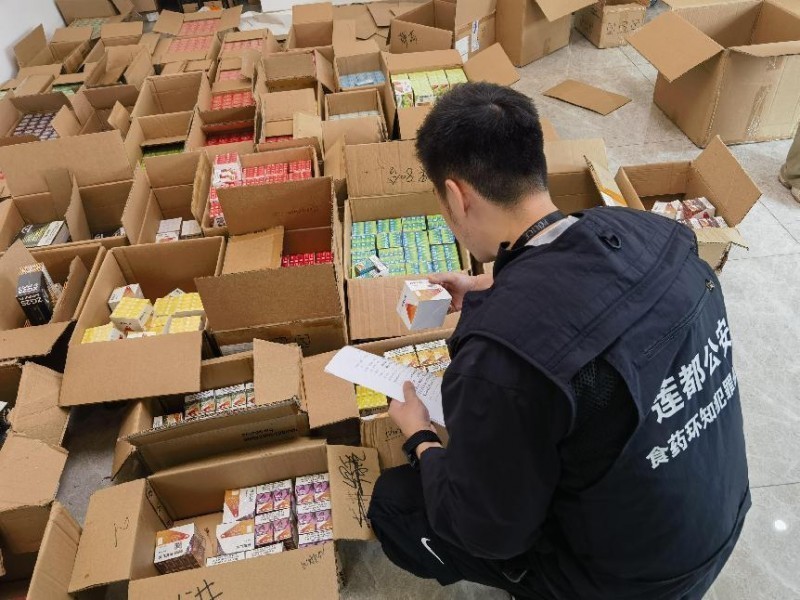
Recently, the Lishui Tobacco Monopoly Bureau in Zhejiang Province, in conjunction with the Liandu District Branch of the Lishui Public Security Bureau, successfully uncovered a large-scale counterfeit e-cigarette network case involving production, transportation, distribution, and online retail. The case spans multiple provinces and cities including Guangdong, Guangxi, and Zhejiang, with a total value of over 21.34 million yuan. It is understood that this is the largest physical e-cigarette case ever uncovered in Zhejiang Province.
In March of this year, based on intelligence, the Lishui Tobacco Monopoly Bureau discovered that there were individuals selling counterfeit e-cigarettes in their jurisdiction. After investigation, the suspect, Mr. Lan, was found to operate an e-cigarette store in the area. In addition to selling compliant e-cigarettes, he also recruited customers offline who had a "demand" for counterfeit e-cigarettes, and completed transactions online, forming a "offline customer recruitment, online targeted sales" model. Preliminary assessment suggests that behind this WeChat account, there is likely a large illegal network for the production and sale of counterfeit e-cigarettes.
In light of this, the tobacco and public security departments quickly formed a special task force. Through analysis of previous clues, they uncovered the illegal e-cigarette "production-transportation-storage-distribution" channels, and followed the trail to identify the "higher-ups" in other provinces and Guangdong. They sent personnel to Guangdong and Zhejiang to conduct investigations. Further investigation revealed that the criminal group was well-organized, with clear division of labor and strong counter-surveillance capabilities, operating illegally through a combination of domestic and international activities.
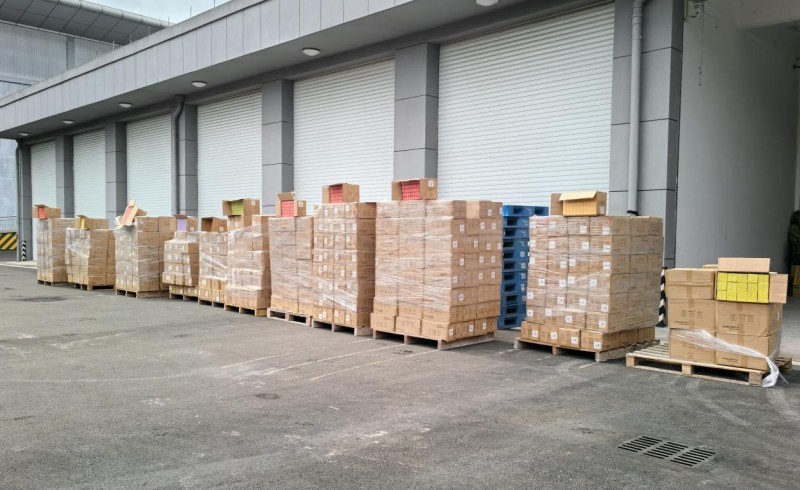
At the end of September, the Lishui Tobacco Monopoly Bureau, in conjunction with the Lishui Public Security Bureau, organized more than 60 tobacco and law enforcement personnel to conduct a coordinated crackdown on the production and sale of counterfeit e-cigarettes related to the "3.07" case in three cities in Guangdong and Zhejiang provinces. In this operation, 7 suspects were captured, 7 warehouses were successfully disrupted, and a total of over 576,000 counterfeit pods, disposable e-cigarettes, smoking paraphernalia, and other items were seized, with a total value of over 21.34 million yuan.
Seven suspects, including Xu, Xia, and Lin, have been criminally detained by the Zhejiang police for allegedly selling counterfeit products. The case is currently under further investigation.
We welcome news tips, article submissions, interview requests, or comments on this piece.
Please contact us at info@2firsts.com, or reach out to Alan Zhao, CEO of 2Firsts, on LinkedIn
Notice
1. This article is intended solely for professional research purposes related to industry, technology, and policy. Any references to brands or products are made purely for objective description and do not constitute any form of endorsement, recommendation, or promotion by 2Firsts.
2. The use of nicotine-containing products — including, but not limited to, cigarettes, e-cigarettes, nicotine pouchand heated tobacco products — carries significant health risks. Users are responsible for complying with all applicable laws and regulations in their respective jurisdictions.
3. This article is not intended to serve as the basis for any investment decisions or financial advice. 2Firsts assumes no direct or indirect liability for any inaccuracies or errors in the content.
4. Access to this article is strictly prohibited for individuals below the legal age in their jurisdiction.
Copyright
This article is either an original work created by 2Firsts or a reproduction from third-party sources with proper attribution. All copyrights and usage rights belong to 2Firsts or the original content provider. Unauthorized reproduction, distribution, or any other form of unauthorized use by any individual or organization is strictly prohibited. Violators will be held legally accountable.
For copyright-related inquiries, please contact: info@2firsts.com
AI Assistance Disclaimer
This article may have been enhanced using AI tools to improve translation and editorial efficiency. However, due to technical limitations, inaccuracies may occur. Readers are encouraged to refer to the cited sources for the most accurate information.
We welcome any corrections or feedback. Please contact us at: info@2firsts.com