Illegal E-Cigarette Factory Busted in Taiwan, Faces Heavy Fines

Aug.30.2024
Illegal E-Cigarette Factory Busted in Taiwan, Faces Heavy Fines
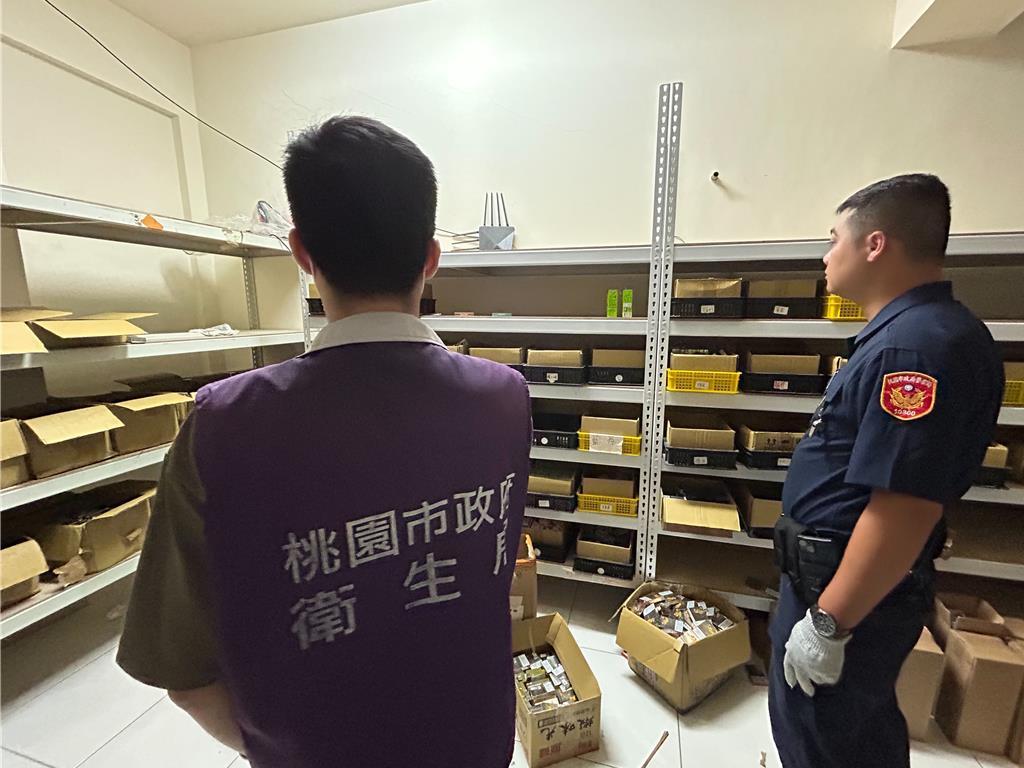
On August 29th, the Taiwan Taoyuan Health Department and Police busted an e-cigarette factory, seizing over $630,000 worth of products.

According to a report from the China Times News Website on August 29th, the Taoyuan Health Bureau in Taiwan, in conjunction with the Taoyuan Police Department, discovered a manufacturing factory for e-cigarettes on the afternoon of the 28th. A total of 321 boxes of e-cigarettes, 86 packs of e-liquid, as well as semi-finished products and main units were confiscated. Additionally, manufacturing equipment such as mixers, fillers, and scales were found. It is estimated that the value of the case exceeds 20 million New Taiwan Dollars (approximately 630,000 US dollars).


It is understood that currently all equipment and products have been sealed, and the manufacturers will be pursued for fines of up to 50 million Taiwanese dollars (approximately 1.57 million US dollars).


The Taoyuan Health Bureau has issued a warning, stating that illegal manufacturing of e-cigarettes and similar products poses a serious threat, especially to the health of young people. The bureau also urges businesses not to take any chances. This is the first time the Taoyuan City Health Bureau has uncovered an e-cigarette manufacturing factory.


The Health Department pointed out that recently, it has been discovered that some teenagers, not familiar with the regulations, have been helping their friends post advertisements or sell e-cigarettes, heated tobacco products, and their accessories on social media platforms. The Health Department once again reminds teenagers not to assist each other in posting advertisements or selling these products, with offenders facing fines ranging from 20,000 to 1 million Taiwanese dollars.


In addition, in order to actively prevent young people from accessing e-cigarette products, the Department of Health has also collaborated with the National Health Administration of the Ministry of Health and Welfare to monitor online activities. From the implementation of the new law on March 22nd last year until August 28th this year, over 2000 inspections have been conducted, resulting in 27 cases of illegal advertising or selling of e-cigarettes being penalized, with a total fine of 4.7 million Taiwan dollars (approximately 150,000 US dollars).


We welcome news tips, article submissions, interview requests, or comments on this piece.

Please contact us at info@2firsts.com, or reach out to Alan Zhao, CEO of 2Firsts, on LinkedIn


Notice

1.  This article is intended solely for professional research purposes related to industry, technology, and policy. Any references to brands or products are made purely for objective description and do not constitute any form of endorsement, recommendation, or promotion by 2Firsts.

2.  The use of nicotine-containing products — including, but not limited to, cigarettes, e-cigarettes, nicotine pouchand heated tobacco products — carries significant health risks. Users are responsible for complying with all applicable laws and regulations in their respective jurisdictions.

3.  This article is not intended to serve as the basis for any investment decisions or financial advice. 2Firsts assumes no direct or indirect liability for any inaccuracies or errors in the content.

4.  Access to this article is strictly prohibited for individuals below the legal age in their jurisdiction.


Copyright


This article is either an original work created by 2Firsts or a reproduction from third-party sources with proper attribution. All copyrights and usage rights belong to 2Firsts or the original content provider. Unauthorized reproduction, distribution, or any other form of unauthorized use by any individual or organization is strictly prohibited. Violators will be held legally accountable.

For copyright-related inquiries, please contact: info@2firsts.com


AI Assistance Disclaimer


This article may have been enhanced using AI tools to improve translation and editorial efficiency. However, due to technical limitations, inaccuracies may occur. Readers are encouraged to refer to the cited sources for the most accurate information.

We welcome any corrections or feedback. Please contact us at: info@2firsts.com

Product | KT&G Brings LOOP Nicotine Pouches to South Africa, Supporting ASF’s Expansion Across Africa
KT&G has introduced nicotine pouch brand LOOP in South Africa, expanding its modern oral nicotine portfolio. Developed by Swedish company Another Snus Factory (ASF), LOOP is a tobacco-free nicotine pouch brand. KT&G and U.S. tobacco company Altria previously participated in ASF’s strategic development, and the South Africa launch represents a further step in LOOP’s international expansion.
Aug.06
Indonesia’s BNN Pushes Total Vape Ban as Health Ministry Tightens Tobacco Packaging Rules, Putting $40 Billion Industry at Risk
Indonesia is entering a new phase of debate over vape and tobacco regulation. The National Narcotics Agency (BNN) has proposed a total vape ban, with some lawmakers supporting stronger restrictions. At the same time, the Health Ministry is advancing tobacco and nicotine regulations under Government Regulation No. 28/2024, including measures such as plain packaging and product controls. Tobacco and vape industries have warned that tighter rules could affect a sector worth around $40 billion, supporting about 6 million jobs and contributing significant tax revenue.
Jul.27
Malaysia Withdraws Appeal Against Liquid Nicotine Ruling as Vape Regulation Framework Enters New Phase
Malaysia’s government has withdrawn its appeal against a High Court ruling concerning the regulatory status of liquid nicotine used in vape and e-cigarette products, according to reports by New Straits Times, Free Malaysia Today and CodeBlue on August 18, 2026. The Kuala Lumpur High Court ruled on May 15 that the government’s decision to remove liquid nicotine from the scheduled poisons list under the Poisons Act 1952 was irrational and made without proper consultation with the Poisons Board. The withdrawal ends the government’s appeal process, while the future regulatory framework for nicotine vape products remains under discussion.
Aug.21
Product | DOJO Launches BLAST10K Fresh in UK With 0+10ml E-Liquid Structure, Retaining 2+8ml Pod Compatibility
DOJO launched the BLAST10K Fresh in the UK on September 4, 2026, introducing its INSTA-JUICED™ technology and a new 0+10ml structure that keeps e-liquid separated from the coil before activation. The device features a 1000mAh rechargeable battery, COREX BLAST dual-mesh technology and SSS leak-resistant technology, with a manufacturer-rated capacity of up to 10,000 puffs. It also retains compatibility with existing 2+8ml pods across the BLAST ecosystem. The launch introduces eight new flavors, including Matcha Strawberry, which DOJO describes as an industry first.
Market
Sep.04
From Nicotine Salts to Cocrystals: China’s Shenzhen Huabao institute explores a more stable form for sustained nicotine release
China-based Shenzhen Huabao Collaborative Innovation Technology Research Institute Co., Ltd. has filed a patent application for a nicotine-ascorbic acid cocrystal, exploring a new solid-state form of nicotine. The patent proposes applications across e-liquids, heated tobacco sticks, oral tobacco, chewing tobacco and snuff. In nicotine pouch tests disclosed in the filing, cocrystal formulations showed less than a 6% decline in nicotine content after three months of accelerated storage and a release profile combining early-stage release with sustained delivery over 60 minutes. The filing reflects exploration of nicotine forms beyond conventional nicotine base and nicotine salts.
Aug.13
U.S. Customs Plan to Require Foreign Export Declarations Could Deal ‘Devastating’ Blow to China’s Vape Exports, Logistics gl Expert Says
A U.S. Customs and Border Protection proposal to collect foreign export declarations and other overseas customs documents could expose discrepancies in the value, classification and description of China-made vape shipments entering the United States. A veteran Chinese logistics professional told 2Firsts that the measure, if implemented, could undermine the all-inclusive shipping model used by some unauthorized vape exporters and push parts of the trade toward costlier underground channels. The risk extends beyond higher duties: accurately declared products may also be more readily identified as unauthorized e-cigarettes subject to FDA enforcement.
Special Report
Sep.07