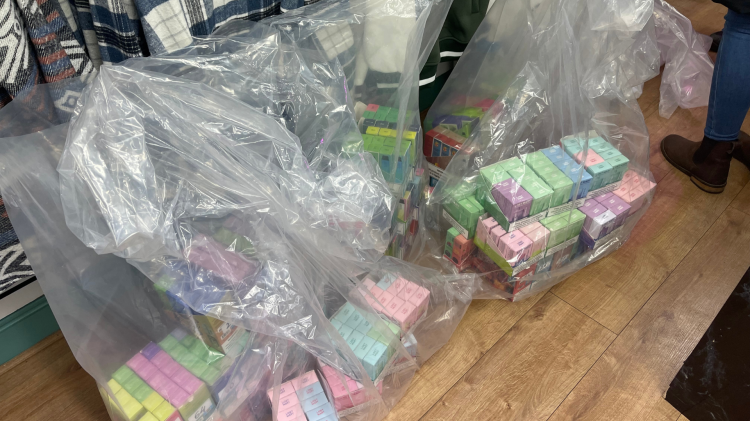
On March 21st, a report submitted to the Public Protection and Community Review Committee in the UK's Lincolnshire County revealed that between April and December 2022, law enforcement officials removed 5,417 unsafe products from the market, 5,062 of which were illegal electronic cigarettes.
This includes electronic cigarettes with nicotine levels and delivery amounts exceeding legal limits (beyond the specified number of puffs). In the UK, electronic cigarettes regulations dictate that a single-use e-cigarette should have around 600 puffs.
In a recent investigation by Trading Standards, some electronic cigarette products were found to be advertised as having a capacity of 10,000 puffs, which is 16 times the limit set by UK law.
The Lincoln County Trading Standards Office conducted inspections and seized products suspected of selling illegal e-cigarettes, using intelligence gathered from officials, partner organizations, and members of the public. The items were seized for further investigation.
To assist businesses in understanding legislation regarding electronic cigarettes, the Lincolnshire Trading Standards agency has issued letters to over 100 locations throughout the county.
They have provided a range of guidelines, including how to check if e-cigarette products comply with standard nicotine capacity, e-liquid content, and draw count. They also remind retailers that such products cannot be sold to individuals under 18 years of age.
Trade standards agencies across the UK are increasingly focusing on illegal sales of electronic cigarettes to minors. In Lincolnshire, 35% of reports received regarding the illegal sale of goods to minors involve electronic cigarettes.
The department of trade standards conducted a test on underage purchases throughout the county, and approximately one-fifth of the underage volunteers were successful in purchasing electronic cigarettes.
Mark Keal, Director of the Lincoln County Trading Standards Office, has reported that in the past 18 months there has been an explosive growth in the sales of disposable electronic cigarettes. Many stores have taken advantage of this trend to make a profit, and unfortunately, many unscrupulous businesses have knowingly sold electronic cigarettes that exceed regulated limits.
Mark said: "Although stores require identification when selling cigarettes and alcohol, sellers seem to have a more relaxed attitude when it comes to electronic cigarettes. This is something we are working to address through education and enforcement.
Further reading:
Lincolnshire authorities issue warning to 300 shops in the UK for selling e-cigarettes to minors.
In Derbyshire, England, more than 8,000 illegal electronic cigarette products have been seized, with nearly a third of disposable e-cigarettes being found to be illegal.
Reference:
More than 5,000 illicit vaping devices have been confiscated from stores in Lincolnshire.
Disclaimer
This article is provided solely for professional research, industry discussion, and informational purposes. Any references to brands, companies, products, technologies, or policies are made for factual reporting and analytical purposes only, and do not constitute endorsement, recommendation, promotion, or advertising by 2Firsts.
Nicotine-containing products, including but not limited to cigarettes, e-cigarettes, heated tobacco products, and nicotine pouches, carry significant health risks. Readers are responsible for complying with all applicable laws and regulations in their respective jurisdictions, including age restrictions and access limitations.
The information contained in this article should not be regarded as investment, legal, medical, regulatory, or commercial advice. While 2Firsts strives to ensure the accuracy and reliability of its content, it does not assume liability for any direct or indirect loss arising from errors, omissions, inaccuracies, or reliance on the information contained herein.
This article is not intended for individuals below the legal age for accessing tobacco or nicotine-related information in their jurisdiction.
Copyright Notice
This article is either original content produced by 2Firsts or content reproduced, translated, summarized, or adapted from third-party sources with attribution where applicable. The intellectual property rights of the original content remain with 2Firsts or the respective original rights holders.
No individual or organization may copy, reproduce, distribute, republish, modify, translate, or otherwise use this content without prior authorization. Any unauthorized use may result in legal action.
For copyright-related inquiries, corrections, or removal requests, please contact: info@2firsts.com.
AI-Assisted Translation and Editing Notice
Portions of this article may have been translated, edited, or reviewed with the assistance of artificial intelligence tools to improve efficiency and readability. Due to the limitations of AI-assisted translation and editing, discrepancies, omissions, or inaccuracies may exist when compared with the original source.
Where applicable, readers are advised to refer to the original source for the most complete and accurate information. If you identify any errors or believe that any content infringes upon your rights, please contact us at info@2firsts.com, and we will review and address the matter promptly.