Liverpool City Council Cracks Down on Illegal E-Cigarette Sales

Regulations by 2FIRSTS.ai
Mar.06.2024
Liverpool City Council Cracks Down on Illegal E-Cigarette Sales
Liverpool city council has closed 8 illegal e-cigarette shops since October 2023, removing thousands of illicit devices from the streets.

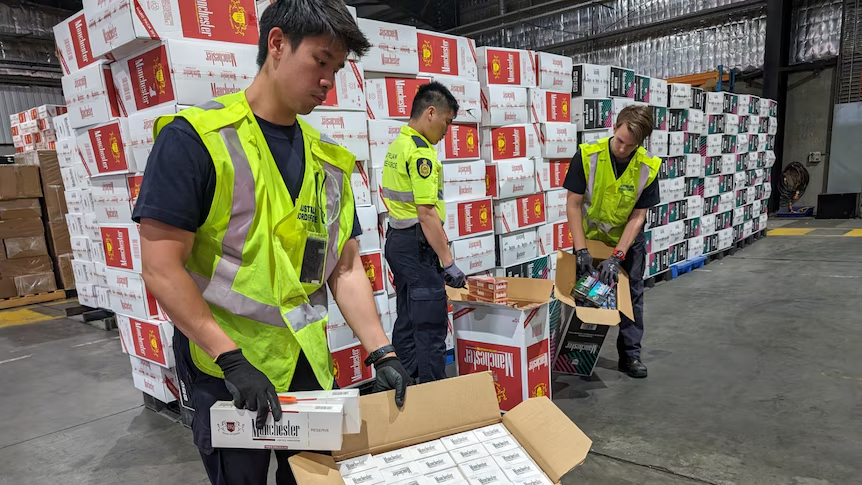
According to a report by the Liverpool Echo on March 5th, the city of Liverpool in the UK has recently carried out comprehensive closures of stores selling illegal e-cigarettes. Since October 2023, the city has closed down 8 retail stores selling illegal e-cigarettes, with over 1,200 illegal devices seized from just one store.


The new approach of using legislation to forcibly close businesses engaged in anti-social behavior during the COVID-19 pandemic has led to the disappearance of thousands of illegal e-cigarette sellers from the streets. Liverpool City Council is the first council in the northwest of England to adopt this strategy. Businesses found to be in violation will be fined and subjected to a three-month closure order.


Illegal e-cigarettes seized by authorities were found to have nicotine concentrations far above the legal limit of 20 milligrams per milliliter, as well as containing other prohibited substances such as colorants, caffeine, and taurine.


Liverpool City Council Cabinet Member for Health, Wellbeing, and Culture, Cllr Harry Doyle, stated:


Witnessing the disappearance of so many illegal products from our streets is very pleasing. In many cases, these e-cigarettes may end up in the hands of young people. Liverpool City Council is leading the way in adopting this new approach to tackling illegal sales, and we urge smokers using e-cigarettes as a smoking cessation tool to purchase them from reputable sellers.


We welcome news tips, article submissions, interview requests, or comments on this piece.

Please contact us at info@2firsts.com, or reach out to Alan Zhao, CEO of 2Firsts, on LinkedIn


Notice

1.  This article is intended solely for professional research purposes related to industry, technology, and policy. Any references to brands or products are made purely for objective description and do not constitute any form of endorsement, recommendation, or promotion by 2Firsts.

2.  The use of nicotine-containing products — including, but not limited to, cigarettes, e-cigarettes, nicotine pouchand heated tobacco products — carries significant health risks. Users are responsible for complying with all applicable laws and regulations in their respective jurisdictions.

3.  This article is not intended to serve as the basis for any investment decisions or financial advice. 2Firsts assumes no direct or indirect liability for any inaccuracies or errors in the content.

4.  Access to this article is strictly prohibited for individuals below the legal age in their jurisdiction.


Copyright


This article is either an original work created by 2Firsts or a reproduction from third-party sources with proper attribution. All copyrights and usage rights belong to 2Firsts or the original content provider. Unauthorized reproduction, distribution, or any other form of unauthorized use by any individual or organization is strictly prohibited. Violators will be held legally accountable.

For copyright-related inquiries, please contact: info@2firsts.com


AI Assistance Disclaimer


This article may have been enhanced using AI tools to improve translation and editorial efficiency. However, due to technical limitations, inaccuracies may occur. Readers are encouraged to refer to the cited sources for the most accurate information.

We welcome any corrections or feedback. Please contact us at: info@2firsts.com

Product | PMI Pilots bonds by IQOS and blends in Japan, Testing a New Heated Tobacco Platform
Philip Morris International (PMI) has launched a regional pilot of bonds by IQOS and dedicated blends tobacco sticks in Japan, introducing a new heated tobacco platform separate from the IQOS ILUMA ecosystem. The system uses Round Heat Technology with an external heating architecture, differentiating it from IQOS ILUMA’s induction-based platform. The pilot began on July 6, 2026, across three Japanese prefectures: Fukuoka, Saga and Nagasaki.
Jul.30
China’s HTP Exports Fell 14.3% in H1 2026 as Russia and Belarus Accounted for 76% Lead
In H1 2026, China’s HS 24041100 exports stood at $1.32 million, down 14.3% YoY, with volume falling 17.2% to 55.33 tons. Market distribution shifted drastically amid overall export drops. Exports to Russia and Belarus totaled $1 million, taking 76.0% of all shipments versus 29.5% in H1 2025. Belarus became the top destination with export value jumping 177.5%, while the Philippines, Singapore and Indonesia’s combined share slumped from 49.3% to 11.2%.Domestically, Yunnan led exporter registrations; Jiangsu and Shanghai were key suppliers, yet Anhui and Sichuan had no exports. Heavy concentration means order or declaration changes for Russia/Belarus greatly affect national aggregate data. The data shows customs entry points (not end markets), covering tobacco consumables only, excluding heating equipment and the complete HTP supply chain.
Aug.11
Minnesota Sues Loon as State Enforcement Targets U.S. Vape Brand Operators
Minnesota Attorney General Keith Ellison sued Maduro Distributors, Inc., doing business as Loon, on July 15, 2026, alleging that the company illegally manufactured, distributed and sold flavored vapes that appeal to minors.
Jul.16
China Tobacco Hubei explores staged nicotine pouch delivery, using dynamic membranes to slow early release and gradient particles to sustain later delivery
China Tobacco Hubei Industrial Co., Ltd. disclosed several oral nicotine-related patent applications in August 2026, including two that approach staged nicotine release from different directions. One uses a high-viscosity membrane that forms inside the pouch after contact with saliva to slow rapid early release, while the other uses gradient particles with a faster-disintegrating outer layer and a slower core to create a fast-to-sustained release profile. Together, the filings explore how nicotine pouches could balance initial delivery with release later in use.
Sep.03
Philippines Weighs Unified Vape Tax as Lawmakers Back Risk-Based Rates and Government Seeks to Fill ₱66 Billion Revenue Gap
Philippine lawmakers are considering an overhaul of the country's vape excise-tax regime to eliminate the wide gap between taxes on nicotine salt and freebase nicotine liquids and reduce incentives for misdeclaration. House Bill 5364, filed by Rep. Rufus Rodriguez and Rep. Maximo Rodriguez Jr., would impose a unified ₱10-per-milliliter tax on vapor products, with 5% annual increases beginning in 2027. Rodriguez says the proposal could generate an average ₱6 billion in annual collections from 2027 through 2030. The debate comes as the Philippine government considers tobacco, vape and other health-tax reforms to help offset around ₱66 billion in revenue expected to be forgone under a proposed tax-relief package.
Aug.18
U.S. Fifth Circuit Vacates NicQuid Vape MDO, Says FDA Comparative-Efficacy Standard Violated APA Procedures
According to VitalLaw on August 27, 2026, the U.S. Court of Appeals for the Fifth Circuit vacated an FDA marketing denial order (MDO) against NicQuid LLC, ruling that the agency’s comparative-efficacy standard for electronic nicotine delivery system (ENDS) applications had become a substantive rule requiring notice-and-comment rulemaking under the Administrative Procedure Act (APA). The court did not reject FDA’s authority to compare the public health benefits and risks of flavored vapes, but held that the agency could not establish a broadly binding standard through informal adjudications. The case was remanded to FDA for further proceedings.
Aug.28