According to a statement released by the Dongyue Sub-bureau of the Public Security Bureau (PSB) in Shiyan, Hubei Province on November 23rd, a major case involving the production and sale of counterfeit e-cigarettes across multiple provinces and cities has been successfully cracked. The authorities have apprehended 20 suspects involved in the case, with the total value of the products involved exceeding 100 million yuan.
In March 2023, staff members of the Tenyan Tobacco Sales Bureau discovered the sale of fruit-flavored e-cigarettes (pods) within the urban area. They immediately launched an investigation and identified Liu as a suspect for selling tobacco products without a license. Subsequently, they reported the matter to the police.
After receiving a report, the Economic Investigation Brigade of Dongyue Sub-bureau proceeded to initiate a formal investigation into Liu's case. On April 20th, the specialized police officers apprehended Liu and his superior, Xiang, inside a residential property in Wuhan, where they were engaged in a transaction. A total of over 40,000 counterfeit e-cigarette pods and 136 smoking accessories were seized at the scene.
After the arrest of two individuals, the police successfully identified two subordinate distributors and their superior, Wu Mou, located in Wuxi, Jiangsu Province through interrogations and investigative analysis. In order to gather further evidence against Wu Mou, the specialized police team conducted on-site investigations in Wuxi. Ultimately, six suspects involved in illegal business activities, with Wu Mou as the leader, were apprehended. Additionally, three shops and three storage locations under their names were searched, resulting in the seizure of over 20,000 counterfeit e-cigarette pods and one transportation vehicle.
In a situation where Wu was extremely uncooperative, the investigating police analyzed and assessed the logistics and financial flows they had already obtained. As the evidence chain became clearer, Wu's psychological defenses were gradually breached, and he confessed to the process of contacting Feng and Qiu to obtain goods.
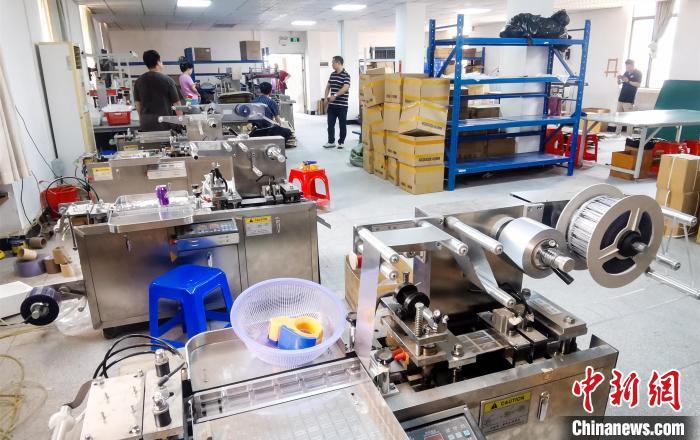
As a result, the task force immediately traveled to Dongguan to carry out an investigation, successfully identifying several suspected criminals, including Feng and Qiu. However, no finished fruit-flavored e-cigarette (pod) products were found at the production site. After more than two months of investigation, the police gradually unraveled information regarding the organization structure and production patterns of the criminal gang.
On July 26th, under the careful coordination of the public security authorities and tobacco department in multiple locations, the special task force of the Dongyue Sub-bureau and staff from the tobacco department carried out simultaneous operations in Dongguan, Zhongshan, and Zhanjiang, Guangdong. They successfully arrested two suspects involved in the case, dismantled three e-cigarette manufacturing sites, and shut down two storage and distribution centers. This operation effectively disrupted the entire supply chain of e-cigarette production, sales, and raw material processing related to this case.
We welcome news tips, article submissions, interview requests, or comments on this piece.
Please contact us at info@2firsts.com, or reach out to Alan Zhao, CEO of 2Firsts, on LinkedIn
Notice
1. This article is intended solely for professional research purposes related to industry, technology, and policy. Any references to brands or products are made purely for objective description and do not constitute any form of endorsement, recommendation, or promotion by 2Firsts.
2. The use of nicotine-containing products — including, but not limited to, cigarettes, e-cigarettes, nicotine pouchand heated tobacco products — carries significant health risks. Users are responsible for complying with all applicable laws and regulations in their respective jurisdictions.
3. This article is not intended to serve as the basis for any investment decisions or financial advice. 2Firsts assumes no direct or indirect liability for any inaccuracies or errors in the content.
4. Access to this article is strictly prohibited for individuals below the legal age in their jurisdiction.
Copyright
This article is either an original work created by 2Firsts or a reproduction from third-party sources with proper attribution. All copyrights and usage rights belong to 2Firsts or the original content provider. Unauthorized reproduction, distribution, or any other form of unauthorized use by any individual or organization is strictly prohibited. Violators will be held legally accountable.
For copyright-related inquiries, please contact: info@2firsts.com
AI Assistance Disclaimer
This article may have been enhanced using AI tools to improve translation and editorial efficiency. However, due to technical limitations, inaccuracies may occur. Readers are encouraged to refer to the cited sources for the most accurate information.
We welcome any corrections or feedback. Please contact us at: info@2firsts.com