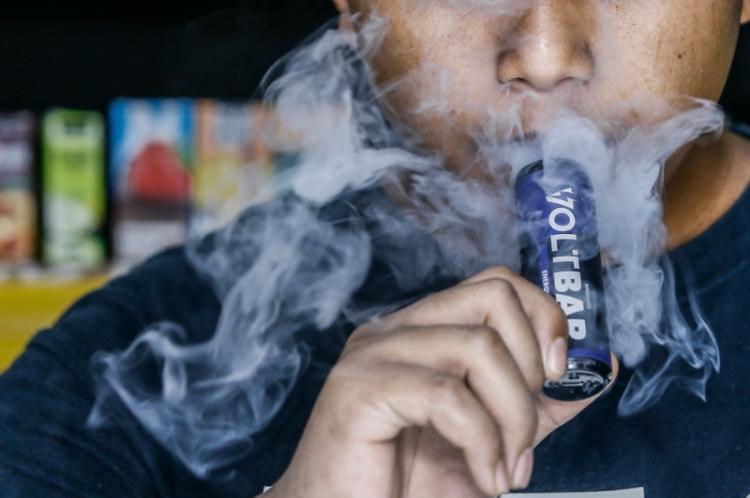
According to the Malay Mail on August 14th, the High Court of Malaysia has granted three civil society organizations the permission to proceed with their lawsuit against Health Minister Zaliha Mustafa and the Malaysian government for failing to curb the sale of e-cigarette liquid and the provision of e-cigarette gel to children.
In a lawsuit filed as early as June 30th, civil society groups are urging the court to overturn the decision made by the Minister of Health to remove e-cigarette liquids and e-cigarette gels from the list of toxic substances, or effectively reinstate regulation of such products.
On the morning of August 14th, Justice Datuk Wan Ahmad Fadzlin Wan Chik presided over and approved the judicial review applications from the Malaysian Tobacco Control Council, Malaysian Green Lungs Association, and Children's Voice Private Limited Company.
Three civil society groups' lawyer Edmund Bon told the Malay Mail that the High Court has also heard applications from three civil society groups requesting a temporary stay on the Health Minister's directive issued on March 31 to remove e-cigarettes or liquids and gels used in e-cigarettes from the "poisonous substances" category.
These three civil society groups are calling for the temporary inclusion of e-liquid and e-cigarette gel in the list of toxins, in order to prevent the open legal sale of such products to children until the litigation is resolved.
According to written opinions, Bon believes it is necessary to temporarily suspend the distribution of free e-cigarette liquid and e-cigarette gel due to the potential health risks they pose to children, as well as the increase in fatalities caused by lung injuries associated with e-cigarette use, and the subsequent rise in medical costs.
Bon further emphasized that the lack of regulation on e-liquid means that the nicotine content in such products is currently unregulated, with any level currently being permitted by law.
Previously, a civil organization claimed that the removal of e-cigarette liquid from the list of toxic substances was done in order for the government to tax e-cigarettes and e-cigarette liquids containing nicotine. The organization pointed out that the Ministry of Finance has imposed a consumption tax on e-cigarettes and e-cigarette liquids containing nicotine, starting from April 1, with a tariff of 40 Malaysian Ringgit (63 Chinese Yuan) per milliliter. Bon believes that public health should take precedence over taxation.
On August 14th, Senior Federal Counsel Ahmed Hanif Hanbali, representing the government and the health minister, confirmed to the Malay Mail that the Attorney General does not object to this permission, and the High Court has also approved the permit today. It is reported that the High Court will decide on September 5th whether to approve the temporary suspension sought by three civil society organizations.
References:
Lawsuit Against Malaysia’s Health Minister Over Vape Liquid Permitted to Move Forward by Court
Disclaimer
This article is provided solely for professional research, industry discussion, and informational purposes. Any references to brands, companies, products, technologies, or policies are made for factual reporting and analytical purposes only, and do not constitute endorsement, recommendation, promotion, or advertising by 2Firsts.
Nicotine-containing products, including but not limited to cigarettes, e-cigarettes, heated tobacco products, and nicotine pouches, carry significant health risks. Readers are responsible for complying with all applicable laws and regulations in their respective jurisdictions, including age restrictions and access limitations.
The information contained in this article should not be regarded as investment, legal, medical, regulatory, or commercial advice. While 2Firsts strives to ensure the accuracy and reliability of its content, it does not assume liability for any direct or indirect loss arising from errors, omissions, inaccuracies, or reliance on the information contained herein.
This article is not intended for individuals below the legal age for accessing tobacco or nicotine-related information in their jurisdiction.
Copyright Notice
This article is either original content produced by 2Firsts or content reproduced, translated, summarized, or adapted from third-party sources with attribution where applicable. The intellectual property rights of the original content remain with 2Firsts or the respective original rights holders.
No individual or organization may copy, reproduce, distribute, republish, modify, translate, or otherwise use this content without prior authorization. Any unauthorized use may result in legal action.
For copyright-related inquiries, corrections, or removal requests, please contact: info@2firsts.com.
AI-Assisted Translation and Editing Notice
Portions of this article may have been translated, edited, or reviewed with the assistance of artificial intelligence tools to improve efficiency and readability. Due to the limitations of AI-assisted translation and editing, discrepancies, omissions, or inaccuracies may exist when compared with the original source.
Where applicable, readers are advised to refer to the original source for the most complete and accurate information. If you identify any errors or believe that any content infringes upon your rights, please contact us at info@2firsts.com, and we will review and address the matter promptly.