Man Convicted for Smoking in Aircraft Restroom in Cayman Islands

Regulations by 2FIRSTS.ai
Jan.15.2024
Man Convicted for Smoking in Aircraft Restroom in Cayman Islands
A man is convicted in the Cayman Islands for smoking in an airplane lavatory, fined $1,200.

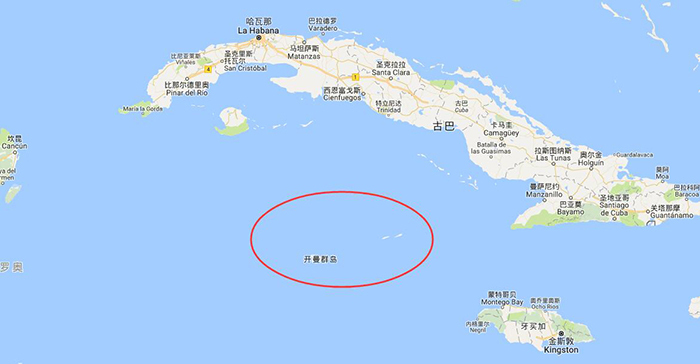
Recently, according to Cayman Marl Road, a media outlet in the Cayman Islands, a man was convicted by the UK Cayman Islands Customs and Border Control (CBC) for smoking in the restroom of a flight entering the Cayman Islands.


Passenger Brendan Joseph Fallon admitted his reckless and negligent behavior before Judge Vanessa Allard and was fined 1000 Cayman Islands dollars (approximately $1200 USD). According to reports, Fallon, a military veteran, informed the judge that he is currently experiencing financial difficulties.


According to regulations from the Federal Aviation Administration (FAA) in the United States, passengers are prohibited from smoking or using e-cigarettes on board an aircraft. This behavior is not only dangerous, but also against federal law. In the United States, passengers who violate federal e-cigarette regulations may face fines of up to $1,771.


A spokesperson from the Federal Aviation Administration (FAA) revealed last year that e-cigarettes are the primary cause of in-flight smoke, fire, or extreme heat incidents for the year 2022.


We welcome news tips, article submissions, interview requests, or comments on this piece.

Please contact us at info@2firsts.com, or reach out to Alan Zhao, CEO of 2Firsts, on LinkedIn


Notice

1.  This article is intended solely for professional research purposes related to industry, technology, and policy. Any references to brands or products are made purely for objective description and do not constitute any form of endorsement, recommendation, or promotion by 2Firsts.

2.  The use of nicotine-containing products — including, but not limited to, cigarettes, e-cigarettes, nicotine pouchand heated tobacco products — carries significant health risks. Users are responsible for complying with all applicable laws and regulations in their respective jurisdictions.

3.  This article is not intended to serve as the basis for any investment decisions or financial advice. 2Firsts assumes no direct or indirect liability for any inaccuracies or errors in the content.

4.  Access to this article is strictly prohibited for individuals below the legal age in their jurisdiction.


Copyright


This article is either an original work created by 2Firsts or a reproduction from third-party sources with proper attribution. All copyrights and usage rights belong to 2Firsts or the original content provider. Unauthorized reproduction, distribution, or any other form of unauthorized use by any individual or organization is strictly prohibited. Violators will be held legally accountable.

For copyright-related inquiries, please contact: info@2firsts.com


AI Assistance Disclaimer


This article may have been enhanced using AI tools to improve translation and editorial efficiency. However, due to technical limitations, inaccuracies may occur. Readers are encouraged to refer to the cited sources for the most accurate information.

We welcome any corrections or feedback. Please contact us at: info@2firsts.com

China’s HTP Exports Fell 14.3% in H1 2026 as Russia and Belarus Accounted for 76% Lead
In H1 2026, China’s HS 24041100 exports stood at $1.32 million, down 14.3% YoY, with volume falling 17.2% to 55.33 tons. Market distribution shifted drastically amid overall export drops. Exports to Russia and Belarus totaled $1 million, taking 76.0% of all shipments versus 29.5% in H1 2025. Belarus became the top destination with export value jumping 177.5%, while the Philippines, Singapore and Indonesia’s combined share slumped from 49.3% to 11.2%.Domestically, Yunnan led exporter registrations; Jiangsu and Shanghai were key suppliers, yet Anhui and Sichuan had no exports. Heavy concentration means order or declaration changes for Russia/Belarus greatly affect national aggregate data. The data shows customs entry points (not end markets), covering tobacco consumables only, excluding heating equipment and the complete HTP supply chain.
Aug.11
U.S. House Defense Bill Includes Pilot Review of Vapes, Nicotine Pouches and Heated Tobacco for Military Smokers
On July 23, 2026, the U.S. House of Representatives passed its version of the Fiscal Year 2027 National Defense Authorization Act (NDAA), which includes Section 707 provisions requiring the Department of Defense to evaluate tobacco use and nicotine alternatives among military personnel. The pilot program would examine products including vapes, nicotine pouches and heated tobacco products, primarily among active-duty service members who continue using combustible tobacco. The provision is a policy evaluation effort, not an authorization for military vaping promotion or a ban on vape products.
Jul.28
JT’s Ploom Volumes Rise 43.5% as Cigarettes Anchor Its Transition
JT’s Ploom heated-tobacco volumes rose 43.5% in the first half of 2026, while combustibles still represented about 97% of its tobacco volume and remained the main earnings base. In Japan, reduced-risk products now account for 48.7% of industry shipments, shifting competition from category adoption towards brand share, pricing and consumer retention. JT’s results offer a revealing case of a traditional tobacco company pursuing a prolonged, dual-track transformation.
JTI
Jul.30
Product | VEEV One Plus Goes Official as PMI Strengthens Its Closed-Pod Vaping Portfolio
Philip Morris International (PMI) has officially introduced the VEEV One Plus, the next-generation device in its closed-pod vaping lineup. The product is now featured on the official VEEV website in Portugal, bringing hardware upgrades including a new dual-pod storage system, a larger battery, and an updated device design while maintaining compatibility with existing VEEV One pods.
Jul.02
EU ‘TPD3’ Enters Next Phase on Aug. 14 as Fragmented Vape and Nicotine Pouch Rules Push the Single Market Toward Regulatory Overhaul
A 12-week European Commission consultation on revising the Tobacco Products Directive and Tobacco Advertising Directive is due to close on Aug. 14, 2026. The Commission has identified e-cigarette flavours, disposable vapes, tobacco heating devices, nicotine pouches, nicotine-free e-cigarettes, packaging and digital marketing among areas for possible new EU rules. National regulations already vary significantly across the bloc, a fragmentation the Commission says creates internal-market barriers and distorts competition. No formal revised TPD/TAD legislative text has yet been published, with the Commission currently indicating December 2026 for the legislative initiative.
Aug.14
Australian Coalition Taskforce Calls for 80% Tobacco Tax Cut to Combat Illicit Market
According to SGST on August 26, 2026, Australia’s Coalition Illegal Tobacco Taskforce released a report recommending an up to 80% cut in tobacco excise to reduce the appeal of the illicit tobacco market. The report claimed organised crime groups now control about 80% of Australia’s tobacco market and argued that high excise rates have widened the price gap between legal and illegal products. The recommendation remains a policy proposal and has not been adopted by the Australian government, which said its focus remains on enforcement, compliance and additional resources.
Aug.27