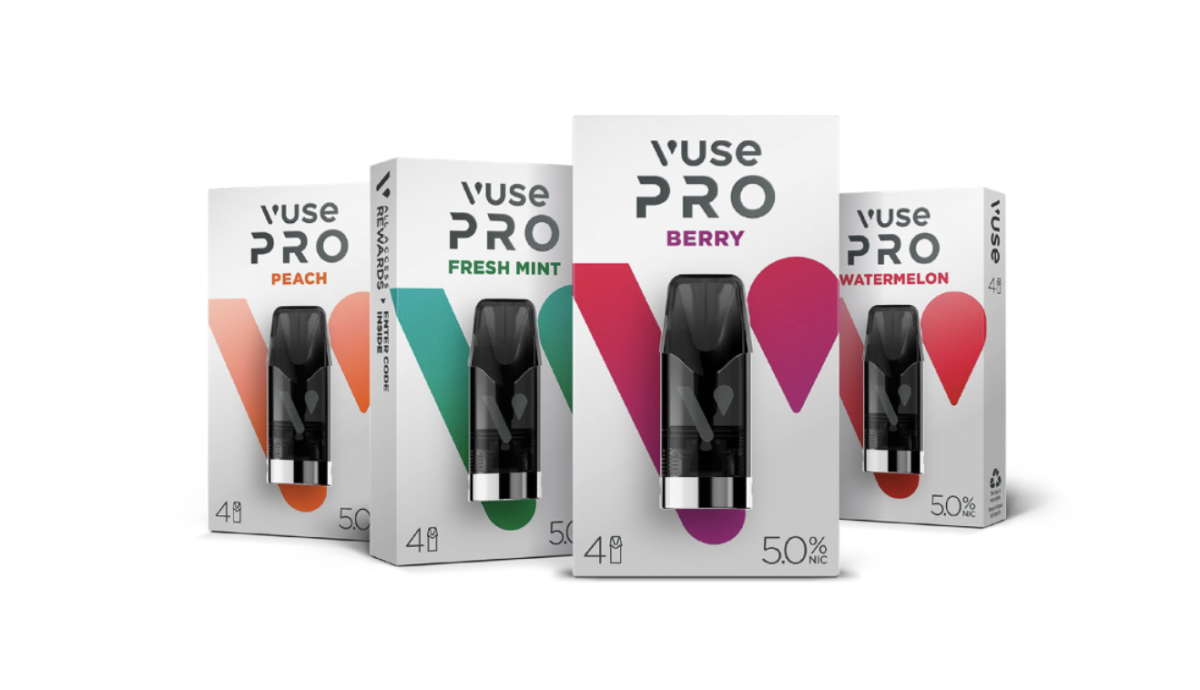
On April 23rd, following the announcement of Quebec's plan to ban the sale of flavored e-cigarette products, the Manitoba Lung Association stated that the Manitoba provincial government should follow in Quebec's footsteps.
It is suggested to emulate Quebec.
The government of Quebec, Canada aims to introduce legislation in the coming weeks that will prohibit the sale of flavored e-cigarettes, excluding tobacco flavor. The law will also prevent e-cigarette manufacturers from selling products that do not conform to the standard nicotine concentration (20mg/ml) and product shape.
Neil Johnston, President and CEO of the Manitoba Lung Association, said it was "exciting" to hear that the Quebec government is taking action.
Neil Johnston | Photo credit: Global News
He expressed that there are few regulations in this province regarding flavored electronic cigarettes, and the requirement to verify the buyer's age does not necessarily prevent minors from obtaining the product through friends or family.
Johnston believes that the Manitoba government should do more.
They should take appropriate measures without federal regulation.
Johnston believes that electronic cigarette products were originally invented to help people quit smoking, so they should not require any added flavors.
Johnston stated, "At that time, there were no regulations on the manufacturing or importation of electronic cigarette products. Now, the government and regulatory agencies are playing catch up by implementing relevant legislation.
More likely to attract young people to smoking.
According to data from Statistics Canada in 2021, 13% of Canadian youth aged 15 to 19 reported using e-cigarettes in the previous month during a survey.
Johnston believes that e-cigarettes do indeed lead to smoking.
He said:
We do know that young people who use e-cigarettes are more likely to start smoking.
According to 2FIRSTS, the ban on flavored electronic cigarettes in Canada is not a isolated incident. Several provinces and territories including Nova Scotia, Prince Edward Island, New Brunswick, and the Northwest Territories have prohibited all non-tobacco e-cigarette flavors. In British Columbia, Ontario, and Saskatchewan, flavored e-cigarette liquids are limited to specialty vaping stores.
Related Reading:
Quebec, Canada may soon introduce flavor ban; industry association plans to appeal to court.
Quebec raises tobacco product taxes.
Quebec, Canada is planning to ban flavored electronic cigarettes. Imperial Tobacco criticizes the proposed flavor restrictions as "misleading.
References:
A representative urges Manitoba to join other provinces in prohibiting flavoured vape products, stating that it is challenging for young people to refrain from using them.
Disclaimer
This article is provided solely for professional research, industry discussion, and informational purposes. Any references to brands, companies, products, technologies, or policies are made for factual reporting and analytical purposes only, and do not constitute endorsement, recommendation, promotion, or advertising by 2Firsts.
Nicotine-containing products, including but not limited to cigarettes, e-cigarettes, heated tobacco products, and nicotine pouches, carry significant health risks. Readers are responsible for complying with all applicable laws and regulations in their respective jurisdictions, including age restrictions and access limitations.
The information contained in this article should not be regarded as investment, legal, medical, regulatory, or commercial advice. While 2Firsts strives to ensure the accuracy and reliability of its content, it does not assume liability for any direct or indirect loss arising from errors, omissions, inaccuracies, or reliance on the information contained herein.
This article is not intended for individuals below the legal age for accessing tobacco or nicotine-related information in their jurisdiction.
Copyright Notice
This article is either original content produced by 2Firsts or content reproduced, translated, summarized, or adapted from third-party sources with attribution where applicable. The intellectual property rights of the original content remain with 2Firsts or the respective original rights holders.
No individual or organization may copy, reproduce, distribute, republish, modify, translate, or otherwise use this content without prior authorization. Any unauthorized use may result in legal action.
For copyright-related inquiries, corrections, or removal requests, please contact: info@2firsts.com.
AI-Assisted Translation and Editing Notice
Portions of this article may have been translated, edited, or reviewed with the assistance of artificial intelligence tools to improve efficiency and readability. Due to the limitations of AI-assisted translation and editing, discrepancies, omissions, or inaccuracies may exist when compared with the original source.
Where applicable, readers are advised to refer to the original source for the most complete and accurate information. If you identify any errors or believe that any content infringes upon your rights, please contact us at info@2firsts.com, and we will review and address the matter promptly.