Modified Risk Applications for ZYN Nicotine Pouches Now Under FDA Scientific Review

Jun.18.2025
  Modified Risk Applications for ZYN Nicotine Pouches Now Under FDA Scientific Review
FDA has accepted MRTP applications for 20 ZYN nicotine pouches, following their PMTA approval in January. Public comment period now open.

Disclaimer: This article is based on publicly available information released by the U.S. FDA and interpreted by 2Firsts for informational purposes only. It does not represent the final outcome of the FDA’s scientific or regulatory review. The MRTP applications for ZYN nicotine pouches are still under evaluation and have not yet been approved.


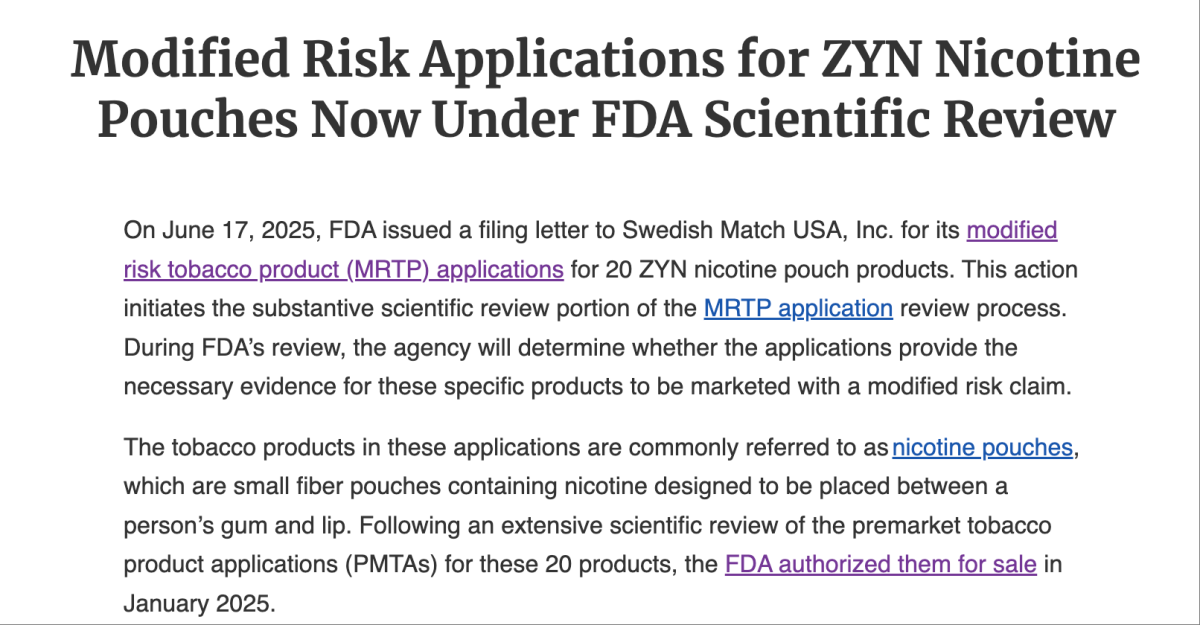
[by 2Firsts]On June 17, 2025, the U.S. Food and Drug Administration (FDA) issued a filing letter to Swedish Match USA, Inc., officially accepting modified risk tobacco product (MRTP) applications for 20 ZYN nicotine pouch products. This acceptance marks the start of the scientific review phase of the MRTP process.


These 20 ZYN products were previously granted marketing authorization in January 2025 after a full review under the premarket tobacco product application (PMTA) pathway. The FDA’s decision marked the first time a group of mainstream nicotine pouch products received such authorization, representing a regulatory milestone for the nicotine alternatives sector. Swedish Match is now seeking to add a modified risk claim to its existing authorization.


FDA is evaluating whether the company has provided sufficient scientific evidence to support the following proposed claim:


“Using ZYN instead of cigarettes puts you at a lower risk of mouth cancer, heart disease, lung cancer, stroke, emphysema, and chronic bronchitis.”

As required by law, such modified risk statements must receive separate FDA authorization. The agency’s review will assess whether the applications meet both scientific and legal standards and will conclude with an order either granting or denying the request.


Beginning June 18, 2025, the public may submit comments on these MRTP applications via regulations.gov, using docket number FDA-2025-N-0835. The FDA will post application materials, including any amendments, on its Center for Tobacco Products (CTP) website on a rolling basis, with redactions for confidential information.


Once all materials have been made available, the FDA will announce the close of the public comment period. This date will be no earlier than 180 days after publication in the Federal Register and no fewer than 30 days following the posting of the final set of documents.


In addition to public comment, the FDA will convene its Tobacco Product Scientific Advisory Committee (TPSAC), as mandated by the 2009 Family Smoking Prevention and Tobacco Control Act, to evaluate the scientific merits of the application. Details on the TPSAC meeting will be announced in due course.


What Is a Modified Risk Tobacco Product (MRTP)?


Under the U.S. Family Smoking Prevention and Tobacco Control Act, a Modified Risk Tobacco Product (MRTP) is a tobacco product that is sold or distributed with claims of reduced harm or risk compared to conventional tobacco products. Such claims must be scientifically substantiated and authorized by the FDA through a separate review process. Applicants must demonstrate that the product, as actually used by consumers, will significantly reduce harm and the risk of tobacco-related disease to individuals and the population as a whole. Only after FDA approval can these reduced-risk statements be used in marketing.

Glas Says FDA Scientific Review Backed Several Flavored Products Before Senior Leaders Blocked Them
Glas says newly released internal FDA records show agency scientific reviewers supported authorization for several flavored G2 products before senior leadership halted them. According to documents obtained through a Freedom of Information Act request, FDA’s Office of Science first recommended marketing authorization for all eight products in December 2025 and later supported six of them in February 2026. FDA ultimately authorized only the G2 device and one tobacco-flavored pod in March.
Apr.23 by 2FIRSTS.ai
South Korea Set to Enforce Liquid Vape Ban in Smoke-Free Areas, but Welfare Ministry Abruptly Adds Two-Month Guidance Period
Local governments across South Korea recently issued press releases saying they would intensively crack down on the use of liquid e-cigarettes in smoke-free areas. Since the revised Tobacco Business Act, passed in December last year, included liquid e-cigarettes within the definition of tobacco and took effect on April 24, local authorities had prepared to begin enforcement immediately.
Apr.27 by 2FIRSTS.ai
VEEV Arrives in South Korea, Completing PMI’s IQOS-ZYN-VEEV Portfolio
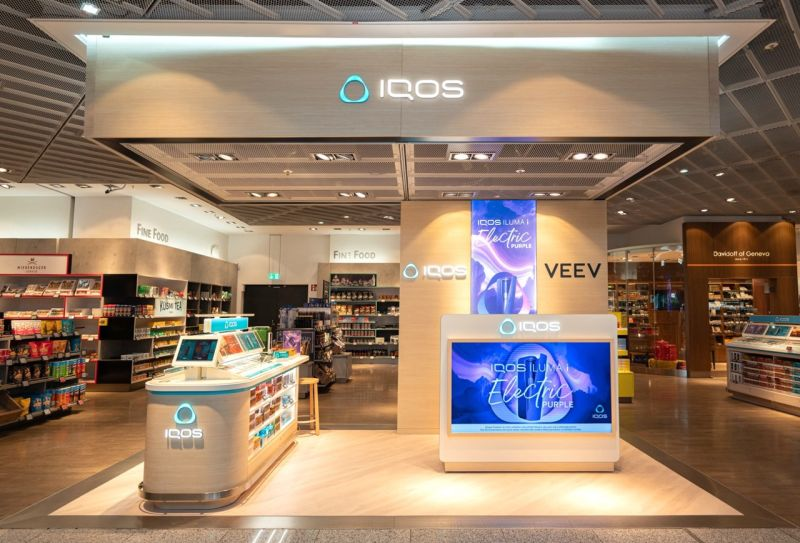
Philip Morris Korea has officially launched its VEEV e-vapor brand in South Korea, introducing both the VEEV inPRIME device and VEEBI inPRIME pods. The launch further expands PMI’s smoke-free portfolio in Korea, alongside its IQOS heated tobacco products and ZYN nicotine pouches.
Jun.16
FDA Tobacco Center Plans Faster Review Process for Certain Supplemental PMTAs
FDA Center for Tobacco Products Acting Director Bret Koplow issued a statement on May 7 outlining new steps to accelerate tobacco product premarket application review. The statement said CTP reduced the backlog of applications by approximately 70% in 2025 and that there is no longer a queue for PMTAs pending acceptance review.
May.09 by 2FIRSTS.ai
Special Report | China’s Tobacco Tax Debate Shifts Toward Tax Design as Policy Trade-offs Come Into Focus
China’s tobacco tax debate is moving from whether to raise prices to how the tax system should be designed. At a Beijing forum on World No Tobacco Day, experts discussed higher specific excise taxes, minimum tax burdens and dynamic adjustments linked to income and inflation. The issue also connects to China’s broader consumption tax reform, health financing and chronic disease costs. Public reports did not mention e-cigarettes, heated tobacco, nicotine pouches or other new nicotine products.
Jun.11
Malaysian Tobacco Control Groups Call for Annual 5% Tobacco Tax Hike
According to The Star and The Edge Malaysia, tobacco control groups in Malaysia have urged the government to raise tobacco taxes by at least 5% annually, saying the measure could reduce smoking rates and fund public health and social programmes.
News
May.26