New Hampshire Lawmakers Announce Adult-Use Marijuana Legalization Bill

Dec.14.2022
New Hampshire Lawmakers Announce Adult-Use Marijuana Legalization Bill
New Hampshire lawmakers plan to legalize adult-use cannabis, allowing adults to possess up to four ounces and grow up to six plants.

A bipartisan group of lawmakers in the New Hampshire House of Representatives has announced plans to introduce a bill legalizing adult-use cannabis.


Majority leader of the House of Representatives, Jason Osborne, told NHPR, "The House has long united and worked together to find a way to get the job done for the people of Granite State. If we're lucky, the Senate will support the will of the vast majority of citizens of New Hampshire.


According to news media reports, although the legislation has not yet been officially introduced, it has already received support from the American Civil Liberties Union and the Americans for Prosperity.


According to NHPR, the proposal would allow adults aged 21 and older to possess or gift up to 4 ounces of marijuana and ultimately establish a licensed, commercial adult-use market with state-licensed dispensaries. The legislation would also include home-growing provisions, allowing adults aged 21 and older to cultivate up to six plants, including up to three mature plants.


According to a report by NHPR, the bill will also impose an 8.5% sales tax on retail marijuana sales, with the generated revenue going towards national pensions and drug abuse prevention programs. A portion of the income will also be designated for law enforcement agencies and municipal authorities with pharmacies.


The Democratic leader of the House, Matt Wilhelm, told NHPR that "legalizing the possession of small amounts of marijuana for adults is the right thing to do for New Hampshire, and we must accomplish it by 2023." He added that users of marijuana in the state's legal market "benefit from the testing and regulation of safer products.


Although the House of Representatives has repeatedly supported measures to legalize adult use of marijuana - most recently approving legislation in March allowing state-run liquor stores to sell marijuana - the Senate has thwarted these efforts.


Governor Chris Sununu may also impede efforts to reform the state's marijuana policies.


As previously reported by Cannabis Business Times, Sununu supports the decriminalization, removal, and medical marijuana plan in New Hampshire, but his voting record on patient access is mixed.


In 2019, Sununu vetoed a bill that would have ended the requirement for patients to establish a relationship with a supplier for at least three months before obtaining medical marijuana certification.


Disclaimer

This article is provided solely for professional research, industry discussion, and informational purposes. Any references to brands, companies, products, technologies, or policies are made for factual reporting and analytical purposes only, and do not constitute endorsement, recommendation, promotion, or advertising by 2Firsts.

Nicotine-containing products, including but not limited to cigarettes, e-cigarettes, heated tobacco products, and nicotine pouches, carry significant health risks. Readers are responsible for complying with all applicable laws and regulations in their respective jurisdictions, including age restrictions and access limitations.

The information contained in this article should not be regarded as investment, legal, medical, regulatory, or commercial advice. While 2Firsts strives to ensure the accuracy and reliability of its content, it does not assume liability for any direct or indirect loss arising from errors, omissions, inaccuracies, or reliance on the information contained herein.

This article is not intended for individuals below the legal age for accessing tobacco or nicotine-related information in their jurisdiction.


Copyright Notice

This article is either original content produced by 2Firsts or content reproduced, translated, summarized, or adapted from third-party sources with attribution where applicable. The intellectual property rights of the original content remain with 2Firsts or the respective original rights holders.

No individual or organization may copy, reproduce, distribute, republish, modify, translate, or otherwise use this content without prior authorization. Any unauthorized use may result in legal action.

For copyright-related inquiries, corrections, or removal requests, please contact: info@2firsts.com.


AI-Assisted Translation and Editing Notice

Portions of this article may have been translated, edited, or reviewed with the assistance of artificial intelligence tools to improve efficiency and readability. Due to the limitations of AI-assisted translation and editing, discrepancies, omissions, or inaccuracies may exist when compared with the original source.

Where applicable, readers are advised to refer to the original source for the most complete and accurate information. If you identify any errors or believe that any content infringes upon your rights, please contact us at info@2firsts.com, and we will review and address the matter promptly.


Reynolds Puts Nearly 183,000 U.S. Contracted Outlets Under Age-Verification Rules, Covering 94% of Volume — Can It Shift an Unauthorized Vape Market?
Reynolds American says nearly 183,000 U.S. retail outlets are under contract, with its Retail Marketing Plan Contract covering about 94% of company volume and requiring point-of-sale age verification. The company combines those contracts with We Card, TruAge, NACS-linked infrastructure and POS integration, while enhanced Vuse Pro retail rules add ID scanning, purchase limits and stronger underage-sales accountability. The initial Vuse Pro rollout targets about 50,000 stores. The system is taking shape as unauthorized vapor products remain dominant in parts of the U.S. market: a 2026 study estimated they accounted for 69.4% of tracked brick-and-mortar e-cigarette dollar sales in December 2025.
Special Report
Oct.15
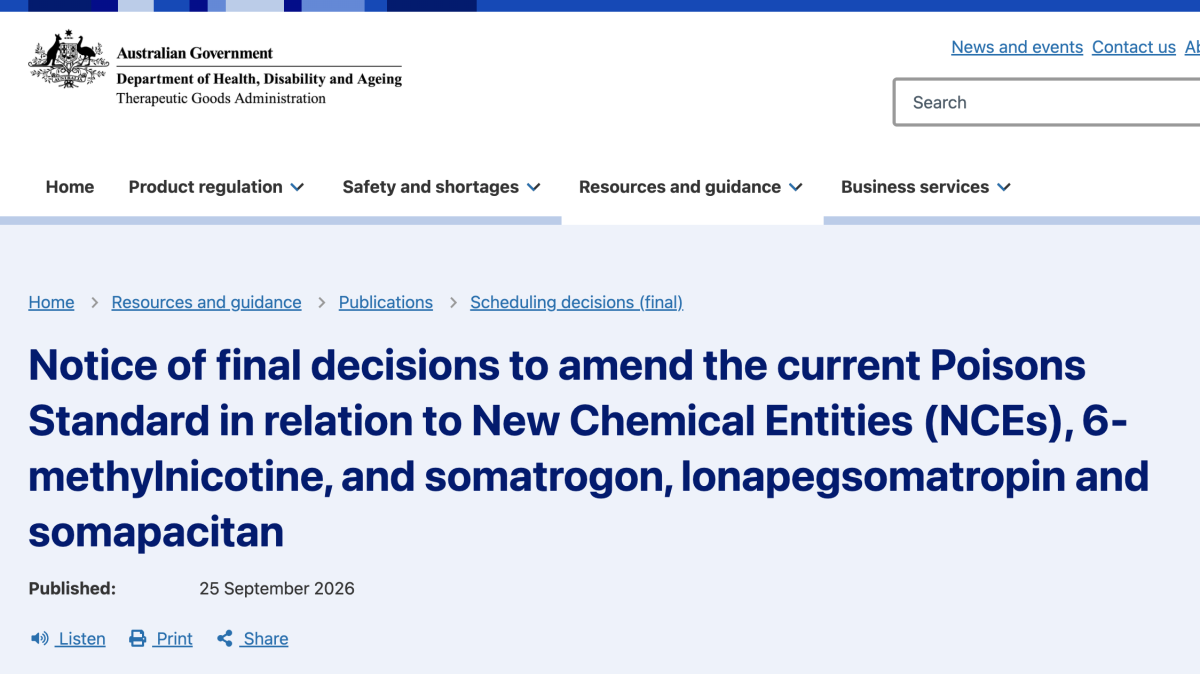
Australia Adds 6-Methylnicotine to Schedule 9 Prohibited Substances, Effective October 1
Australia's Therapeutic Goods Administration published a final decision on September 25 to classify 6-methylnicotine as a Schedule 9 prohibited substance under the Poisons Standard, effective October 1, 2026. TGA said the chemical has been reported in e-cigarette liquids sold in Australia and marketed as nicotine-free or nicotine alternatives, while evidence also indicates its use in preparations such as oral pouches. The government originally proposed a Schedule 7 classification but ultimately adopted the stricter Schedule 9 designation, citing acute toxicity, dependence risk, use in unapproved consumer products and misleading marketing.
News
Sep.29 by 2Firsts Perspectives
U.S. Rep. Krishnamoorthi Questions FDA Over Planned PMTA Rewrite, Seeks Communications With Altria and Reynolds
U.S. Rep. Raja Krishnamoorthi on Oct. 6 questioned the FDA over its plan to reassess and potentially replace the 2021 PMTA regulatory framework, asking the agency to identify provisions it may change or eliminate, state whether current scientific evidentiary standards will be maintained, and disclose communications with Altria, Reynolds and other parties challenging the rule. Krishnamoorthi led a congressional investigation into JUUL and youth vaping in 2019 and has since remained active on e-cigarette regulation and enforcement.
Regulations
Oct.08
Why Does JPMorgan Favor BAT Over Philip Morris Despite Forecasting Slower Growth of 3.9% Versus 6.2%?
JPMorgan resumed equity research coverage of British American Tobacco (BAT), Philip Morris International (PMI) and Imperial Brands in November 2026, assigning BAT an Overweight rating and the other two companies Neutral ratings. The bank forecasts like-for-like sales growth of 3.9% for BAT and 6.2% for PMI in 2027, but estimates the two companies will trade at approximately 11 times and 21 times 2027 earnings, respectively. JPMorgan cited BAT's improving position in US nicotine pouches and vaping products as a driver of its investment outlook. BAT reported a 220% constant-currency increase in US modern oral nicotine revenue in the first half of 2026, while PMI's ZYN US shipments returned to growth in the third quarter. Imperial expects NGPs to represent 4% to 5% of sales and has expanded its oral portfolio through acquisitions.
Capital Markets
Nov.12
Product | KT&G Launches lil HYBRID 3.0 Misty Rosé Edition II in South Korea With Two Pink Finishes at 88,000 Won
South Korean tobacco company KT&G launched the limited-edition lil HYBRID 3.0 Misty Rosé Edition II on September 30, 2026, following the original Misty Rosé Edition introduced in November 2025. The new release comes in two pink finishes, Bloom Rosé and Viva Rosé, each priced at 88,000 won. Both versions initially went on sale through the lil Store online shop and lil MINIMALIUM flagship stores. From October 7, Bloom Rosé became available at approximately 1,500 lil Station retail outlets nationwide. The release retains the existing lil HYBRID 3.0 hybrid heated tobacco platform, with changes focused on exterior design and distribution.
product
Oct.10
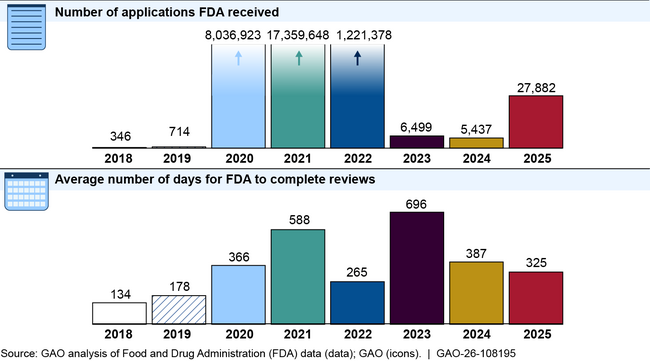
GAO Audit Finds Nearly 132,000 FDA Tobacco Applications Waiting an Average 1,266 Days as Nicotine Pouch Pilot Practices Move Into Vape PMTA Reviews
A U.S. Government Accountability Office audit found that 131,915 tobacco product applications submitted to the FDA since 2018 remained without a final review as of December 31, 2025, with pending applications waiting an average of 1,266 days. GAO also found FDA lacks the data needed to systematically determine whether scientific reviews meet applicable timelines. HHS agreed to upgrade the agency's tracking systems. At the same time, FDA has begun applying lessons from its nicotine pouch PMTA pilot to e-cigarette reviews, while changes to enforcement policy and electronic submissions are making the specific stage of a PMTA increasingly relevant to market access.
FDA
Oct.03