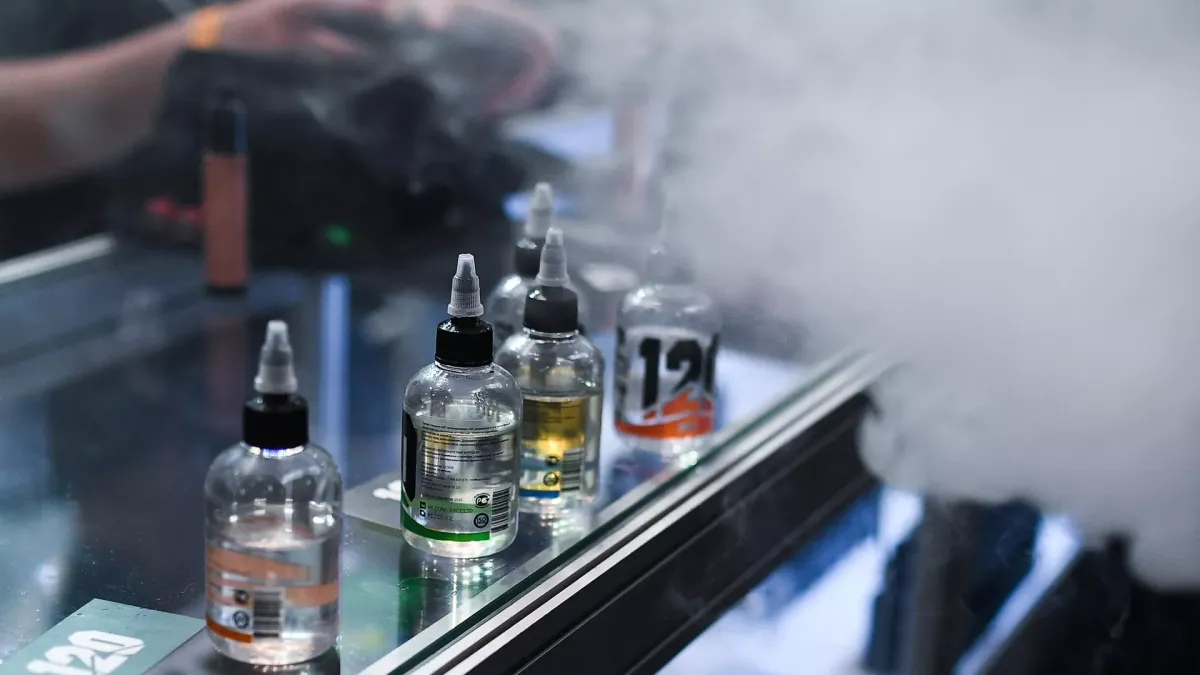
According to a report by RIA Novosti, scientists from Saratov State University in Russia have unexpectedly discovered alternative uses of e-cigarette liquid in the field of medicine.
According to them, the ingredients in e-liquid can enhance the transparency of tissues to light waves, allowing doctors to better observe affected organs and evenly irradiate them during the treatment process, such as in the treatment of mucous membranes in throat and lung cancer.
Optical tissue visualization is considered a promising direction in medical diagnostics. It allows for detailed examination of diseases, particularly the spread of cancer, and the study of cellular internal structures, explained Professor N.G. Chernyshevsky from Saratov State Research University.
In order to ensure the uniform and effective penetration of radiation through the skin and internal organs, a special transparent agent is required. This agent should have the ability to reduce the scattering of light in biological tissues without absorbing the wavelengths necessary for diagnosis. This is crucial for the successful detection of diseases.
Valery Tukhin, director of the Department of Optics and Photonics at Saratov National Research University and academician of the Russian Academy of Sciences, explained, "Our research proves that e-cigarette liquids are the optimal agents for various new biological diagnostics in the respiratory tract and oral cavity. These liquids, composed of vegetable glycerin and propylene glycol, have previously demonstrated high efficiency in transparent agents, and their combination proves to be most effective.
He further pointed out that glycerol is the unique active ingredient in this diagnosis because it does not absorb light over a very broad spectrum, ranging from infrared to ultraviolet with a minimum wavelength of approximately 150 nanometers. Propylene glycol, on the other hand, enhances the permeability of biofilms to glycerol.
Because the proportions of these two components differ in various mixtures, it is easy to select the optimal ratio for medical use. It is worth noting that the e-liquids being discussed by scientists do not contain nicotine or flavorings.

He continued, "These characteristics are not only necessary in diagnosis, but also in phototherapy treatment, such as treating cancer using laser irradiation or other sources of light waves, and significantly improving the photosensitivity of specific tissues. Glycerol propylene glycol mixture not only provides better target visualization, but also achieves more uniform light distribution in deep tissues. These advantages will help reduce radiation dosage and improve treatment effectiveness.
Scientists also added that e-cigarette liquid can be used as an antifreeze when freezing live organs - that is, by placing the organs in this mixture, they can be cooled to extremely low temperatures without forming sharp ice crystals that can damage cells.
However, prolonged exposure to e-cigarette vapors can potentially result in throat cancer, lung cancer, and cardiovascular diseases due to the effects on the oral and lung mucosa. In addition, e-cigarettes also increase vulnerability to viruses and toxins as propylene glycol can facilitate the penetration of various particles and molecules from the air into the bloodstream.
This research was funded by the Russian Science Foundation (grant number: 23-14-00287).
Reference:
[1] В России нашли неожиданное применение смесей для вейпов в медицине
Disclaimer
This article is provided solely for professional research, industry discussion, and informational purposes. Any references to brands, companies, products, technologies, or policies are made for factual reporting and analytical purposes only, and do not constitute endorsement, recommendation, promotion, or advertising by 2Firsts.
Nicotine-containing products, including but not limited to cigarettes, e-cigarettes, heated tobacco products, and nicotine pouches, carry significant health risks. Readers are responsible for complying with all applicable laws and regulations in their respective jurisdictions, including age restrictions and access limitations.
The information contained in this article should not be regarded as investment, legal, medical, regulatory, or commercial advice. While 2Firsts strives to ensure the accuracy and reliability of its content, it does not assume liability for any direct or indirect loss arising from errors, omissions, inaccuracies, or reliance on the information contained herein.
This article is not intended for individuals below the legal age for accessing tobacco or nicotine-related information in their jurisdiction.
Copyright Notice
This article is either original content produced by 2Firsts or content reproduced, translated, summarized, or adapted from third-party sources with attribution where applicable. The intellectual property rights of the original content remain with 2Firsts or the respective original rights holders.
No individual or organization may copy, reproduce, distribute, republish, modify, translate, or otherwise use this content without prior authorization. Any unauthorized use may result in legal action.
For copyright-related inquiries, corrections, or removal requests, please contact: info@2firsts.com.
AI-Assisted Translation and Editing Notice
Portions of this article may have been translated, edited, or reviewed with the assistance of artificial intelligence tools to improve efficiency and readability. Due to the limitations of AI-assisted translation and editing, discrepancies, omissions, or inaccuracies may exist when compared with the original source.
Where applicable, readers are advised to refer to the original source for the most complete and accurate information. If you identify any errors or believe that any content infringes upon your rights, please contact us at info@2firsts.com, and we will review and address the matter promptly.