New York State Suffolk County to Ban Sale of Disguised E-cigarette Products

Regulations by 2FIRSTS.ai
Nov.27.2023
New York State Suffolk County to Ban Sale of Disguised E-cigarette Products
A new law in Suffolk County, New York, aims to ban the sale of e-cigarette products disguised as school supplies.

According to Newsday, a bill in Suffolk County, New York, that would ban the sale of e-cigarette products disguised as school supplies and personal items will have a public hearing on December 5th.


The bill prohibits the sale of e-cigarette devices that resemble fluorescent pens, USB drives, ballpoint pens, phone cases, smartwatches, and backpacks.


The sponsor of the bill, state legislator Jim Mazzarella, stated that he hopes to ensure that the bill is in line with state laws, including the definition of smoking and the potential repercussions for businesses that violate the regulations and risk losing their licenses.


In August of this year, the Food and Drug Administration (FDA) sent warning letters to 15 online retailers for selling and/or distributing unauthorized e-cigarette products that are packaged to resemble cartoon characters, school supplies, toys, and beverages, appealing to teenagers. Selling e-cigarettes to individuals below the age of 21 is illegal.


The President of the New York Convenience Store Association, Kent Sopris, based in Albany, has expressed support for the bill, with the expectation that the county would commit to enforcing it. It is worth noting that online sales of e-cigarette products were prohibited in the state of New York in 2020. Recent data reveals that approximately one out of every ten American middle and high school students, equivalent to 2.55 million individuals, have used e-cigarettes at least once within 30 days of being surveyed in 2022.


We welcome news tips, article submissions, interview requests, or comments on this piece.

Please contact us at info@2firsts.com, or reach out to Alan Zhao, CEO of 2Firsts, on LinkedIn


Notice

1.  This article is intended solely for professional research purposes related to industry, technology, and policy. Any references to brands or products are made purely for objective description and do not constitute any form of endorsement, recommendation, or promotion by 2Firsts.

2.  The use of nicotine-containing products — including, but not limited to, cigarettes, e-cigarettes, nicotine pouchand heated tobacco products — carries significant health risks. Users are responsible for complying with all applicable laws and regulations in their respective jurisdictions.

3.  This article is not intended to serve as the basis for any investment decisions or financial advice. 2Firsts assumes no direct or indirect liability for any inaccuracies or errors in the content.

4.  Access to this article is strictly prohibited for individuals below the legal age in their jurisdiction.


Copyright


This article is either an original work created by 2Firsts or a reproduction from third-party sources with proper attribution. All copyrights and usage rights belong to 2Firsts or the original content provider. Unauthorized reproduction, distribution, or any other form of unauthorized use by any individual or organization is strictly prohibited. Violators will be held legally accountable.

For copyright-related inquiries, please contact: info@2firsts.com


AI Assistance Disclaimer


This article may have been enhanced using AI tools to improve translation and editorial efficiency. However, due to technical limitations, inaccuracies may occur. Readers are encouraged to refer to the cited sources for the most accurate information.

We welcome any corrections or feedback. Please contact us at: info@2firsts.com

Texas Extends Tobacco Tax Interpretation to a 6-Methylnicotine Product, Citing VELO Ruling
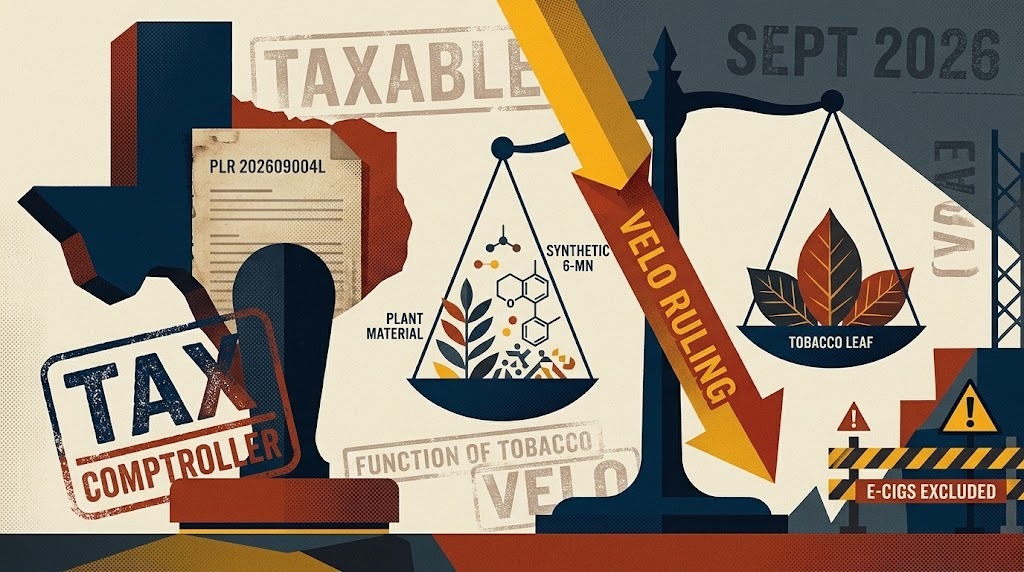
The Texas Comptroller of Public Accounts ruled in September 2026 that a combustible product made with non-tobacco plant material and 6-methylnicotine (6-MN), a synthetic nicotine analog, qualifies as a taxable tobacco product. The applicant said the product contained neither tobacco leaf nor measurable conventional nicotine. The determination applies reasoning from a May Texas Supreme Court decision involving VELO nicotine pouches, finding that the plant material and 6-MN together perform the functions of tobacco in a conventional smoking product. The ruling carries applicable tax, licensing and reporting obligations but is limited to the facts submitted by the taxpayer. It does not establish a blanket tax classification for all 6-MN products or extend the same conclusion to e-cigarettes.
Regulations
Nov.06
Italian Financial Police Seize 4.3 Million E-Cigarettes and Smoking Accessories; 28 Reported to Judicial Authorities Across Operations
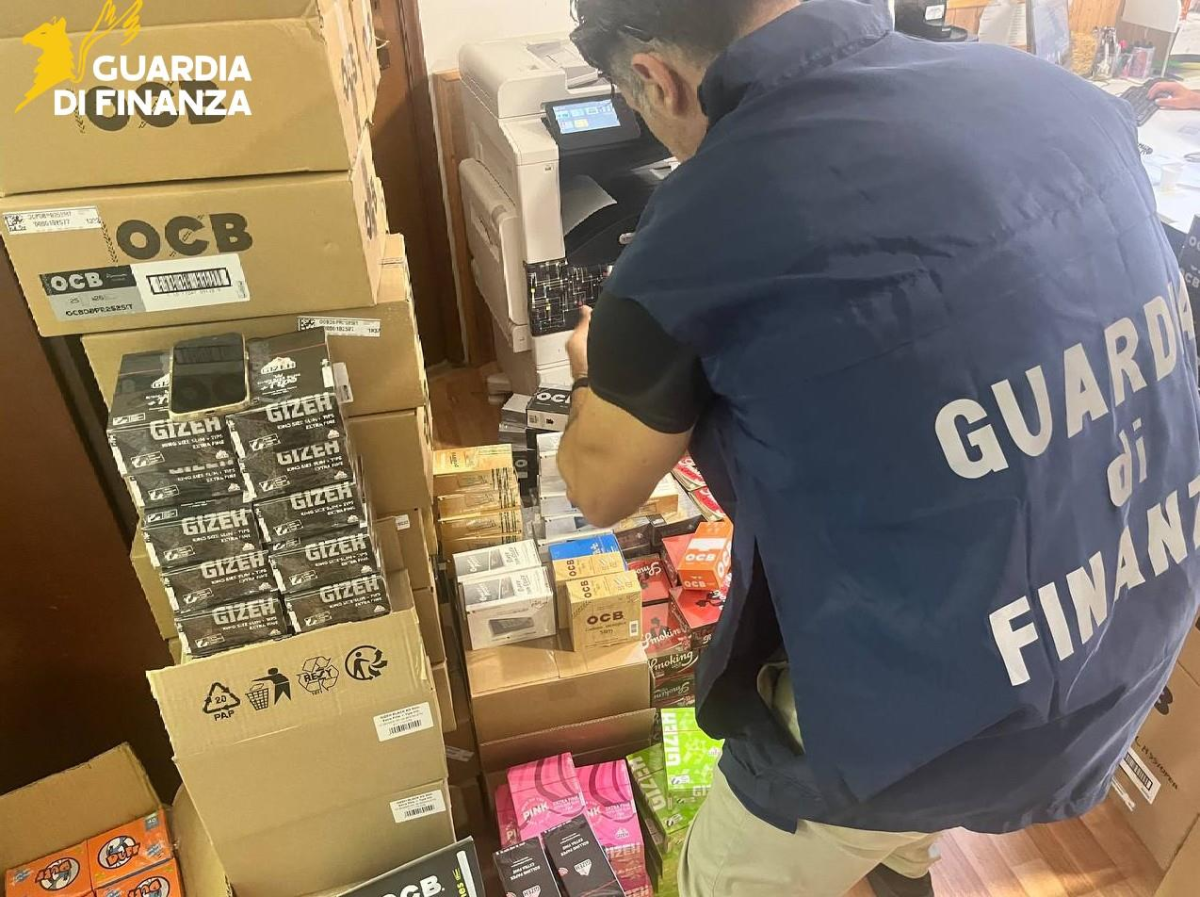
Italy's Guardia di Finanza announced on October 28 that officers in Latina province had seized approximately 4.3 million e-cigarettes and smoking accessories at an unauthorized warehouse in an operation involving restrictions on the possession and sale of tobacco-related products. Another 300,000 suspected counterfeit or unsafe items were confiscated during separate inspections, bringing total seizures across the operations to more than 4.6 million products. Twenty-eight people were reported to judicial authorities over suspected smuggling and counterfeiting offenses. Officials did not disclose separate vape quantities, the value of the merchandise or alleged violations associated with individual brands.
Enforcement
Oct.29
U.S. Health Groups Seek to Overturn FDA Enforcement Discretion for Pending PMTAs as Altria's Helix, NJOY and AVM Move to Intervene
American Vapor Manufacturers (AVM) and Altria subsidiaries Helix Innovations and NJOY filed separate motions on October 7, 2026, seeking to intervene on the FDA's side in a lawsuit challenging its enforcement guidance for certain e-cigarette and nicotine pouch products with pending premarket tobacco product applications (PMTAs). Seven public health and tobacco-control organizations, including the Campaign for Tobacco-Free Kids, sued the agency in July to overturn the policy. AVM argues that vacating the guidance could disrupt orders, inventory, retail distribution and investments in regulatory submissions.
Regulations
Oct.09
2Firsts On-Site | PMI Brings IQOS, ZYN, VEEV and Marlboro Together at Its “Boulevard” at InterTabac 2026
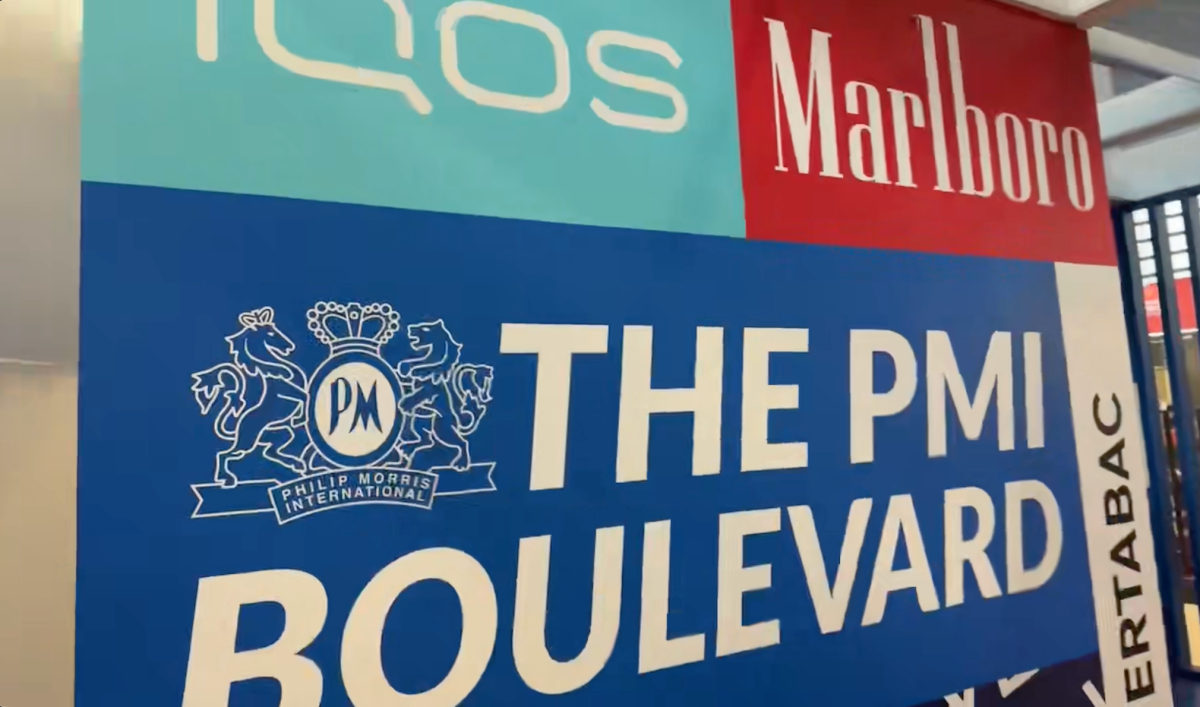
At InterTabac 2026 in Dortmund, PMI is presenting multiple brands and products along “The PMI Boulevard,” including IQOS, ZYN, VEEV and Marlboro. On-site images captured by 2Firsts show dedicated spaces including the IQOS Boutique, ZYN Café, PMI Gallery and Marlboro Office
Market
Sep.16 by 2Firsts Perspectives
Malaysia's Poisons Board Backs New Vape Nicotine Exemption After Unanimously Opposing 2023 Proposal
Malaysia's Poisons Board has endorsed Health Minister Dzulkefly Ahmad's proposal to exempt liquid nicotine used in vaping products from the Poisons List, according to a November 2, 2026, report by CodeBlue. The Board unanimously opposed a similar proposal in 2023, but the government proceeded with the exemption. The Kuala Lumpur High Court invalidated the 2023 decision in May 2026, and the government withdrew its appeal in August. No new ministerial order has been published. The development raises questions about the interaction between Malaysia's two regulatory frameworks and the treatment of RM354.51 million in excise duties collected on e-cigarette and vape products between May 2023 and June 11, 2026.
Regulations
Nov.03
Russia’s Vape Device Labeling Regime Enters Force: Registration Starts in September, Mandatory Coding in December
Russia's digital labeling regime for reusable e-cigarettes and similar personal vaping devices entered its first mandatory phase in September 2026. From September 1, manufacturers, importers and other market participants must register with the national Chestny ZNAK tracking system. From December 1, newly manufactured and imported covered devices will be required to carry digital identification codes and be reported as entering circulation. Russia has also issued new operational guidance for imports, marking the transition from a voluntary pilot to phased mandatory implementation.
Sep.15