New Zealand issues emergency warning for some e-cigarettes

Oct.28.2022
New Zealand issues emergency warning for some e-cigarettes
New Zealand issues emergency safety alert for some e-cigarette products containing excessive nicotine amount.

On October 27th, the New Zealand Ministry of Health issued an urgent safety alert regarding certain electronic cigarette products.


Electronic cigarettes in New Zealand are allowed to contain nicotine salt at levels of up to 50 milligrams per milliliter, although some people have misunderstood this to mean that 50 milligrams of nicotine are permitted, which is much higher than what the law actually allows.


Retailers have been advised to inspect their products for extremely high levels of nicotine in certain e-cigarettes and may need to immediately remove some products from their shelves. An official notice has been issued to retailers and manufacturers to promptly take down the affected products.


Fair Go has been investigating this issue and has now submitted its findings to the Ministry of Health. Just a few hours ago, the Ministry of Health issued a warning to retailers and manufacturers.


A copy seen by Fair Go shows that the Ministry of Health's e-cigarette regulator has stated that in some cases, the notifier appears to have provided false or misleading information regarding the nicotine content in their product notifications.


The emergency alert instructs retailers to inspect their product labels and remove any non-compliant products from shelves, or else face enforcement actions.


The Ministry of Health has confirmed that if brought to court, fines up to a maximum of 400,000 US dollars could be imposed.


Statement:


This article is compiled from third-party information and is intended solely for industry communication and learning.


This article does not represent the views of 2FIRSTS and 2FIRSTS cannot confirm the authenticity or accuracy of its content. The translation of this article is only for communication and research within the industry.


Due to the limitations of the translation skills, the compiled article may not fully express the same meaning as the original text. Therefore, please refer to the original text for accuracy.


2FIRSTS maintains complete alignment with the Chinese government on any domestic, Hong Kong-Macau-Taiwan-related, and foreign-related statements and stances.


The copyright of the compiled information belongs to the original media and author. If there is any infringement, please contact us to have it removed.


Disclaimer

This article is provided solely for professional research, industry discussion, and informational purposes. Any references to brands, companies, products, technologies, or policies are made for factual reporting and analytical purposes only, and do not constitute endorsement, recommendation, promotion, or advertising by 2Firsts.

Nicotine-containing products, including but not limited to cigarettes, e-cigarettes, heated tobacco products, and nicotine pouches, carry significant health risks. Readers are responsible for complying with all applicable laws and regulations in their respective jurisdictions, including age restrictions and access limitations.

The information contained in this article should not be regarded as investment, legal, medical, regulatory, or commercial advice. While 2Firsts strives to ensure the accuracy and reliability of its content, it does not assume liability for any direct or indirect loss arising from errors, omissions, inaccuracies, or reliance on the information contained herein.

This article is not intended for individuals below the legal age for accessing tobacco or nicotine-related information in their jurisdiction.


Copyright Notice

This article is either original content produced by 2Firsts or content reproduced, translated, summarized, or adapted from third-party sources with attribution where applicable. The intellectual property rights of the original content remain with 2Firsts or the respective original rights holders.

No individual or organization may copy, reproduce, distribute, republish, modify, translate, or otherwise use this content without prior authorization. Any unauthorized use may result in legal action.

For copyright-related inquiries, corrections, or removal requests, please contact: info@2firsts.com.


AI-Assisted Translation and Editing Notice

Portions of this article may have been translated, edited, or reviewed with the assistance of artificial intelligence tools to improve efficiency and readability. Due to the limitations of AI-assisted translation and editing, discrepancies, omissions, or inaccuracies may exist when compared with the original source.

Where applicable, readers are advised to refer to the original source for the most complete and accurate information. If you identify any errors or believe that any content infringes upon your rights, please contact us at info@2firsts.com, and we will review and address the matter promptly.


Philippines Weighs Unified Vape Tax as Lawmakers Back Risk-Based Rates and Government Seeks to Fill ₱66 Billion Revenue Gap
Philippine lawmakers are considering an overhaul of the country's vape excise-tax regime to eliminate the wide gap between taxes on nicotine salt and freebase nicotine liquids and reduce incentives for misdeclaration. House Bill 5364, filed by Rep. Rufus Rodriguez and Rep. Maximo Rodriguez Jr., would impose a unified ₱10-per-milliliter tax on vapor products, with 5% annual increases beginning in 2027. Rodriguez says the proposal could generate an average ₱6 billion in annual collections from 2027 through 2030. The debate comes as the Philippine government considers tobacco, vape and other health-tax reforms to help offset around ₱66 billion in revenue expected to be forgone under a proposed tax-relief package.
Aug.18
NATO Executive Director David Spross Sees U.S. Vape Regulation Improving, Calls for More PMTA Authorizations and Warns of 2027 State Tax Pressure
The National Association of Tobacco Outlets is calling for more FDA marketing authorizations, greater transparency in the PMTA process and continued enforcement against unauthorized e-cigarettes, even as its executive director, David Spross, points to recent regulatory developments as signs of progress. At the state level, excise taxes, flavor restrictions and vapor product directories remain major issues for tobacco retailers. By August 2026, 17 states had enacted laws establishing state-managed e-cigarette directories or similar systems.
Innovation
Sep.29 by 2Firsts Perspectives
Product | Philip Morris Japan Launches Ginza-Exclusive IQOS ILUMA i PRIME, Limited to 1,814 Units at First Global Flagship
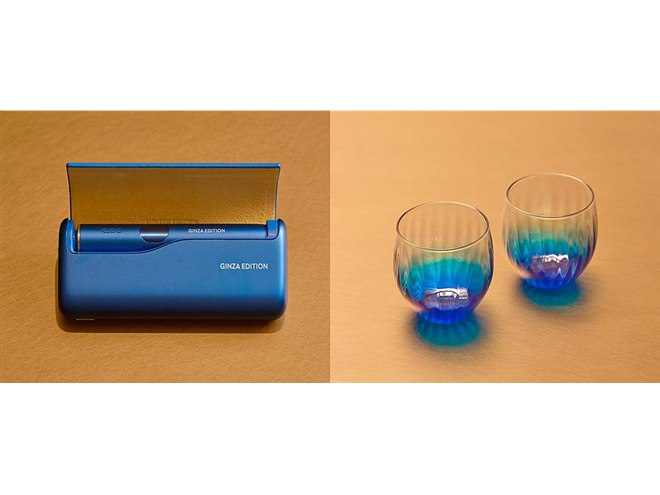
Philip Morris Japan (PMJ) launched the IQOS ILUMA i PRIME Ginza Limited Model Set in Tokyo on September 4, 2026, alongside the opening of IQOS Flagship Ginza, the brand’s first global flagship store. The Oasis Blue edition is limited to 1,814 individually numbered units, with the figure derived from the store’s address at Ginza 1-8-14. The set also includes two Yamanaka-nuri glasses and special packaging, priced at JPY 11,980 and sold exclusively at the Ginza flagship.
Sep.07
Russia’s Vape Device Labeling Regime Enters Force: Registration Starts in September, Mandatory Coding in December
Russia's digital labeling regime for reusable e-cigarettes and similar personal vaping devices entered its first mandatory phase in September 2026. From September 1, manufacturers, importers and other market participants must register with the national Chestny ZNAK tracking system. From December 1, newly manufactured and imported covered devices will be required to carry digital identification codes and be reported as entering circulation. Russia has also issued new operational guidance for imports, marking the transition from a voluntary pilot to phased mandatory implementation.
Sep.15
Australia Extends Illicit Tobacco Crackdown From Tougher Penalties to Customs and Logistics Supply Chains
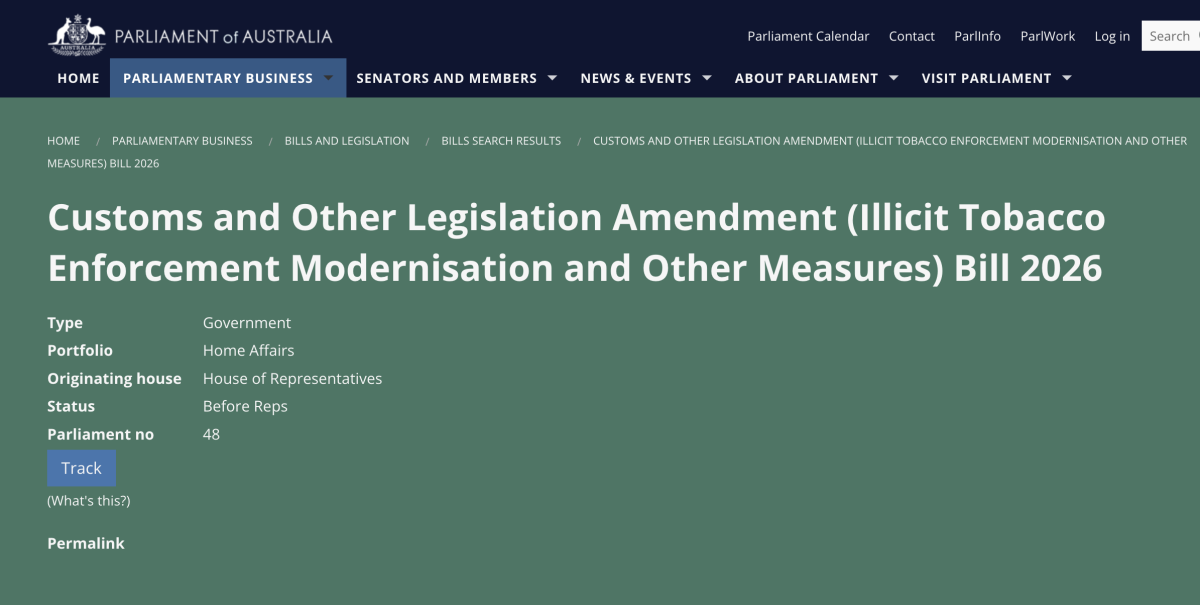
Australia's federal government introduced a new illicit tobacco enforcement bill on September 10 that would strengthen evidentiary presumptions, representative sampling, seizure and forfeiture procedures, proceeds-of-crime powers and obligations for customs and logistics operators. The proposal follows the Combatting Illicit Tobacco Act 2026, which took effect in August and increased penalties while expanding investigative and asset-recovery tools. Together, the reforms extend Australia's crackdown from tougher criminal sanctions into import, logistics and evidentiary enforcement.
Sep.14
UK HMRC Issues One-Month Countdown Warning, Urges Vape Businesses to Prepare for New Tax Rules
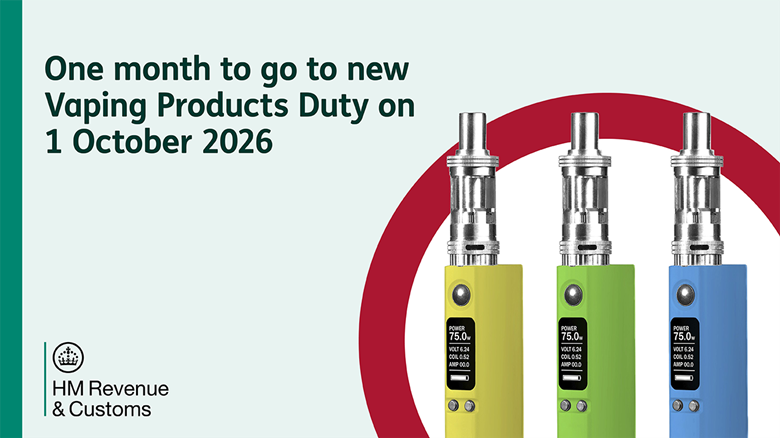
The UK’s Vaping Products Duty and Vaping Duty Stamps Scheme will take effect on October 1, 2026. All vaping liquids manufactured in or imported into the UK will face a flat excise duty of £2.20 per 10ml, whether or not they contain nicotine. Newly manufactured or imported products released onto the UK market from October 1 will require a valid duty stamp, while eligible existing unstamped inventory can continue to be sold through March 31, 2027. From April 1, 2027, all vaping products outside duty suspension must carry a valid stamp.
Sep.03