Key Highlights:
Defendants:
The New York City government has filed a federal lawsuit against nine of the largest nationwide distributors of flavored disposable e-cigarettes.
The companies involved include Puff BAR, MYLÉ VAPE, Pod Juice, etc., all of which have close ties to Chinese manufacturers.
Lawsuit Content and Objectives:
The defendants are accused of violating the federal Prevent All Cigarette Trafficking (PACT) Act, New York State Public Health Law, and New York City Administrative Code.
The lawsuit demands the court prohibit these distributors from continuing to sell the related products to New York City and seeks financial compensation and penalties.
They are also charged with creating a “public nuisance” that endangers public safety and infringes on the health rights of youth.
Product Characteristics:
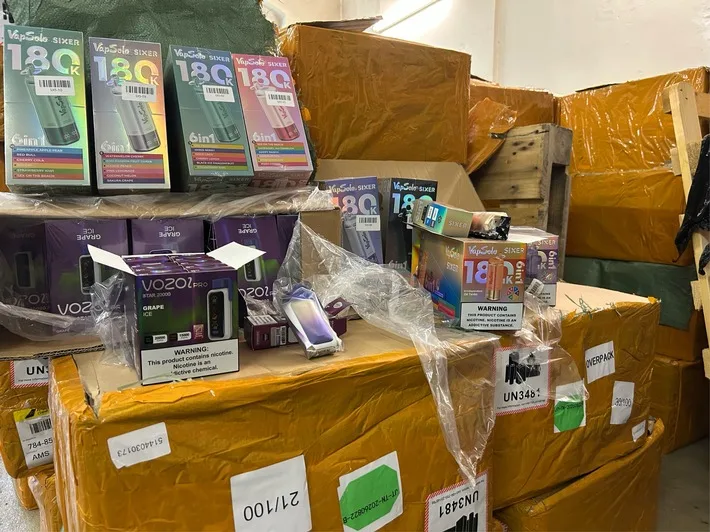
The products feature flavors clearly appealing to minors, such as Pink Lemonade, Watermelon, Banana Ice, and Lychee Ice.
Packaging is cartoonish, and some devices are even embedded with mini-games—clearly targeting the youth market.
Supporting Data:
According to 2024 data from the CDC and FDA, 14% of middle and high school students in the U.S. have used e-cigarettes.
Among them, 26.3% use e-cigarettes daily, and 38.4% have vaped on at least 20 days in the past 30 days.
E-cigarettes have been the most commonly used tobacco product among teens for the 10th consecutive year, with flavored products being especially popular.
Background on Crackdown Efforts:
This lawsuit is the latest legal action by Mayor Adams’ administration, following suits in 2023 and 2024 against the country’s largest e-cigarette distributor and 11 local wholesalers.
The previous three lawsuits are still pending in court.
“Operation Padlock to Protect” Achievements:
Since its launch in May 2024, “Operation Padlock to Protect” has shut down over 1,370 illegal cannabis shops and seized illegal goods worth more than $94 million.
On April 7, the official website of the New York City government announced that Mayor Eric Adams’ administration had filed a federal lawsuit against nine of the largest nationwide distributors of flavored disposable e-cigarettes. The lawsuit alleges violations of multiple federal, state, and city laws, including the illegal marketing of flavored e-cigarettes that appeal to minors. The complaint seeks to ban these so-called "master distributors" from selling the products in New York City and demands monetary damages and punitive compensation.
The defendants named in the lawsuit are:
- 10 Days, Inc. d/b/a Pod Juice (California)
- EVO Brands, LLC (California)
- Midwest Goods Inc. (Illinois)
- MYLÉ VAPE INC. (New York, New Jersey)
- MVH I, Inc. (New Jersey)
- Puff BAR Inc. (California)
- PVG2, LLC d/b/a Puff Bar (California)
- Safa Goods LLC (Florida)
- SV3, LLC d/b/a Mi-One Brands (Arizona)
The NYC government emphasized that these companies have close ties to Chinese manufacturers and continue to distribute flavored e-cigarettes with names like “Pink Lemonade,” “Watermelon,” “Banana Ice,” “Lychee Ice,” and “Cool Mint,” which are designed to appeal to minors.

These products reach retail stores through sub-distributors or are sold directly to consumers via online platforms. The lawsuit states that the nine defendants have violated the Prevent All Cigarette Trafficking (PACT) Act, a federal law that effectively bans all e-cigarette sales except for face-to-face transactions. The defendants are also accused of violating Section 1399-ll, Paragraph 1-a of the New York State Public Health Law, which prohibits the delivery of e-cigarettes to others unless by a state-authorized vapor product business.
Additionally, the defendants are allegedly in violation of Section 17-715 of the New York City Administrative Code, which prohibits the sale, offer for sale, or possession for sale of flavored e-cigarette products within New York City. The lawsuit further argues that the defendants, by selling flavored e-cigarettes that pose risks to public health and safety, constitute a “public nuisance” under common law. This case is linked to a related lawsuit filed by the New York State Attorney General’s Office in February 2025.
Mayor Adams stated: “This lawsuit is an important step in protecting the health of our youth. We will not stand by as companies endanger public health.”
City Corporation Counsel Muriel Goode-Trufant added that this is part of the city’s ongoing efforts to hold “predatory businesses” accountable.
This legal action coincides with the near one-year anniversary of the city’s “Operation Padlock to Protect.” Since its launch in May 2024, the operation has shut down 1,370 illegal cannabis stores and confiscated over $94 million in illegal goods.
Citing data from the FDA and CDC, the NYC government noted that a 2024 joint survey found that 14% of U.S. middle and high school students have used e-cigarettes. Among them, 410,000 middle school students and 1.2 million high school students reported using e-cigarettes in the past 30 days. Over a quarter (26.3%) of youth users stated they use e-cigarettes daily, and 38.4% used them on 20 or more days in the past 30 days. The most popular products remain flavored ones—featuring fruit, cola, and dessert flavors.
The lawsuit also states that the companies’ use of cartoon graphics, toy-like shapes, and built-in mini-games in product packaging further entice minors to use these products.
This marks the fourth lawsuit filed by NYC against illegal e-cigarette distributors since July 2023.
The three previous lawsuits were:
July 2023: The city announced a federal lawsuit against several illegal flavored e-cigarette distributors, including the nation’s largest distributor.
April 2024: A second lawsuit was filed against 11 local wholesalers; the case was later transferred to federal court.
November 2024: NYC sued Price Point, a major distributor based in Long Island.
All three cases are still under litigation. These lawsuits target distributors’ roles in the illegal sales of flavored disposable e-cigarettes, which are the most popular among middle and high school students.
Beyond legal action, the Adams administration is also targeting illegal operators who threaten communities and children. After Mayor Adams successfully secured legislative authority—previously not granted under state law—to allow NYC to shut down illegal cannabis stores, the city launched “Operation Padlock to Protect.” Since May 2024, the operation has closed over 1,370 shops and removed illegal goods worth more than $94 million from city streets. According to a 2024 amendment to the state’s administrative code regarding searches, penalties, and closures of illegal cannabis stores, the NYC Sheriff's Office was granted authority to seal illegal businesses for up to one year.
As the city approaches the one-year mark of shutting down its first store under this new authority, the Adams administration is advising businesses on next steps. Business owners are urged to contact the NYC Sheriff's Office at 718-707-2100 or via email at SmokeShopRelease@nyc.gov to schedule an appointment. The NYC Department of Finance will send letters with security codes to building owners and businesses, which should be presented to the Sheriff’s Office, along with detailed instructions.
The Adams administration also supports legal businesses to help them thrive. Cannabis entrepreneurs holding Conditional Adult-Use Retail Dispensary licenses can apply for loans of up to $100,000 through the NYC Cannabis Loan Fund. These loans have no application fees, no minimum credit score requirements, and a repayment period of 36 months. The NYC Department of Small Business Services (SBS) also offers the “Cannabis Entrepreneurs FastTrac®” course—a 10-session program covering the basics of starting, operating, and growing a cannabis business in NYC. In addition, SBS provides assistance with business lease negotiations, licensing, and permitting through the NYC Business Express Service Team, and the NYC LEASE program helps license holders find suitable storefronts and educates them on state regulations.
Main image source:nyc.gov
We welcome news tips, article submissions, interview requests, or comments on this piece.
Please contact us at info@2firsts.com, or reach out to Alan Zhao, CEO of 2Firsts, on LinkedIn
Notice
1. This article is intended solely for professional research purposes related to industry, technology, and policy. Any references to brands or products are made purely for objective description and do not constitute any form of endorsement, recommendation, or promotion by 2Firsts.
2. The use of nicotine-containing products — including, but not limited to, cigarettes, e-cigarettes, nicotine pouchand heated tobacco products — carries significant health risks. Users are responsible for complying with all applicable laws and regulations in their respective jurisdictions.
3. This article is not intended to serve as the basis for any investment decisions or financial advice. 2Firsts assumes no direct or indirect liability for any inaccuracies or errors in the content.
4. Access to this article is strictly prohibited for individuals below the legal age in their jurisdiction.
Copyright
This article is either an original work created by 2Firsts or a reproduction from third-party sources with proper attribution. All copyrights and usage rights belong to 2Firsts or the original content provider. Unauthorized reproduction, distribution, or any other form of unauthorized use by any individual or organization is strictly prohibited. Violators will be held legally accountable.
For copyright-related inquiries, please contact: info@2firsts.com
AI Assistance Disclaimer
This article may have been enhanced using AI tools to improve translation and editorial efficiency. However, due to technical limitations, inaccuracies may occur. Readers are encouraged to refer to the cited sources for the most accurate information.
We welcome any corrections or feedback. Please contact us at: info@2firsts.com