Portland, Oregon - The Oregon Liquor Control Commission (OLCC) has announced an expansion of the recall of marijuana electronic pods.
This recall was originally announced in January 2023.
The OLCC's ongoing investigation and evaluation has found that three batches of electronic cigarette products appear to contain prohibited additives. It states that these products do not meet national standards as they contain synthetic CBN and CBC, which produce sensory effects that are distinctly different from the psychoactive effects of tetrahydrocannabinol (THC). Ohio law prohibits electronic cigarette pods from containing synthetic cannabinoids and the synthesized CBC does not meet OLCC's requirements for non-cannabis additives.
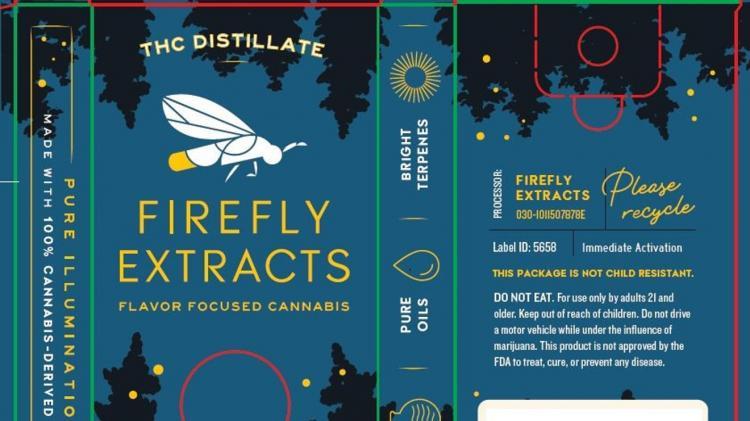
This recall involves pods sold under the Firefly Extracts or Smoke-Rite Wellness brands. The OLCC stated that 7,000 units from the recalled batches have been sold, while approximately 500 units are still present in the market.
These recalled products were produced in a factory licensed by OLCC.
The OLCC has released a list of recalled products.
Product names, production dates, and start of sales for several Firefly pods have been reported by the OLCC. The "Purple Kush 8:1" pod with label ID 5658 was produced on May 27, 2022, and went on sale on June 21, 2022. The "Suver Haze" pod with the same label ID was produced on May 24, 2022, and began selling on March 11, 2022. The "T-1" or "High CBD 8:1" pod with label ID 5658 was produced on May 19, 2022, and has been available since that date. The "Cherry Wife 8:1" or "High CBD Blend 8" pod with label ID 5658 was produced on September 9, 2021, and went on sale on February 13, 2022. The "Cherry Wife 1:1" or "High CBD Blend 1" or "High CBD Blend 1:1" pod with label ID 5658 or 344 was produced on September 9, 2021, and began selling on October 23, 2021. The "Cherry Wife 2:1" or "High CBD Blend 2" or "High CBD Blend 2:1" pod with the same label ID was produced on September 9, 2021, and went on sale on December 12, 2021. The "Cherry Wife 10:1" or "High CBD Blend 10" or "High CBD Blend 10:1" pod with label ID 5658 or 344 was produced on July 27, 2021, and began selling on August 16, 2021. The "El Jefe" or "High CBD Blend 0" pod with label ID 5658 was produced on July 15, 2021, and went on sale on July 28, 2021. The "Sour Space Candy" pod with the same label ID was produced on May 3, 2021, and began selling on May 9, 2021. The "High CBD Blend 0" pod with label ID 5658 was produced on December 1, 2020, and became available on December 24, 2020. The OLCC has instructed those who purchased these recalled products to dispose of them, but has not received any health-related complaints related to their use.
Disclaimer
This article is provided solely for professional research, industry discussion, and informational purposes. Any references to brands, companies, products, technologies, or policies are made for factual reporting and analytical purposes only, and do not constitute endorsement, recommendation, promotion, or advertising by 2Firsts.
Nicotine-containing products, including but not limited to cigarettes, e-cigarettes, heated tobacco products, and nicotine pouches, carry significant health risks. Readers are responsible for complying with all applicable laws and regulations in their respective jurisdictions, including age restrictions and access limitations.
The information contained in this article should not be regarded as investment, legal, medical, regulatory, or commercial advice. While 2Firsts strives to ensure the accuracy and reliability of its content, it does not assume liability for any direct or indirect loss arising from errors, omissions, inaccuracies, or reliance on the information contained herein.
This article is not intended for individuals below the legal age for accessing tobacco or nicotine-related information in their jurisdiction.
Copyright Notice
This article is either original content produced by 2Firsts or content reproduced, translated, summarized, or adapted from third-party sources with attribution where applicable. The intellectual property rights of the original content remain with 2Firsts or the respective original rights holders.
No individual or organization may copy, reproduce, distribute, republish, modify, translate, or otherwise use this content without prior authorization. Any unauthorized use may result in legal action.
For copyright-related inquiries, corrections, or removal requests, please contact: info@2firsts.com.
AI-Assisted Translation and Editing Notice
Portions of this article may have been translated, edited, or reviewed with the assistance of artificial intelligence tools to improve efficiency and readability. Due to the limitations of AI-assisted translation and editing, discrepancies, omissions, or inaccuracies may exist when compared with the original source.
Where applicable, readers are advised to refer to the original source for the most complete and accurate information. If you identify any errors or believe that any content infringes upon your rights, please contact us at info@2firsts.com, and we will review and address the matter promptly.