PMI Invests Nearly $260 Million for Factory Modernization

Apr.03.2025
PMI Invests Nearly $260 Million for Factory Modernization
Philip Morris International (PMI) completes nearly $260 million investment in Krakow factory, creating over 300 new jobs.

Key takeaways:

Philip Morris International's (PMI) Polish subsidiary has completed a nearly 1 billion Polish Zloty (260 million US dollars) investment for the modernization of its factory in Krakow, creating over 300 new jobs.

The factory has added a new heated stick production line to produce specialized sticks for the IQOS ILUMA i.

The CEO of PMI's Northeast Europe region stated that the company is transitioning from a traditional cigarette manufacturer to a producer of new tobacco products. Since the launch of IQOS, global cigarette sales have decreased by 28%.


According to Polanddaily24 on April 3rd, Philip Morris International (PMI) Poland's subsidiary (Philip Morris Polska Distribution Sp. z oo) has completed a nearly 1 billion Polish zloty (2.6 million USD) investment in their Kraków factory for modernization. This investment has created over 300 new jobs in Kraków.


This investment enables the factory to produce heating sticks for the latest IQOS ILUMA i. It is worth noting that the sticks use tobacco locally grown in Poland. Over the past decade, PMI has directly purchased over 40,000 tons of tobacco from Polish farmers.


The modernization of PMI's factory in Krakow includes a new production line for heating sticks. These sticks are not only distributed in the Polish market, but also exported to international markets including European Union countries and Asia, with Japan being a key destination. IQOS devices were first launched globally in Japan in 2014.


PMI Northeast Europe President Michał Mierzejewski stated,


Compared to other tobacco companies, we are gradually phasing out cigarettes faster on a global scale. Since the launch of IQOS, we have reduced cigarette sales volume by 28% in the global market. Now, our Krakow factory has also joined the forefront of global transformation, transitioning from a cigarette manufacturer to a manufacturer of smoke-free products.


PMI has invested over $14 billion in scientific research, technological development, and the commercialization of new tobacco products. The development of heat-not-burn tobacco in IQOS has benefited from collaboration with engineers from the International Tobacco Machinery company (ITM) in Lodz, Poland. Currently, PMI's new tobacco products are being sold in 95 markets worldwide.


According to international estimates, there are still over one billion people worldwide who smoke. In Poland, the number of smokers exceeds eight million.

We welcome news tips, article submissions, interview requests, or comments on this piece.

Please contact us at info@2firsts.com, or reach out to Alan Zhao, CEO of 2Firsts, on LinkedIn


Notice

1.  This article is intended solely for professional research purposes related to industry, technology, and policy. Any references to brands or products are made purely for objective description and do not constitute any form of endorsement, recommendation, or promotion by 2Firsts.

2.  The use of nicotine-containing products — including, but not limited to, cigarettes, e-cigarettes, nicotine pouchand heated tobacco products — carries significant health risks. Users are responsible for complying with all applicable laws and regulations in their respective jurisdictions.

3.  This article is not intended to serve as the basis for any investment decisions or financial advice. 2Firsts assumes no direct or indirect liability for any inaccuracies or errors in the content.

4.  Access to this article is strictly prohibited for individuals below the legal age in their jurisdiction.


Copyright


This article is either an original work created by 2Firsts or a reproduction from third-party sources with proper attribution. All copyrights and usage rights belong to 2Firsts or the original content provider. Unauthorized reproduction, distribution, or any other form of unauthorized use by any individual or organization is strictly prohibited. Violators will be held legally accountable.

For copyright-related inquiries, please contact: info@2firsts.com


AI Assistance Disclaimer


This article may have been enhanced using AI tools to improve translation and editorial efficiency. However, due to technical limitations, inaccuracies may occur. Readers are encouraged to refer to the cited sources for the most accurate information.

We welcome any corrections or feedback. Please contact us at: info@2firsts.com

Australian Coalition Taskforce Calls for 80% Tobacco Tax Cut to Combat Illicit Market
According to SGST on August 26, 2026, Australia’s Coalition Illegal Tobacco Taskforce released a report recommending an up to 80% cut in tobacco excise to reduce the appeal of the illicit tobacco market. The report claimed organised crime groups now control about 80% of Australia’s tobacco market and argued that high excise rates have widened the price gap between legal and illegal products. The recommendation remains a policy proposal and has not been adopted by the Australian government, which said its focus remains on enforcement, compliance and additional resources.
Aug.27
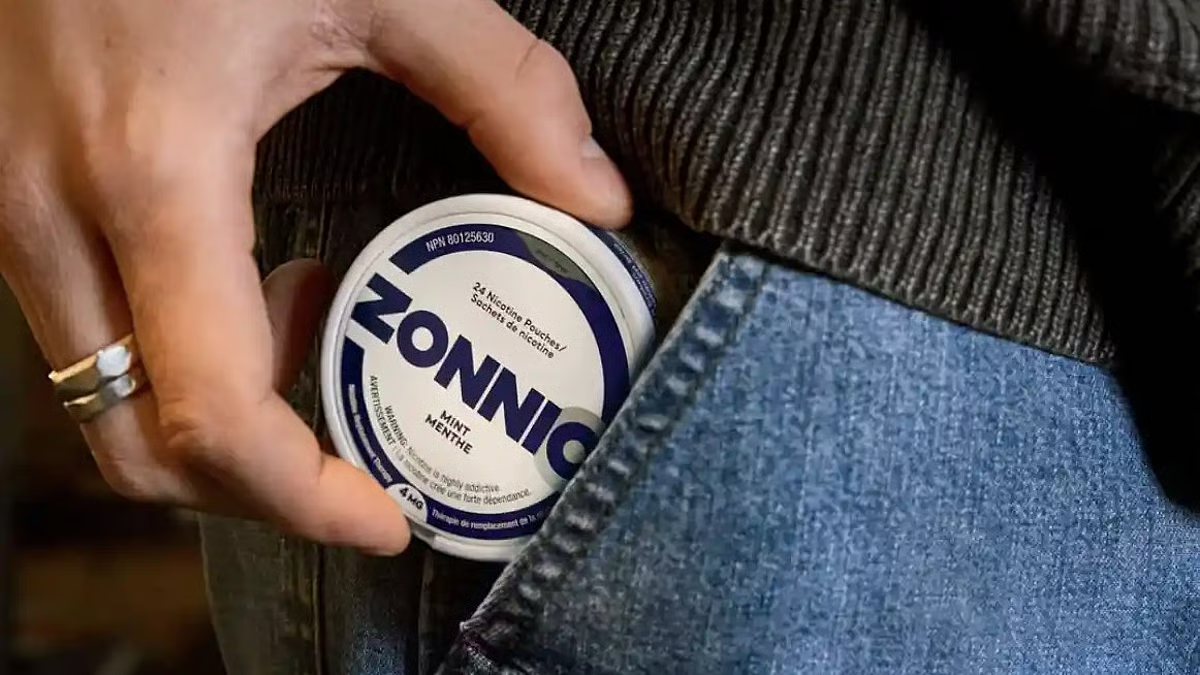
Canada Considers Easing Pharmacy-Only Nicotine Pouch Sales Rules, Potentially Reopening Convenience Store Channel
Canada's federal government is considering changes to current restrictions on where nicotine pouches can be sold, potentially allowing authorized products to return to convenience stores and other general retail channels, although no decision has been made. Since 2024, emerging nicotine replacement therapy products such as nicotine pouches have been largely restricted to behind-the-counter pharmacy sales. Health Canada, meanwhile, continues to recall unauthorized and higher-strength nicotine pouches, indicating that the current discussion concerns retail access for authorized products rather than a broad relaxation of nicotine pouch regulation.
Sep.14
NAS 2026 | FDA CTP Director Says PMTA Pathway Is “Predicated on Tobacco Harm Reduction”
At the 2026 New Approaches Summit in New York, FDA Center for Tobacco Products Director Bret Koplow said the PMTA pathway is “predicated on tobacco harm reduction.” He outlined four CTP priorities: youth prevention, helping adults quit or switch to lower-risk products, improving relative-risk communication, and reducing unauthorized products. Koplow also addressed flavored e-cigarettes, public risk perceptions, industry credibility and efforts to make PMTA reviews more efficient and predictable.
Sep.26
On-Site Report | CTP Details PMTA Backlog, 180-Day Review Goal and sPMTA Process
FDA’s Center for Tobacco Products detailed new PMTA review data and process changes at the 2026 FDLI conference. Pending PMTAs fell from about 450,000 at the start of 2025 to 135,000 by September 2026. CTP also discussed its 180-day review goal, current sPMTA pilot, alternate-supplier planning, more than 50,300 pending SE reports, and lessons from the nicotine pouch pilot already being applied to ENDS review.
Regulations
Oct.07
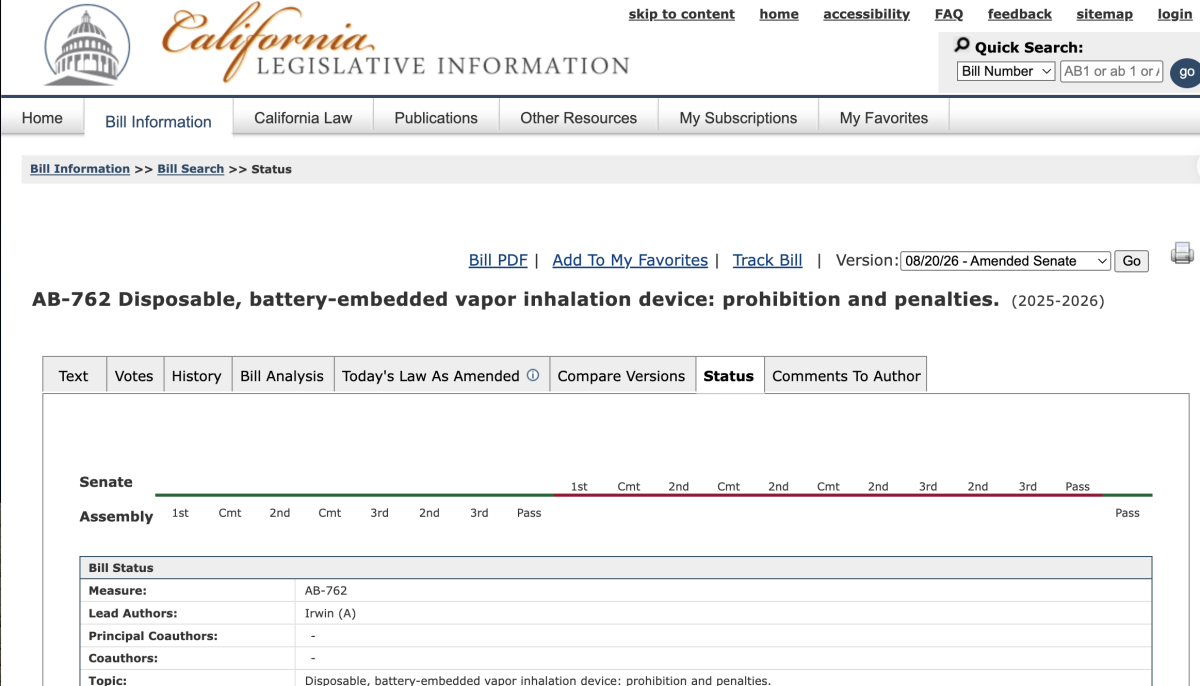
California Lawmakers Pass Disposable Nicotine Vape Ban, With Sales Prohibition Set for 2028
According to CBS Los Angeles on August 27, 2026, California lawmakers have passed Assembly Bill 762, which would phase out disposable, battery-embedded nicotine vapes in the state. If signed by Governor Gavin Newsom, manufacturing and importation of the covered products would be prohibited beginning January 1, 2027, followed by a sales ban on January 1, 2028. Driven primarily by concerns over electronic waste, lithium-battery fires and environmental pollution, the legislation would further shift California’s legal vape market toward rechargeable, refillable or replaceable-pod devices.
Aug.28
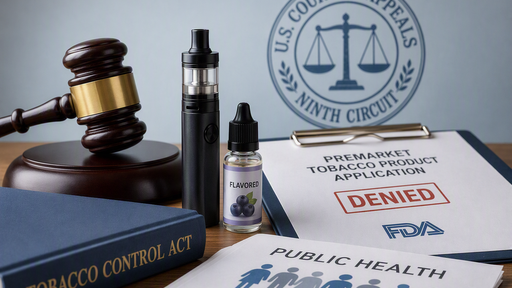
U.S. Ninth Circuit Upholds FDA Denial of MH Global’s Flavored Vape PMTA Applications
The U.S. Court of Appeals for the Ninth Circuit upheld the FDA’s denial of MH Global LLC’s applications to market flavored electronic nicotine delivery systems (ENDS). The court ruled that FDA’s comparative-efficacy framework, which requires applicants to show that flavored products provide greater cessation or switching benefits than tobacco-flavored alternatives, is consistent with the Tobacco Control Act’s “appropriate for the protection of the public health” standard. The court also found that FDA was not required to establish the framework through notice-and-comment rulemaking.
Aug.26