PMI Launches Unregistered Disposable E-Cigarette Brand in UK

May.29.2023
PMI Launches Unregistered Disposable E-Cigarette Brand in UK
PMI's VEEBA disposable e-cigarette brand lacks registration with UK's MHRA, in violation of regulatory requirements.

On February 28th, PMI International announced the launch of VEEBA, a disposable e-cigarette brand, in the UK. However, on May 29th, it was revealed that the brand had not been registered with the Medicines and Healthcare Products Regulatory Agency (MHRA) by PMI International, according to 2FIRSTS.


It is understood that the online data information collection period of the UK MHRA is from August 21, 2021, to May 27, 2023, and is updated daily with the latest registration information.


The image source for VEEBA on the IQOS UK online sales platform.


However, according to the regulations set by the UK regulatory authority, all electronic cigarettes and e-liquids entering the British market must be registered with MHRA before being launched. This registration can be carried out by brand owners, distributors, transporters, and other relevant parties. According to inquiries by 2FIRSTS, the international electronic cigarette brand VEEV, VEEV NOW, and VEEV ONE have been included in the registration list. It is understood that VEEV is a pod vape, VEEV NOW is a disposable e-cigarette, and VEEV ONE is a rechargeable device. However, no relevant registration information has been found for VEEBA.


Has VEEBA registered with the MHRA under the brand name VEEV NOW? While the registered brand name is VEEV NOW, the products are sold under the brand name VEEBA. Is this compliant? 2FIRSTS has reached out to PMI and the MHRA for comment on this issue, but as of publication time, no response has been received. 2FIRSTS will continue to monitor and update on this topic. Stay tuned.


VEEV is listed in the registration information of MHRA. Image source: MHRA.


Disclaimer

This article is provided solely for professional research, industry discussion, and informational purposes. Any references to brands, companies, products, technologies, or policies are made for factual reporting and analytical purposes only, and do not constitute endorsement, recommendation, promotion, or advertising by 2Firsts.

Nicotine-containing products, including but not limited to cigarettes, e-cigarettes, heated tobacco products, and nicotine pouches, carry significant health risks. Readers are responsible for complying with all applicable laws and regulations in their respective jurisdictions, including age restrictions and access limitations.

The information contained in this article should not be regarded as investment, legal, medical, regulatory, or commercial advice. While 2Firsts strives to ensure the accuracy and reliability of its content, it does not assume liability for any direct or indirect loss arising from errors, omissions, inaccuracies, or reliance on the information contained herein.

This article is not intended for individuals below the legal age for accessing tobacco or nicotine-related information in their jurisdiction.


Copyright Notice

This article is either original content produced by 2Firsts or content reproduced, translated, summarized, or adapted from third-party sources with attribution where applicable. The intellectual property rights of the original content remain with 2Firsts or the respective original rights holders.

No individual or organization may copy, reproduce, distribute, republish, modify, translate, or otherwise use this content without prior authorization. Any unauthorized use may result in legal action.

For copyright-related inquiries, corrections, or removal requests, please contact: info@2firsts.com.


AI-Assisted Translation and Editing Notice

Portions of this article may have been translated, edited, or reviewed with the assistance of artificial intelligence tools to improve efficiency and readability. Due to the limitations of AI-assisted translation and editing, discrepancies, omissions, or inaccuracies may exist when compared with the original source.

Where applicable, readers are advised to refer to the original source for the most complete and accurate information. If you identify any errors or believe that any content infringes upon your rights, please contact us at info@2firsts.com, and we will review and address the matter promptly.


Indonesia's Influential Islamic Body MUI Urges Vape Permit Freeze, Raising Uncertainty for 200 Manufacturers
Indonesia's Ulema Council (MUI) published Fatwa No. 131/2026 on November 9, declaring electronic cigarette use, production and trade haram under Islamic religious rules. The council urged the Industry Ministry to prohibit the issuance of vape industry permits and review licensing policies, while calling on the president and parliament to enact a comprehensive ban. On November 10, the Constitutional Court heard a challenge to provisions of the 2023 Health Law seeking a prohibition on vape production, importation, distribution and use. The Health Ministry said on November 11 it was studying stronger restrictions, including a possible ban on circulation, while industry association APVI called for tighter oversight rather than a total ban. Indonesia's Industry Ministry previously estimated the sector comprises about 200 companies, Rp31 trillion ($1.7 billion) in cumulative investment and approximately 100,000 supply-chain jobs. No nationwide statutory ban has been enacted.
Regulations
Nov.12
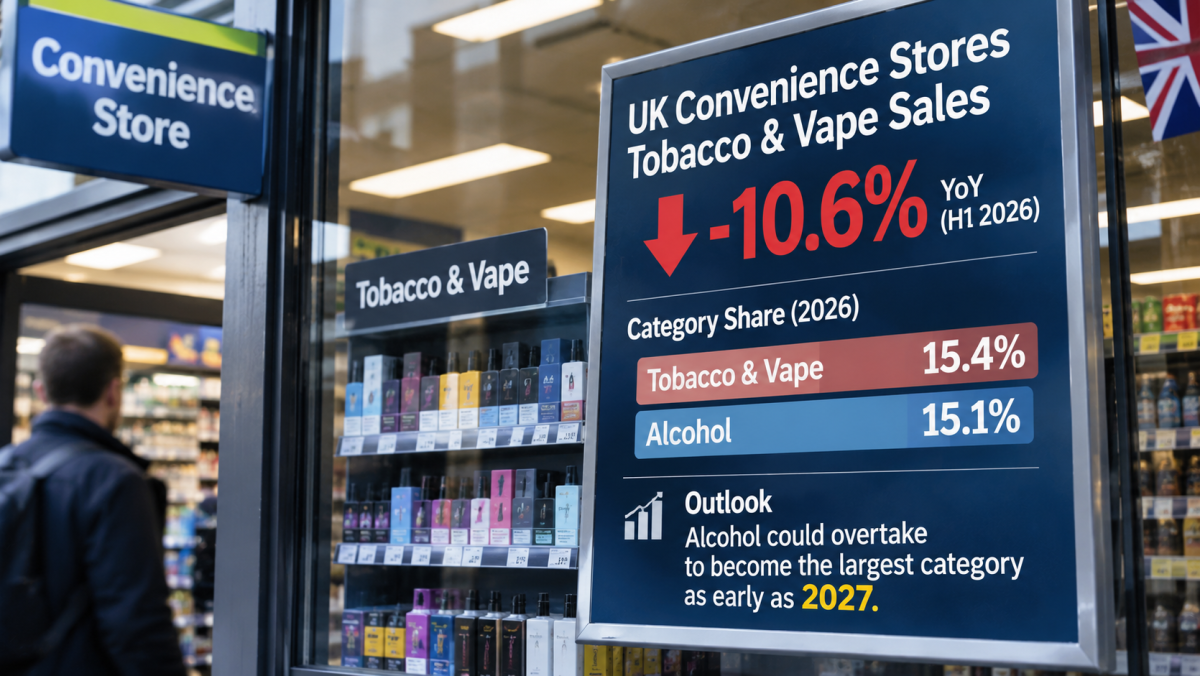
DATA|UK Retail Research Group IGD Says Convenience Tobacco and Vape Sales Fell 10.6%, With 15.4% Market Share Versus Alcohol's 15.1%; Top Rank at Risk in 2027
Combined tobacco and vaping sales in UK convenience stores fell 10.6% year over year in the first half of 2026, making the category a major drag on channel performance, according to retail research organization IGD. Total convenience sales declined 1.2%, while sales excluding tobacco and vaping increased 0.7%. IGD's 2026 category-share figures show tobacco and vaping accounting for 15.4% of convenience sales, compared with 15.1% for alcohol. The organization forecasts alcohol could overtake tobacco and vaping as the largest category by sales value as early as 2027 if current trends continue. IGD expects the convenience market to increase from £48.6 billion in 2026 to £54.9 billion in 2031, a 2.5% compound annual growth rate, or 3.4% excluding tobacco and vaping.
DATA
Nov.11
Special Report | Vape bans and tougher rules: the South Caucasus takes different paths
Azerbaijan's sweeping e-cigarette ban has raised concerns over enforcement errors and the emergence of illicit sales, while neighboring Armenia is tightening technical rules and preparing higher excise taxes. Georgia, meanwhile, has resisted calls for broader vape restrictions and introduced preferential taxes for some domestically produced cigarettes. The divergent approaches across the South Caucasus highlight a regional policy dilemma: how to curb nicotine use and protect public health without encouraging black markets or creating unintended economic consequences for businesses and consumers.
Nov.03
South Korea's Tobacco Plan Excludes 6-Methyl Nicotine as Customs Tightens Import Controls and Analog Liquid Imports Fall 83%
South Korea's government unveiled its first Tobacco Harm Management Basic Plan for 2027–2031 on October 29, 2026, proposing broader testing of vaping and heated tobacco products while excluding nicotine analogs such as 6-methyl nicotine. Synthetic nicotine came under tobacco regulation on April 24, and a June investigation found 6-methyl nicotine in 12 liquid inhalation products marketed as nicotine-free. Customs data released in September showed that imports of nicotine analog solutions fell 83.3%, from 12 metric tons in January–April to 2 metric tons in May–August. By September 20, imports had reached approximately 15 metric tons for the year, with 99.99% originating from China. Customs authorities have tightened pre-clearance testing and supply-chain documentation requirements, while the MFDS expects to complete its assessment of nicotine analog hazards by the end of 2026.
Regulations
Nov.04
Reuters Reveals California Raid on Illegal Vape Factory Involving Geek Bar and Foger, Days After WSJ Reported Importer's $1 Billion Factory Plan and White House Lobbying to Release Detained Vape Imports
US authorities raided a suspected illegal vape manufacturing facility in Chino, California, on October 30, 2026, discovering production and packaging machinery, unfinished vaping devices and approximately 850,000 vape-related items associated with brands including Geek Bar and Foger, Reuters reported on November 17. A person involved in the investigation said the raid provided concrete evidence of some manufacturing activities involving major Chinese vape labels taking place in the United States. Four days earlier, The Wall Street Journal reported that Hillfield, a US importer of Geek Bar products, had enlisted politically connected advisers to seek the release of detained vape shipments while presenting a $1 billion US manufacturing plan to the White House. No connection between the proposed investment and the raided facility has been established.
Enforcement
Nov.17
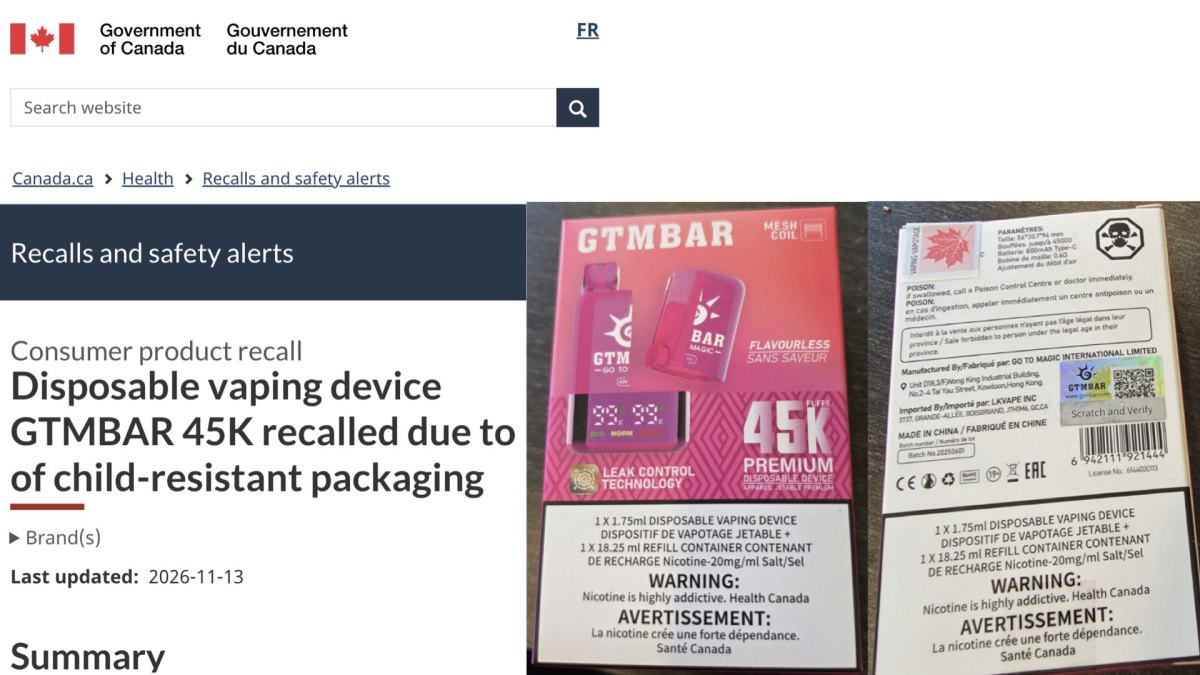
Canada Recalls Nearly 25,000 GTMBAR Vapes Over Child-Resistant Packaging Violations; Brand Linked to Shenzhen GTM Bar, with LK Vape as Importer and Distributor
Health Canada announced a recall of 24,950 China-made GTMBAR 45K disposable vaping devices on November 13, 2026, citing non-compliance with child-resistant packaging requirements. The devices were sold in Canada between December 2024 and October 2026 and feature a 20mL e-liquid system with a nicotine concentration of 20 mg/mL. No related incidents or injuries had been reported as of November 12. Quebec-based LK Vape is the Canadian importer and distributor, while Shenzhen GTM bar Electronic Technology Co., Ltd. holds the GTMBAR trademark registration in the United Kingdom.
Regulations
Nov.16