Preparing for Disposable E-cigarette Ban: Guidance for UK Retailers

Mar.25.2025
Preparing for Disposable E-cigarette Ban: Guidance for UK Retailers
Most UK convenience store owners preparing for disposable e-cigarette ban, with over half reducing products; Booker releases guidance.

Key Points:

  • The majority of convenience store owners in the UK have begun preparing for the disposable e-cigarette ban, which goes into effect on June 1st, with over half of stores reducing the variety of related products.
  • Booker has released a guide advising store owners to ensure their staff are aware of the ban, recommend alternative products, and complete the task of reducing non-compliant products by the end of April.
  • Retailers are feeling confused about the influx of both compliant and non-compliant new products, experts suggest consulting the official registry of compliant products to distinguish compliant products.

According to a report from Better Retailing on March 21st, the majority of independent convenience store owners in the UK have started preparing for the ban on disposable e-cigarettes, which comes into effect on June 1st.


A survey conducted by Newtrade Media, the publisher of Better Retailing, with over 200 retailers, showed that over half of the stores have already reduced their range of e-cigarette products. However, many other important measures that need to be implemented before the ban takes effect have not yet been put in place.


British wholesale distributor Booker has released a guide on how to prepare for a ban. The guide advises that shop owners should currently ensure their staff have a "full understanding" of the impending law, are able to "confidently" discuss it with customers, and recommends alternative products that can still be sold after the ban.


According to Booker's advice, tasks that need to be completed by the end of April include reducing the variety of disposable e-cigarettes, increasing the display space for remaining products, and introducing more compliant product categories. Booker's ultimate task is to clear all non-compliant inventory and replace them with alternatives, with a focus on the "leading four brands" - Elfbar, SKE, Lost Mary, and IVG.


Despite limited time, retailers report feeling confused when faced with a surge of new products, both compliant and non-compliant. These new products are often introduced as "closed-system e-cigarette systems," and their prices, appearance, and even names are similar to non-compliant products.


Natalie Lightfoot, from the Londis Solo convenience store in Glasgow, told Better Retailing:


We are still confused about the definition of closed e-cigarette systems, as some recently launched e-cigarettes do not seem to comply. We will rely on big brands and our research.


The Public Affairs Manager of ACS, Daniel Askew, suggests that businesses consult the official compliance product registration list of the Medicines and Healthcare products Regulatory Agency (MHRA). He revealed, "They are currently removing non-compliant disposable e-cigarette products and halting applications for new 'disposable' products. Once the ban takes effect, these products will not be allowed to appear on the list.


We welcome news tips, article submissions, interview requests, or comments on this piece.

Please contact us at info@2firsts.com, or reach out to Alan Zhao, CEO of 2Firsts, on LinkedIn


Notice

1.  This article is intended solely for professional research purposes related to industry, technology, and policy. Any references to brands or products are made purely for objective description and do not constitute any form of endorsement, recommendation, or promotion by 2Firsts.

2.  The use of nicotine-containing products — including, but not limited to, cigarettes, e-cigarettes, nicotine pouchand heated tobacco products — carries significant health risks. Users are responsible for complying with all applicable laws and regulations in their respective jurisdictions.

3.  This article is not intended to serve as the basis for any investment decisions or financial advice. 2Firsts assumes no direct or indirect liability for any inaccuracies or errors in the content.

4.  Access to this article is strictly prohibited for individuals below the legal age in their jurisdiction.


Copyright


This article is either an original work created by 2Firsts or a reproduction from third-party sources with proper attribution. All copyrights and usage rights belong to 2Firsts or the original content provider. Unauthorized reproduction, distribution, or any other form of unauthorized use by any individual or organization is strictly prohibited. Violators will be held legally accountable.

For copyright-related inquiries, please contact: info@2firsts.com


AI Assistance Disclaimer


This article may have been enhanced using AI tools to improve translation and editorial efficiency. However, due to technical limitations, inaccuracies may occur. Readers are encouraged to refer to the cited sources for the most accurate information.

We welcome any corrections or feedback. Please contact us at: info@2firsts.com

Altria’s USSTC Starts $250 Million Kentucky Expansion, Adding More Than 200 Jobs
U.S. Smokeless Tobacco Company, an Altria Group company, has broken ground on an approximately $250 million manufacturing expansion in Hopkinsville, Kentucky. The roughly 270,000-square-foot facility is expected to create more than 200 jobs and absorb processing, manufacturing and packaging operations currently split between Hopkinsville and Nashville, Tennessee. USSTC previously said production at its Nashville facility is expected to wind down by early 2028. The project forms part of Altria’s broader effort to modernize and consolidate its U.S. smokeless tobacco manufacturing network.
Sep.10
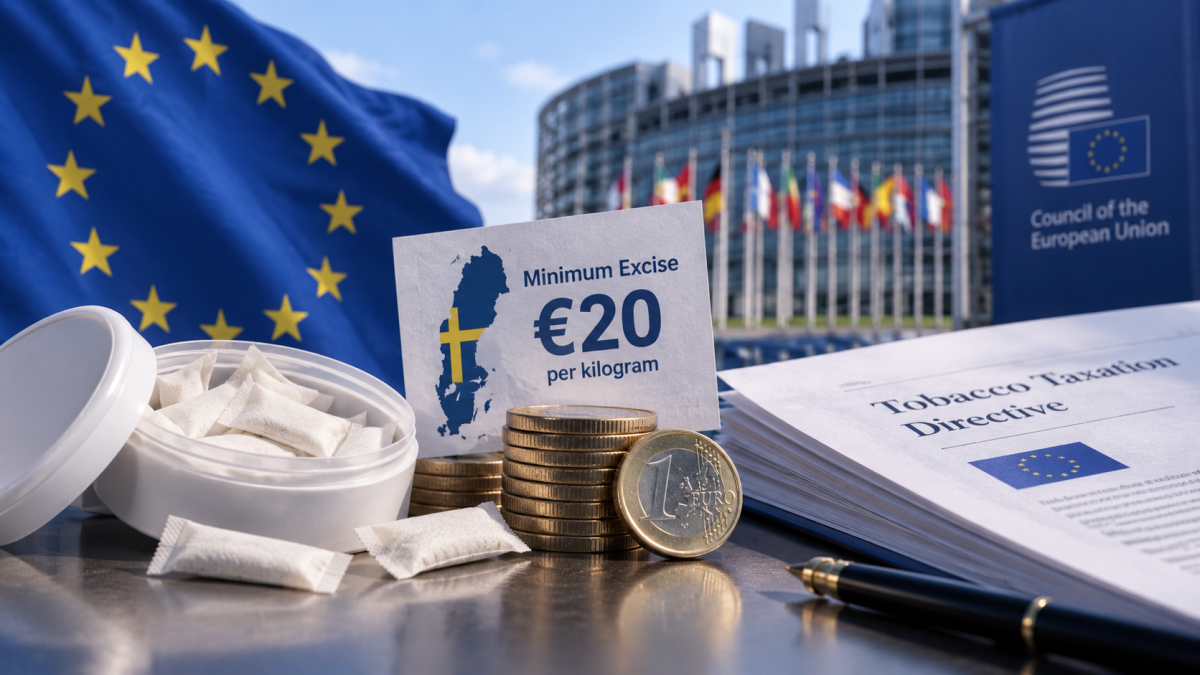
EU Tobacco Tax Reform Targets November Push as Sweden Holds Nicotine-Pouch Minimum at €20 per Kilogram
The Irish presidency of the Council of the European Union is using bilateral talks to push the bloc’s Tobacco Taxation Directive toward a political agreement in November. According to Law360, citing an EU official, Sweden is unwilling to accept a minimum excise threshold above €20 per kilogram for nicotine pouches. Council negotiations have already lowered the European Commission’s original proposal, but a May 2026 presidency compromise still set the minimum at 10% of the tax-inclusive retail price or €30 per kilogram in 2028-29, with higher levels later.
Market
Sep.17 by 2Firsts Perspectives
Why AIRSCREAM Built its European Production Hub for Regulated Market Growth
AIRSCREAM’s production hub in the Czech Republic brings nicotine pouch manufacturing, e-liquid bottling, product documentation, warehousing and international logistics into one operation, giving brands and commercial partners a practical platform from which to launch, expand and enter new markets.
Market
Sep.16 by 2Firsts Perspectives
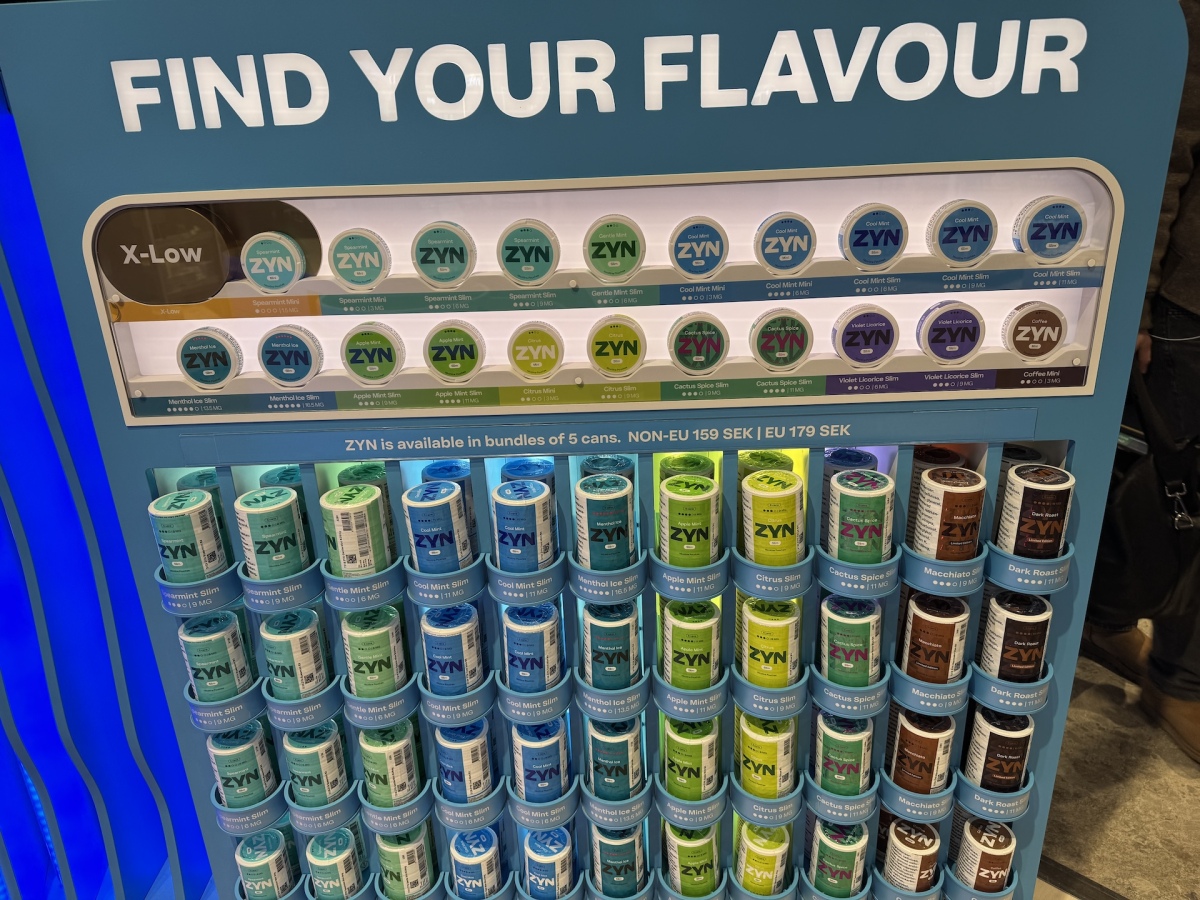
Sweden Finds ZYN Ingredient Labels Noncompliant Over Generic Flavoring Disclosure, Swedish Match Faces SEK 2 Million Monthly Penalty
Sweden's Public Health Agency has found ingredient labels on ZYN nicotine pouches sold by Philip Morris International subsidiary Swedish Match to be noncompliant, according to Dagens industri. The products' packaging listed 10 to 13 ingredients, compared with 11 to 42 in regulatory submissions, with multiple flavoring ingredients grouped under the generic term "aromer." The agency ordered corrective action, warning of a conditional penalty of SEK 2 million per month for noncompliance. The order applies only to products manufactured after the decision becomes legally effective and does not require recalls. Swedish Match disputes the agency's interpretation and plans to appeal.
PMI
Oct.22
As JUUL2 Wins FDA Authorization, Harm Reduction Journal Highlights the Role of Real-World Evidence in Nicotine Product Regulation
A commentary published in the international open-access, peer-reviewed Harm Reduction Journal argues that randomized controlled trials remain central to evaluating smoking cessation efficacy but cannot alone capture real-world uptake, complete switching, longer-term use and population impact of non-combustible nicotine products such as e-cigarettes, heated tobacco and nicotine pouches. The authors frame impact as “reach × efficacy” and call for real-world evidence to complement RCTs. Three days after publication, the FDA authorized three JUUL2 products and highlighted complete switching among adult smokers in explaining its decision, providing a timely regulatory backdrop to the debate.
Sep.08
Australian Coalition Unveils Illicit Tobacco Plan With 80% Excise Cut and Legal, Taxed Vapes and Nicotine Pouches
Australia’s Coalition has unveiled a national illicit-tobacco policy that would cut tobacco excise by 80% and create legal, regulated and taxed adult markets for vaping products and nicotine pouches if it wins government. The plan proposes an excise of A$0.50 per millilitre of e-liquid and A$0.025 per milligram of nicotine in pouches, alongside A$200 million in additional enforcement and a A$60 million three-year public-awareness campaign. The Coalition says the package would narrow the price advantage of illicit products and undermine organised crime, while Labor and public-health groups warn that dramatically cheaper cigarettes could reverse long-term declines in smoking.
Sep.03