UK Disposable E-Cigarette Sales Ban: Industry Shift Towards Diversification

Mar.11.2025
UK Disposable E-Cigarette Sales Ban: Industry Shift Towards Diversification
UK to ban disposable e-cigarette sales from June 1, 2025, sparking shift to reusable devices and diverse product offerings.

Key points to watch:


1. The UK will ban the sale of disposable e-cigarettes starting June 1, 2025, a move that could prompt the industry to shift towards a more diversified product portfolio.


2. Since the beginning of 2025, the sales of disposable e-cigarettes have exceeded 18 million units, accounting for 65% of all e-cigarette sales at that time. However, with the ban taking effect on June 1st, sales of reusable devices are expected to quickly increase.


3. Nicotine pouches have exceeded £131 million in retail sales in the UK, with sales volume increasing by 82% compared to the previous year.


The UK will ban the sale and supply of disposable e-cigarettes starting June 1, 2025, Conveniencestore reported. This will apply to in-store sales, inventory holdings, and the provision of sales, all of which will be deemed illegal.


John Rennie, the head of Philip Morris International (PMI) for the UK and Ireland, suggests that diversifying product portfolios is key to staying competitive in a changing market.


"68% of independent retailers believe that success depends on offering a diverse product mix, including a full range of e-cigarettes, Heating and non-combustible products, and nicotine pouches, rather than relying on a single category like disposable products as before."


 Susanna De Iesu, commercial director for Ireland at British American Tobacco (BAT), added that despite these changes looming, there is still strong demand in the market for more traditional e-cigarette products.


"According to Nielsen data, since early 2025, the sales of disposable e-cigarettes of all brands have exceeded 18 million units, accounting for 65% of all e-cigarette sales at that time."


Angelo Yang from ELFBAR predicts that, before the ban goes into effect, these types of products will still dominate the market, but reusable devices will quickly increase in popularity.


Prianka Jhingan, the marketing director of Scandinavian Tobacco Group UK, stated that:


"Our latest data shows that nicotine pouch sales in the UK have increased by 82%, with traditional retail annual sales reaching £131 million, and this figure does not even include online sales. This reflects an 82% year-on-year growth in sales, clearly demonstrating its increasing popularity and consumer demand. ZYN's performance in the UK is particularly strong, with sales increasing by 161% year-on-year."


In addition, the ban on June 1 could be the latest legislation to disrupt the category. Currently, there are proposals to ban e-cigarette flavors and e-cigarette displays.


Angelo said:


"Research from ELFBAR indicates that if overly strict regulations are imposed on flavors, packaging, and display in addition to a ban on disposable use, approximately 2 million e-cigarette users in the UK (35%) may turn to illegal disposable e-cigarettes, resume smoking, or increase tobacco consumption."


Mark McGuinness, UK Market Director at Japan Tobacco International (JTI), added that a recent survey found that 78% of retailers expect the generational ban to result in an increase in illegal tobacco sales in local markets.


We welcome news tips, article submissions, interview requests, or comments on this piece.

Please contact us at info@2firsts.com, or reach out to Alan Zhao, CEO of 2Firsts, on LinkedIn


Notice

1.  This article is intended solely for professional research purposes related to industry, technology, and policy. Any references to brands or products are made purely for objective description and do not constitute any form of endorsement, recommendation, or promotion by 2Firsts.

2.  The use of nicotine-containing products — including, but not limited to, cigarettes, e-cigarettes, nicotine pouchand heated tobacco products — carries significant health risks. Users are responsible for complying with all applicable laws and regulations in their respective jurisdictions.

3.  This article is not intended to serve as the basis for any investment decisions or financial advice. 2Firsts assumes no direct or indirect liability for any inaccuracies or errors in the content.

4.  Access to this article is strictly prohibited for individuals below the legal age in their jurisdiction.


Copyright


This article is either an original work created by 2Firsts or a reproduction from third-party sources with proper attribution. All copyrights and usage rights belong to 2Firsts or the original content provider. Unauthorized reproduction, distribution, or any other form of unauthorized use by any individual or organization is strictly prohibited. Violators will be held legally accountable.

For copyright-related inquiries, please contact: info@2firsts.com


AI Assistance Disclaimer


This article may have been enhanced using AI tools to improve translation and editorial efficiency. However, due to technical limitations, inaccuracies may occur. Readers are encouraged to refer to the cited sources for the most accurate information.

We welcome any corrections or feedback. Please contact us at: info@2firsts.com

Russia's State Duma Passes Tobacco and Nicotine Ingredient Disclosure Bill, Targeting 2027 End to Trade-Secret Protection for Certain Harmful Ingredient Data
Russia's State Duma passed a government-sponsored amendment on November 11, 2026, by 414 votes to none, seeking to prevent businesses from classifying information on the presence and number of types of certain harmful ingredients in tobacco and nicotine-containing products as trade secrets. The measure covers ingredients capable of increasing nicotine dependence or exhibiting toxic, carcinogenic, mutagenic or reproductive toxicity, including substances that acquire such properties during heating or smoldering. Bill No. 1286415-8 would amend Article 5 of Federal Law No. 98-FZ on Commercial Secrets and is scheduled to take effect on January 1, 2027. The bill has cleared all three readings in the State Duma but has not completed the remaining legislative procedures.
Regulations
Nov.12 by 2Firsts Perspectives
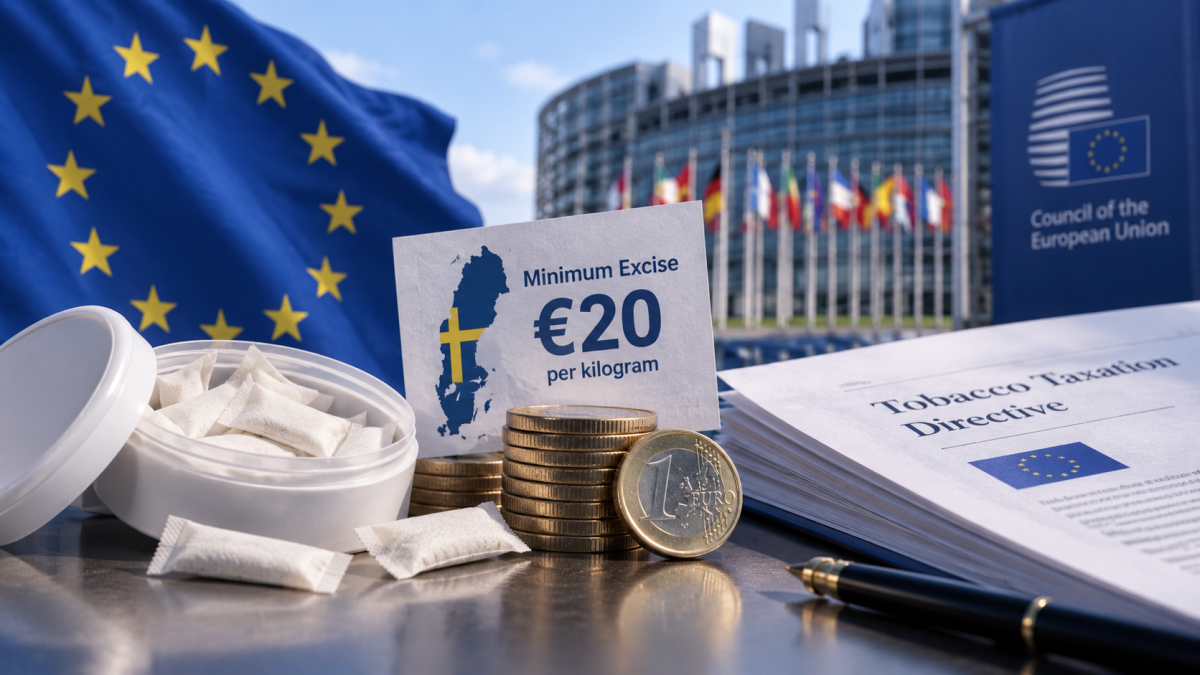
EU Tobacco Tax Reform Targets November Push as Sweden Holds Nicotine-Pouch Minimum at €20 per Kilogram
The Irish presidency of the Council of the European Union is using bilateral talks to push the bloc’s Tobacco Taxation Directive toward a political agreement in November. According to Law360, citing an EU official, Sweden is unwilling to accept a minimum excise threshold above €20 per kilogram for nicotine pouches. Council negotiations have already lowered the European Commission’s original proposal, but a May 2026 presidency compromise still set the minimum at 10% of the tax-inclusive retail price or €30 per kilogram in 2028-29, with higher levels later.
Market
Sep.17 by 2Firsts Perspectives
Philippines BIR Steps Up Illicit Vape Enforcement Ahead of Christmas Shopping
The Philippines’ Bureau of Internal Revenue is intensifying enforcement against illicit vape and tobacco products ahead of the Christmas shopping season, directing regional and enforcement offices to strengthen monitoring of production sites, warehouses, distribution channels and retail outlets. The BIR destroyed 240,550 illicit vape products in August with an estimated tax liability of about PHP1.53 billion. A nationwide tax-compliance operation in July also inspected 3,590 businesses involved in tobacco and vapor products.
Regulations
Sep.17 by 2Firsts Perspectives
Malaysia's Poisons Board Backs New Vape Nicotine Exemption After Unanimously Opposing 2023 Proposal
Malaysia's Poisons Board has endorsed Health Minister Dzulkefly Ahmad's proposal to exempt liquid nicotine used in vaping products from the Poisons List, according to a November 2, 2026, report by CodeBlue. The Board unanimously opposed a similar proposal in 2023, but the government proceeded with the exemption. The Kuala Lumpur High Court invalidated the 2023 decision in May 2026, and the government withdrew its appeal in August. No new ministerial order has been published. The development raises questions about the interaction between Malaysia's two regulatory frameworks and the treatment of RM354.51 million in excise duties collected on e-cigarette and vape products between May 2023 and June 11, 2026.
Regulations
Nov.03
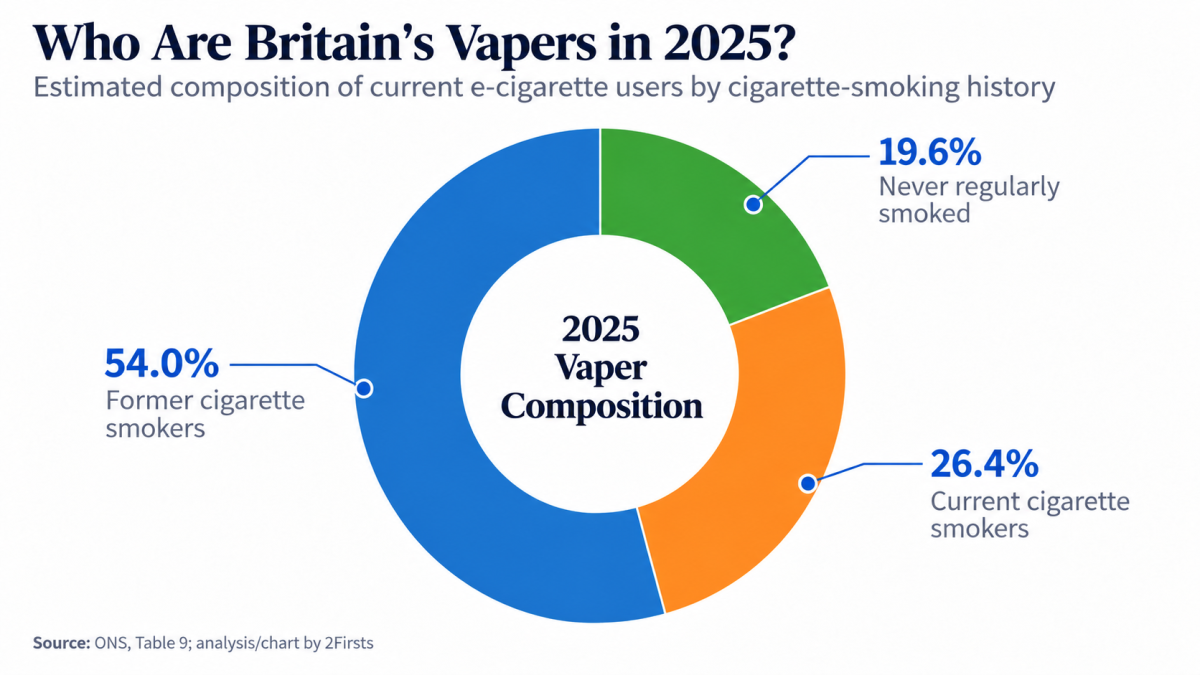
Latest UK ONS Data: 54% of Vapers Are Former Cigarette Smokers, 26% Also Smoke and 20% Never Smoked Regularly
Former cigarette smokers accounted for an estimated 54% of current e-cigarette users in Great Britain in 2025, while 26% also smoked cigarettes and 20% had never regularly smoked, according to a 2Firsts analysis of Office for National Statistics (ONS) data. Among former cigarette smokers who currently vape, approximately 81% used e-cigarettes daily, compared with about 50% of dual users. The ONS found that 33.8% of current cigarette smokers also vaped in 2025, up from 10.6% in 2014. Approximately 1.1 million adults who had never regularly smoked cigarettes used e-cigarettes, representing 2.9% of that population, compared with 0.2% in 2014. The figures highlight differences in the composition, frequency of use and long-term trends across Britain's vaping population.
DATA
Oct.14
Philip Morris Malaysia Again Meets Religious Authority Over Cigarette Alternatives as Perlis Mufti Responds on Halal Criteria
Philip Morris Malaysia Managing Director Naeem Shahab Khan met Perlis Mufti Mohd Asri Zainul Abidin on September 17 and presented the company's shift from conventional cigarettes toward alternative products. The mufti said a product could be considered halal if it is clean, its side effects are not harmful or can be controlled, and it does not involve excessive waste. His remarks did not mention IQOS or any other specific PMI product and did not amount to a new product-specific religious ruling. It was at least the second publicly reported engagement between Philip Morris Malaysia and a Malaysian religious institution over cigarette alternatives within six months.
Regulations
Sep.18 by 2Firsts Perspectives