Ethan Lewellen will be disappointed if, as expected, the commissioner of Multnomah County announces the second seasoning tobacco ban in Oregon on December 15th.
To be honest, I will be a little upset," he said.
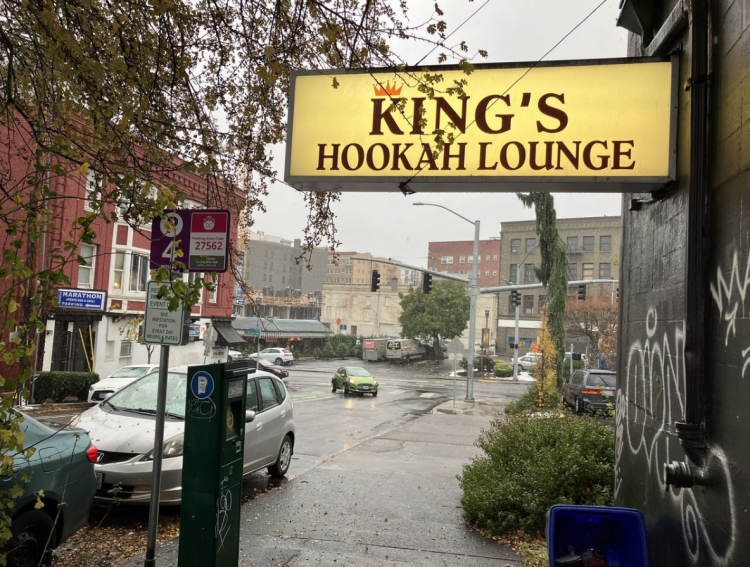
He stated that the ban will severely obstruct the existing three hookah lounges in Multnomah County, including the King's Hookah Lounge located in the northwest of Portland, which Lewellen visited on Sunday. As an African American, Lewellen said that he is looking for an opportunity to socialize with people from Portland's non-mainstream culture. He added that the ban would hinder the diversity of the community he discovered in hookah lounges as taste is crucial for business.
This is a rich cultural experience, as Portland is a predominantly white city," said Lewellen. "I always tell people that the hookah scene here is very diverse and unique, and it's mainly because of my exposure and experience in hookah lounges.
Lewellen expressed his understanding of the efforts being made by the county to curb the use of e-cigarettes among young people, who may be attracted to flavors like blueberry and bubblegum, despite them being illegal for consumers under the age of 21. However, he believes that a hookah lounge is different from e-cigarettes and smoking. Its clientele is more mature and he sees it as comparable to a coffee shop where people sometimes even work in the lounge throughout the week.
On Thursday, a committee rejected the amendment proposed by committee member Lori Stegmann, which would have lifted the ban on existing hookah lounges. Stegmann argued that the lounges are a cultural gathering place, especially among Middle Eastern and North African residents in Portland.
I support small businesses," she said. "I support businesses owned by minority communities. I support the existence and preservation of specific cultural spaces.
Technically speaking, the proposed ban by Moterunoma County that would take effect in 2024 will not shut down its hookah lounges, which are exempted under the state's Indoor Clean Air Act. This would prohibit them from selling flavored products.
In a way, this is a form of disrespect," said Christopher Christian, an employee of 007 Hookah Lounge located in the Hosford-Abernethy neighborhood on Southeast Division Street. "We have people of different nationalities coming together here to share their culture.
Christian has been working at this store for over a year now and he says that repeat customers are very common. He rarely sees customers from his college years and notes that they are carefully checking IDs at the door. Christian says that for a hookah lounge, the ban feels unnecessary because the clientele is not young teenagers that the new restrictions are aimed at protecting.
Christian stated that flavored tobacco products, also known as shisha, are the foundation of the business. Without it, he's uncertain if the shop can survive if regulations pass. Shisha was originally flavored using molasses and honey.
Salam Zaniel, the boss of 007, testified at a county committee meeting on Thursday that hookah is important to his culture and to those who frequently visit hookah bars in the country.
As a Muslim, I and my friends do not drink alcohol, so instead of going to bars or clubs, we hang out at hookah lounges," said Zanier.
Commissioner Sharon Meieren has responded to the proposed amendment by pointing out the dangers of inhaling smoke in these lounges. According to data from the Centers for Disease Control and Prevention, users can inhale 100 to 200 times more smoke during a typical one-hour hookah session than they would from smoking a single cigarette.
In November 2021, the Washington County Commission issued a similar ban based on Senate Bill 587, which created a statewide framework to license and regulate tobacco sales. Oregon's first ban went into effect in January but immediately faced legal challenges from retailers and was never enforced.
In May, voters supported the ban, but in September, Washington County Judge Andrew Owen ruled that SB 587 did not allow for the ban and stated that it must be approved statewide rather than on a county-by-county basis.
Supporters in Washington County and Sonoma County are vigorously arguing that the decision made by Owen was incorrect.
The Motenoma County committee will conduct a second, and possibly final, review of the ban on December 15th. If approved, the ban will take effect in January 2024.
2FIRSTS will continue to follow and report on this topic. Further updates will be available on the '2FIRSTSAPP'. Scan the QR code below to download the app.
Disclaimer
This article is provided solely for professional research, industry discussion, and informational purposes. Any references to brands, companies, products, technologies, or policies are made for factual reporting and analytical purposes only, and do not constitute endorsement, recommendation, promotion, or advertising by 2Firsts.
Nicotine-containing products, including but not limited to cigarettes, e-cigarettes, heated tobacco products, and nicotine pouches, carry significant health risks. Readers are responsible for complying with all applicable laws and regulations in their respective jurisdictions, including age restrictions and access limitations.
The information contained in this article should not be regarded as investment, legal, medical, regulatory, or commercial advice. While 2Firsts strives to ensure the accuracy and reliability of its content, it does not assume liability for any direct or indirect loss arising from errors, omissions, inaccuracies, or reliance on the information contained herein.
This article is not intended for individuals below the legal age for accessing tobacco or nicotine-related information in their jurisdiction.
Copyright Notice
This article is either original content produced by 2Firsts or content reproduced, translated, summarized, or adapted from third-party sources with attribution where applicable. The intellectual property rights of the original content remain with 2Firsts or the respective original rights holders.
No individual or organization may copy, reproduce, distribute, republish, modify, translate, or otherwise use this content without prior authorization. Any unauthorized use may result in legal action.
For copyright-related inquiries, corrections, or removal requests, please contact: info@2firsts.com.
AI-Assisted Translation and Editing Notice
Portions of this article may have been translated, edited, or reviewed with the assistance of artificial intelligence tools to improve efficiency and readability. Due to the limitations of AI-assisted translation and editing, discrepancies, omissions, or inaccuracies may exist when compared with the original source.
Where applicable, readers are advised to refer to the original source for the most complete and accurate information. If you identify any errors or believe that any content infringes upon your rights, please contact us at info@2firsts.com, and we will review and address the matter promptly.