Proposed Fee to Support Enforcement of E-cig Regulations in California's Tuolumne County

Regulations by 2FIRSTS.ai
Jan.24.2024
Proposed Fee to Support Enforcement of E-cig Regulations in California's Tuolumne County
California's Tuolumne County is considering imposing fees on tobacco retailers to support enforcement efforts against flavored e-cigarette sales.

According to a report by US media outlet mymotherlode on January 23rd, Tuolumne County in California is currently considering imposing fees on tobacco retailers to support the enforcement of regulations banning the sale of flavored e-cigarette products, among others.


The public health department of Tehuaremi County has highlighted that the smoking rate among teenagers in the region is significantly higher than the state average. According to the 2021 California Health Children Survey, 21% of 11th-grade students in Tehuaremi County reported using e-cigarette products, compared to the statewide average of only 11%.


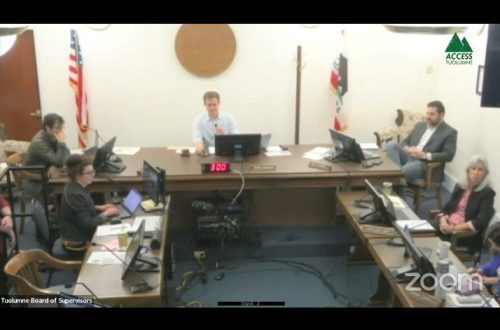
With a result of 3 votes in favor and 1 vote against, the County Supervisory Council has instructed the relevant staff to draft regulations for retail tobacco licenses, which could potentially impact the 44 businesses in the county that sell tobacco products.


Some city governments in California charge tobacco retailers an annual fee ranging from $30 to $40, but some municipalities, such as Alameda County, have fees as high as $100 or even $1,000. County officials emphasize that they want the fees to be as low as possible in order to cover enforcement costs. Currently, all California retailers are required to pay a state-level tobacco licensing fee of approximately $270.


County supervisor Ryan Campbell expressed that the United States has spent 25 to 30 years effectively persuading children not to smoke, however, unfortunately, e-cigarettes have now replaced traditional cigarettes and are even more difficult to regulate.


Terremi County will advance the development of a local licensing plan, with specific details to be approved by the board of supervisors at a later date. The local blue zone team also expressed support for this concept.


We welcome news tips, article submissions, interview requests, or comments on this piece.

Please contact us at info@2firsts.com, or reach out to Alan Zhao, CEO of 2Firsts, on LinkedIn


Notice

1.  This article is intended solely for professional research purposes related to industry, technology, and policy. Any references to brands or products are made purely for objective description and do not constitute any form of endorsement, recommendation, or promotion by 2Firsts.

2.  The use of nicotine-containing products — including, but not limited to, cigarettes, e-cigarettes, nicotine pouchand heated tobacco products — carries significant health risks. Users are responsible for complying with all applicable laws and regulations in their respective jurisdictions.

3.  This article is not intended to serve as the basis for any investment decisions or financial advice. 2Firsts assumes no direct or indirect liability for any inaccuracies or errors in the content.

4.  Access to this article is strictly prohibited for individuals below the legal age in their jurisdiction.


Copyright


This article is either an original work created by 2Firsts or a reproduction from third-party sources with proper attribution. All copyrights and usage rights belong to 2Firsts or the original content provider. Unauthorized reproduction, distribution, or any other form of unauthorized use by any individual or organization is strictly prohibited. Violators will be held legally accountable.

For copyright-related inquiries, please contact: info@2firsts.com


AI Assistance Disclaimer


This article may have been enhanced using AI tools to improve translation and editorial efficiency. However, due to technical limitations, inaccuracies may occur. Readers are encouraged to refer to the cited sources for the most accurate information.

We welcome any corrections or feedback. Please contact us at: info@2firsts.com

Australia’s Daily Smoking Rate Falls to Record Low of 5.8% as Nicotine Use Patterns Shift
According to the Australian Institute of Health and Welfare’s National Drug Strategy Household Survey, daily smoking among Australians aged 18 and over fell to a record low of 5.8% in 2025. Health Minister Mark Butler said Australia now has around 500,000 fewer daily smokers than three years ago and credited the government’s vaping reforms as part of broader progress. Among people aged 14 and over, daily smoking declined from 8.3% in 2022-23 to 5.6% in 2025. Daily vaping rates stabilised at 3.6%, while the government also moved to further restrict access to nicotine pouches through unapproved therapeutic import pathways.
Jul.21
Product | BAT Expands VELO Travellers’ Collection With Mexico, Spain and Sweden Summer Edition Nicotine Pouches
British American Tobacco (BAT) Global Travel Retail has expanded the VELO Travellers’ Collection with three new Summer Editions: Mexico, Spain and Sweden. Inspired by destination themes, the new nicotine pouch variants are designed for global travel-retail channels. The launch further strengthens VELO’s positioning as a travel-retail exclusive product collection.
Aug.27
China Tobacco Hubei explores staged nicotine pouch delivery, using dynamic membranes to slow early release and gradient particles to sustain later delivery
China Tobacco Hubei Industrial Co., Ltd. disclosed several oral nicotine-related patent applications in August 2026, including two that approach staged nicotine release from different directions. One uses a high-viscosity membrane that forms inside the pouch after contact with saliva to slow rapid early release, while the other uses gradient particles with a faster-disintegrating outer layer and a slower core to create a fast-to-sustained release profile. Together, the filings explore how nicotine pouches could balance initial delivery with release later in use.
Sep.03
Product | JT Launches Ploom AURA Glacier White in Japan, Expanding the Device Ecosystem Through Color and Accessories
Japan Tobacco Inc. (JT) has introduced the Ploom AURA Glacier White heated tobacco device in Japan, adding a new color option to the existing Ploom AURA lineup. The device maintains the existing SMART HEATFLOW technology and HEAT SELECT SYSTEM with four heating modes, while expanding the ecosystem through new accessories including front panels, back covers, a car holder and wireless charging covers. The product entered pre-sale in Japan on June 30, 2026, followed by broader retail availability from July 7.
Aug.03
Japan’s Heated Tobacco Tax Reform Drives Price Increase as JT Raises All Ploom Sticks by ¥40
Japan Tobacco Inc. (JT) has applied to Japan’s finance minister for approval to revise retail prices of its Ploom heated tobacco sticks following planned changes to the heated tobacco tax system from October 1, 2026. If approved, all 31 Ploom stick products will increase by ¥40. After the adjustment, EVO products will cost ¥620 per 20-stick pack, MEVIUS products ¥590 and CAMEL products ¥570. JT said the price revision is intended to respond to tax changes while maintaining product quality and brand value. The tax reform is expected to narrow the tax gap between combustible cigarettes and heated tobacco products, potentially reshaping pricing strategies in Japan’s heated tobacco market.
Jul.22
Ohio Supreme Court Weighs Whether State Consumer Law Can Restrict Flavored Vape Sales
The Ohio Supreme Court is hearing a case involving flavored vape sales and whether state authorities can use consumer protection laws to take action against retailers selling unauthorized vape products. Ohio officials argue that selling unauthorized flavored vapes may constitute consumer deception, while retailers argue that tobacco product regulation falls under federal Food and Drug Administration (FDA) authority and that states cannot impose additional restrictions through consumer laws. The case could affect the scope of state-level vape regulation across the United States.
Aug.06