Key Points
- Russia’s State Duma approved a ban on selling cigarettes and vapes at transport stops;
- The measure expands existing tobacco sales restrictions at transport facilities;
- Exemptions apply in small settlements under specific conditions;
- The law enters into force on September 1, 2026;
- Russia continues to advance broader vape control measures nationwide.
2Firsts, December 18,2025 – According to the State Duma’s electronic database, Russia’s lower house of parliament has adopted, in its third reading, a law banning the sale of cigarettes and electronic cigarettes at public transport stops.
The initiative expands existing restrictions that prohibit the sale of tobacco products at transport infrastructure facilities, including railway stations, airports, ports, and metro stations.
State Duma Chairman Vyacheslav Volodin said public transport stops are areas with high concentrations of people, and sales of cigarettes and vapes at such locations increase accessibility, especially for young people, while also raising the risk of passive smoking for children, pregnant women, and individuals with chronic illnesses.
The amendments were introduced to the law on protecting citizens from exposure to tobacco smoke and the consequences of tobacco and nicotine-containing product use. They were developed by lawmakers from the Legislative Duma of Khabarovsk Krai and submitted to the State Duma in May, passing the first reading on October 21.
During revisions ahead of the second reading, the amendments were adjusted to account for the interests of residents in small settlements. The ban will not apply if a kiosk at a transport stop is the only point of sale for cigarettes and vapes in the town or settlement.
The law will come into force on September 1, 2026.
Earlier this month, additional amendments proposing a complete ban on vapes and nicotine-containing liquids in Russia were submitted to the State Duma. Russia currently bans the sale of vapes and related liquids to minors. In February 2025, President Vladimir Putin signed a law increasing fines for selling vapes to children, with companies facing penalties of up to 2 million rubles (approximately US$22,000). In early November, Putin expressed support for a nationwide ban on vape sales, and in late August approved granting regions the authority to impose full bans on electronic vaporizers.
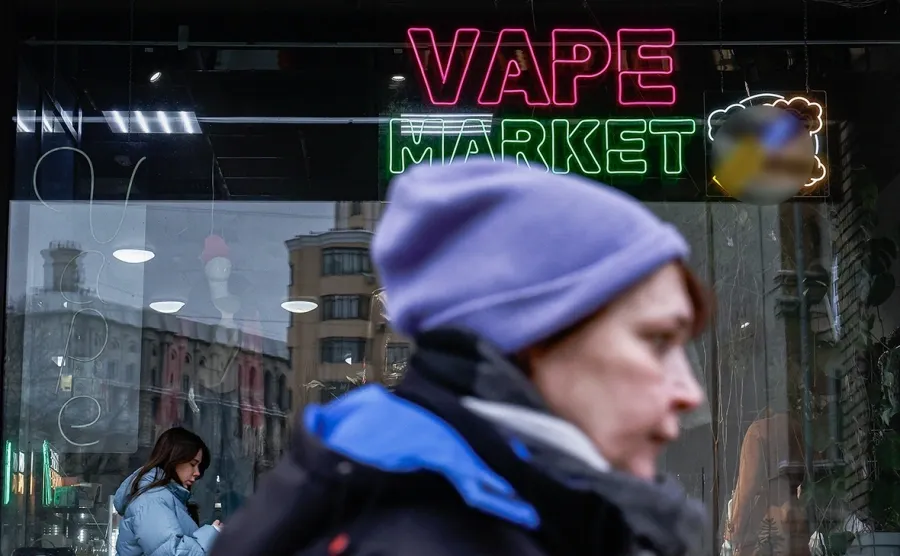
Image credit: Andrey Lyubimov / RBC
We welcome news tips, article submissions, interview requests, or comments on this piece.
Please contact us at info@2firsts.com, or reach out to Alan Zhao, CEO of 2Firsts, on LinkedIn
Notice
1. This article is intended solely for professional research purposes related to industry, technology, and policy. Any references to brands or products are made purely for objective description and do not constitute any form of endorsement, recommendation, or promotion by 2Firsts.
2. The use of nicotine-containing products — including, but not limited to, cigarettes, e-cigarettes, nicotine pouchand heated tobacco products — carries significant health risks. Users are responsible for complying with all applicable laws and regulations in their respective jurisdictions.
3. This article is not intended to serve as the basis for any investment decisions or financial advice. 2Firsts assumes no direct or indirect liability for any inaccuracies or errors in the content.
4. Access to this article is strictly prohibited for individuals below the legal age in their jurisdiction.
Copyright
This article is either an original work created by 2Firsts or a reproduction from third-party sources with proper attribution. All copyrights and usage rights belong to 2Firsts or the original content provider. Unauthorized reproduction, distribution, or any other form of unauthorized use by any individual or organization is strictly prohibited. Violators will be held legally accountable.
For copyright-related inquiries, please contact: info@2firsts.com
AI Assistance Disclaimer
This article may have been enhanced using AI tools to improve translation and editorial efficiency. However, due to technical limitations, inaccuracies may occur. Readers are encouraged to refer to the cited sources for the most accurate information.
We welcome any corrections or feedback. Please contact us at: info@2firsts.com