Key points:
·The number of e-cigarettes containing drugs in Singapore has surged, potentially leading to legislative regulations.
· Between January and June 2025, there were 28 cases of e-cigarettes containing anaesthetics found. A 13-year-old girl exhibited abnormal behavior after using an e-cigarette with anaesthetics.
· Singapore is enhancing market supervision and education on e-cigarettes.
【2Firsts News Flash】According to a report by Borneo Bulletin on July 14th, Singapore may tighten its current regulations on e-cigarettes, as the country has seen a continuous increase in the number of e-cigarettes containing controlled substances, including the anesthetic propofol. This trend has raised concerns among the government and may lead to stricter regulations.
The Ministry of Health and the Ministry of Home Affairs in Singapore said in a joint statement that they are currently discussing whether there is a need to strengthen existing regulations to curb this escalating trend. According to data from the Singapore Health Science Authority, in the first half of 2025, the country reported 28 cases of e-cigarettes containing ethylene glycol, nearly three times the 10 cases reported in 2024.
Despite the ban on e-cigarettes in Singapore as early as February 2018, authorities have confiscated e-cigarettes and related accessories worth over 41 million Singapore dollars (about 32.03 million US dollars) from January 2024 to March 2025. Officials emphasize that the emergence of e-cigarettes containing psychotropic drugs is similar to this trend, and this phenomenon is currently unfolding in Singapore.
A recent case involves a 13-year-old girl who exhibited erratic behavior after using an e-cigarette outside a state courthouse. The investigation found that the "Kpod" e-cigarette she used contained the anesthetic drug ketamine. Subsequently, a 25-year-old man who sold the e-cigarette to the girl was arrested, with both him and his wife assisting in the investigation.
The authorities have warned that the use of propofol is a controlled substance under the Poison Act and can only be used in a medical environment. Inhaling it through e-cigarettes can lead to serious health risks, including involuntary muscle spasms, seizures, mental confusion, and physical dependency.
As part of ongoing law enforcement efforts, the Health Sciences Authority has ramped up monitoring of online platforms, physical hotspots, and public areas. It is also collaborating with institutions such as the Singapore Police Force, Immigration & Checkpoints Authority, and National Environment Agency. Additionally, the Health Promotion Board is working with the Ministry of Education to enhance education on the dangers of e-cigarettes for students, and supporting relevant users through the "I Quit" program.
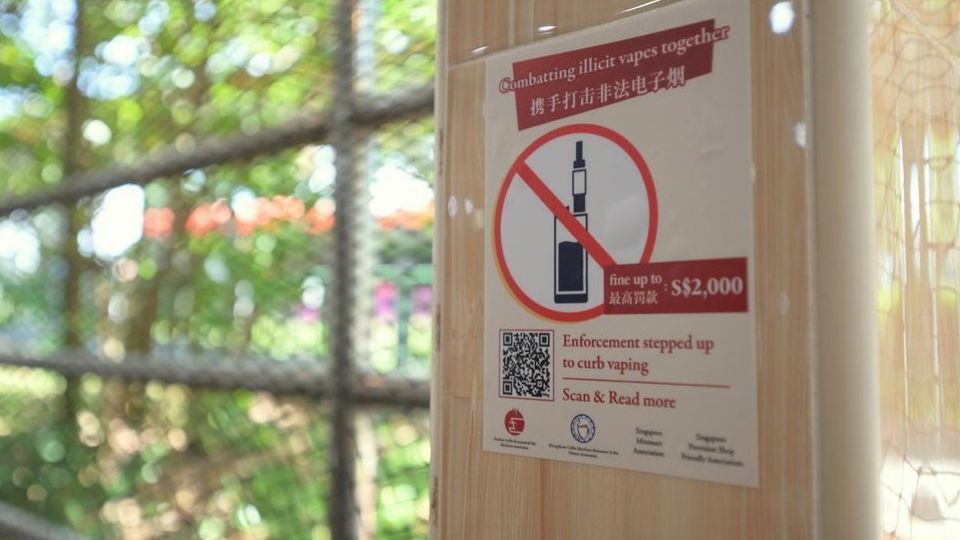
The government has reiterated its commitment to ramp up enforcement against individuals who import, sell, possess, or use e-cigarettes containing harmful substances. Currently, in Singapore, individuals can be fined up to 2,000 Singapore dollars (approximately 1,560 US dollars) for possessing or using e-cigarettes, while importers or distributors face fines of up to 10,000 Singapore dollars (approximately 7,813 US dollars), six months in prison, or both penalties.
The phenomenon of drug-containing e-cigarettes in Malaysia has also raised concerns, with Malaysian authorities stating that 65% of the e-liquid seized since 2023 contains banned synthetic substances. The United Nations Office on Drugs and Crime also noted in a report in May that synthetic drug e-cigarettes, including those containing methamphetamine, are on the rise in the detection in East Asia and Southeast Asia.
We welcome news tips, article submissions, interview requests, or comments on this piece.
Please contact us at info@2firsts.com, or reach out to Alan Zhao, CEO of 2Firsts, on LinkedIn
Notice
1. This article is intended solely for professional research purposes related to industry, technology, and policy. Any references to brands or products are made purely for objective description and do not constitute any form of endorsement, recommendation, or promotion by 2Firsts.
2. The use of nicotine-containing products — including, but not limited to, cigarettes, e-cigarettes, nicotine pouchand heated tobacco products — carries significant health risks. Users are responsible for complying with all applicable laws and regulations in their respective jurisdictions.
3. This article is not intended to serve as the basis for any investment decisions or financial advice. 2Firsts assumes no direct or indirect liability for any inaccuracies or errors in the content.
4. Access to this article is strictly prohibited for individuals below the legal age in their jurisdiction.
Copyright
This article is either an original work created by 2Firsts or a reproduction from third-party sources with proper attribution. All copyrights and usage rights belong to 2Firsts or the original content provider. Unauthorized reproduction, distribution, or any other form of unauthorized use by any individual or organization is strictly prohibited. Violators will be held legally accountable.
For copyright-related inquiries, please contact: info@2firsts.com
AI Assistance Disclaimer
This article may have been enhanced using AI tools to improve translation and editorial efficiency. However, due to technical limitations, inaccuracies may occur. Readers are encouraged to refer to the cited sources for the most accurate information.
We welcome any corrections or feedback. Please contact us at: info@2firsts.com