South Korean Brand Mons to Introduce New Bubblemon 2ml Model with RELX Symbol

Market by 2FIRSTS.ai
Apr.11.2024
South Korean Brand Mons to Introduce New Bubblemon 2ml Model with RELX Symbol
Mons to launch new e-cigarette "Bubblemon 2ml" with aqua and pink mon flavors; improved user experience and competitive pricing.

According to a report by South Korean media outlet BusinessKorea on April 11, the e-cigarette brand Mons recently announced that they will be launching a new e-cigarette model called "Bubblemon 2ml.
South Korean Brand Mons to Introduce New Bubblemon 2ml Model with RELX Symbol
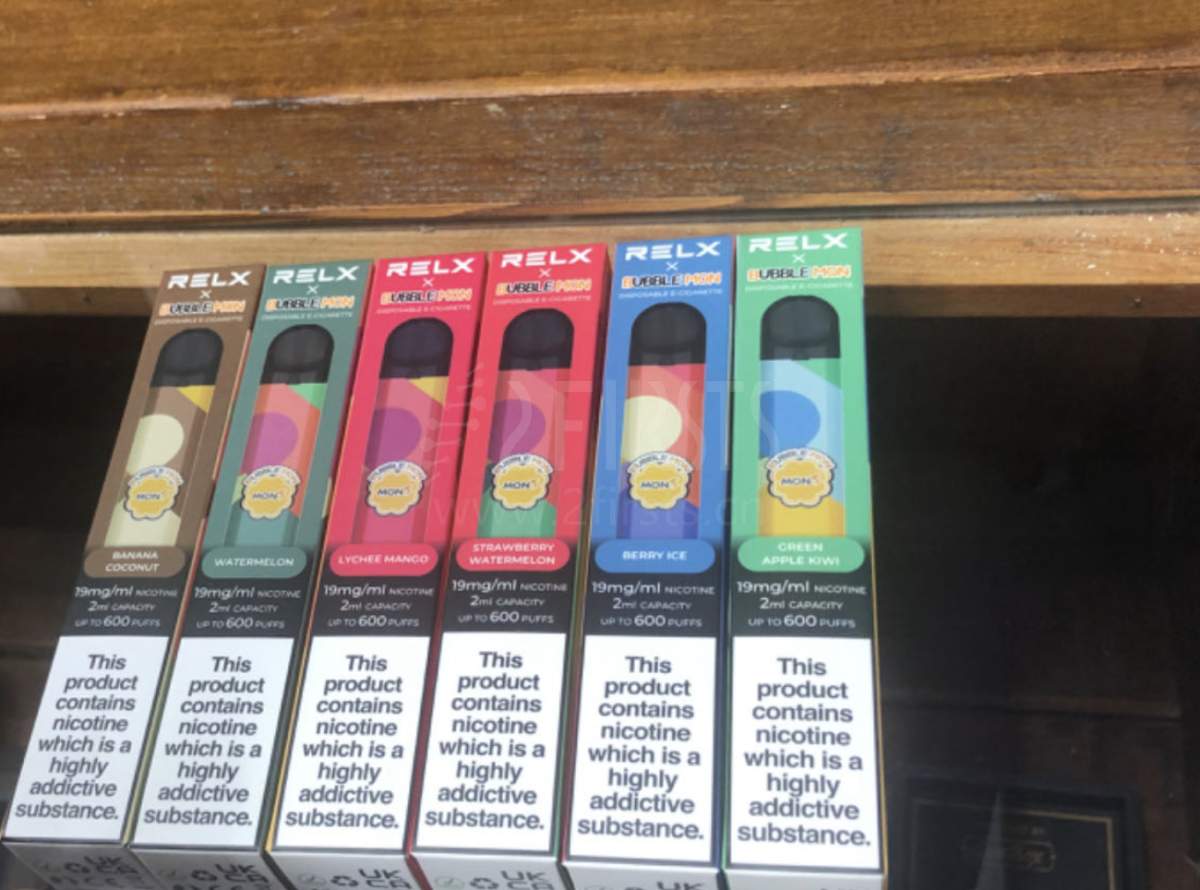
Co-branded product | Image source: 2FIRSTS


According to reports, the new product will come in two different scents, "aqua" and "pink mon", with an e-liquid capacity of 2 milliliters and a nicotine content of 0.98%. The e-cigarette measures 11.3cm x 1.0cm x 2.1cm and weighs 29 grams, and it is powered by a 3.7V/500mAh battery.


This product uses naturally extracted nicotine from tobacco and a sensor, allowing for immediate use without the need for lighting.


A company spokesperson stated that the new e-cigarette model focuses on enhancing consumer experience and offers better value for money compared to the previous 1.2ml products. It is reported that the product will be available for purchase at GS25 stores starting on the 15th.


It is worth mentioning that in addition to the iconic Mons logo, the design of this product also includes the "RELX" symbol at the bottom. This symbol was not present in Mons' previous releases of Bubble Pop, BILLOW BLACK, and BILLOW WHITE.


RELX and Bubblemon recently launched a disposable e-cigarette in the UK market.


We welcome news tips, article submissions, interview requests, or comments on this piece.

Please contact us at info@2firsts.com, or reach out to Alan Zhao, CEO of 2Firsts, on LinkedIn


Notice

1.  This article is intended solely for professional research purposes related to industry, technology, and policy. Any references to brands or products are made purely for objective description and do not constitute any form of endorsement, recommendation, or promotion by 2Firsts.

2.  The use of nicotine-containing products — including, but not limited to, cigarettes, e-cigarettes, nicotine pouchand heated tobacco products — carries significant health risks. Users are responsible for complying with all applicable laws and regulations in their respective jurisdictions.

3.  This article is not intended to serve as the basis for any investment decisions or financial advice. 2Firsts assumes no direct or indirect liability for any inaccuracies or errors in the content.

4.  Access to this article is strictly prohibited for individuals below the legal age in their jurisdiction.


Copyright


This article is either an original work created by 2Firsts or a reproduction from third-party sources with proper attribution. All copyrights and usage rights belong to 2Firsts or the original content provider. Unauthorized reproduction, distribution, or any other form of unauthorized use by any individual or organization is strictly prohibited. Violators will be held legally accountable.

For copyright-related inquiries, please contact: info@2firsts.com


AI Assistance Disclaimer


This article may have been enhanced using AI tools to improve translation and editorial efficiency. However, due to technical limitations, inaccuracies may occur. Readers are encouraged to refer to the cited sources for the most accurate information.

We welcome any corrections or feedback. Please contact us at: info@2firsts.com

Ohio Supreme Court Weighs Whether State Consumer Law Can Restrict Flavored Vape Sales
The Ohio Supreme Court is hearing a case involving flavored vape sales and whether state authorities can use consumer protection laws to take action against retailers selling unauthorized vape products. Ohio officials argue that selling unauthorized flavored vapes may constitute consumer deception, while retailers argue that tobacco product regulation falls under federal Food and Drug Administration (FDA) authority and that states cannot impose additional restrictions through consumer laws. The case could affect the scope of state-level vape regulation across the United States.
Aug.06
Exclusive Analysis | Smoore H1 Revenue Rises 19.9% Amid Growth Concentration, Profit Pressure and Slowing Momentum
Smoore’s first-half 2026 revenue rose 19.9%, but the results revealed growing structural risks beneath the headline growth. Heat-not-burn contributed about 61% of incremental revenue and remains driven largely by one core customer, while traditional vaping markets diverged, own-brand growth slowed and China enterprise revenue declined further. Gross profit and adjusted profit lagged revenue growth, while second-quarter revenue growth slowed to about 1.9%, putting greater focus on the quality, concentration and sustainability of Smoore’s expansion.
Capital Markets
Aug.20
Research | Swedish Study Finds Oral Lesions in 79% of Examined Nicotine Pouch Users, With Distinct Tissue Responses
A new Swedish study found oral mucosal lesions in 79% of examined nicotine pouch users and 89% of tobacco-derived snus users, with different tissue-response patterns between the two categories. For manufacturers and regulators, the findings shift attention toward product formulation, flavouring, pouch materials and local oral exposure, not only whether a product contains tobacco. The study found no higher prevalence of caries or periodontal disease, but it could not establish causality, long-term outcomes or differences between individual products or designs.
Special Report
Jul.27
JT Plans ¥800 Billion Investment in Heated Tobacco Over Three Years, Betting on Ploom as Second Growth Engine
Japan Tobacco Inc. (JT) CEO Takehiko Tsutsui said the company plans to invest about ¥800 billion (approximately US$5.4 billion) in heated tobacco products over three years through 2028, aiming to establish Ploom as a second growth engine after combustible cigarettes. Tsutsui said Ploom AURA helped JT increase its share of Japan’s heated tobacco market to 15.8% in the first quarter of 2026. Ploom products are now available in 29 markets, with Ploom AURA sold in 25 markets including Japan. JT also plans to continue its cigarette business while positioning its food operations, particularly frozen noodle products in North America, as another growth opportunity.
Jul.23
Special Report | China Opens Draft Mandatory Heated Cigarette Standard for Comment, Multiple Heating Technologies Remain in Scope
China’s State Tobacco Monopoly Administration (STMA) has released a draft mandatory national standard for heated cigarettes, setting out detailed requirements for tobacco sticks, heating devices and aerosols. The proposal treats the stick and device as parts of the same product system, focuses on minimum safety and quality requirements, and leaves several heating architectures within scope.
Special Report
Jul.29
South Korea Vape Strategies Diverge as BAT Reconsiders Exit and PMI Takes VEEV to About 14,000 Stores
BAT Rothmans says it previously considered exiting South Korea's vaping market because of competitive pressure from unregulated products, but is now reassessing conditions following changes to the country's nicotine regulatory framework. Vuse and other BAT vaping products remain available through existing distribution channels. The statement followed a South Korean media report that interpreted BAT's broader withdrawal from selected Vapour markets as a full exit from South Korea. Meanwhile, Philip Morris International launched VEEV inPRIME in the country in June and began expanding distribution to around 14,000 convenience stores and other retail channels in July. The contrasting moves highlight differing investment strategies as South Korea's regulated vaping market evolves.
Aug.14