South Korean tobacco sales decline for second year, But NGP rise

Apr.18.2025
South Korean tobacco sales decline for second year, But NGP rise
South Korea's traditional cigarette sales continue to decline for the fourth consecutive year, while sales of new tobacco products rise.

Key points:

Data released by the South Korean Ministry of Strategy and Finance shows that tobacco sales in South Korea have decreased for two consecutive years. However, sales of new tobacco products such as heated tobacco have increased against the trend by 8.3%, with their market share rising to 18.4%.


According to a report by N.News on April 18th, data released by the South Korean Ministry of Planning and Finance on "Tobacco Market Trends" show that the total sales volume of tobacco in South Korea is expected to decrease by 2.2% to 3.53 billion packets in 2024, marking the second consecutive year of decline following a sales volume of 3.63 billion packets in 2022.


After considering the sales of tax-exempt cigarettes, the total tobacco sales in South Korea in 2024 amounted to 3.683 billion packs, a 1.7% decrease compared to the previous year. The increase in sales of tax-exempt cigarettes has somewhat alleviated the overall downward trend in the market.


In terms of product category, the sales volume of traditional cigarettes in 2024 was 2.873 billion packs, a year-on-year decrease of 4.3%, and has been showing a downward trend for four consecutive years. This category of products has been steadily shrinking since 2021.


Duty-free cigarette sales reached 151 million packs in 2024, representing a year-on-year increase of 11.9%, reflecting the return of consumer spending from overseas travel after the pandemic.


In contrast, new tobacco products such as heated tobacco products are showing a growing trend. In 2024, sales of these products reached 660 million boxes, representing an 8.3% increase compared to the previous year, and their market share in the overall tobacco market rose to 18.4%.


We welcome news tips, article submissions, interview requests, or comments on this piece.

Please contact us at info@2firsts.com, or reach out to Alan Zhao, CEO of 2Firsts, on LinkedIn


Notice

1.  This article is intended solely for professional research purposes related to industry, technology, and policy. Any references to brands or products are made purely for objective description and do not constitute any form of endorsement, recommendation, or promotion by 2Firsts.

2.  The use of nicotine-containing products — including, but not limited to, cigarettes, e-cigarettes, nicotine pouchand heated tobacco products — carries significant health risks. Users are responsible for complying with all applicable laws and regulations in their respective jurisdictions.

3.  This article is not intended to serve as the basis for any investment decisions or financial advice. 2Firsts assumes no direct or indirect liability for any inaccuracies or errors in the content.

4.  Access to this article is strictly prohibited for individuals below the legal age in their jurisdiction.


Copyright


This article is either an original work created by 2Firsts or a reproduction from third-party sources with proper attribution. All copyrights and usage rights belong to 2Firsts or the original content provider. Unauthorized reproduction, distribution, or any other form of unauthorized use by any individual or organization is strictly prohibited. Violators will be held legally accountable.

For copyright-related inquiries, please contact: info@2firsts.com


AI Assistance Disclaimer


This article may have been enhanced using AI tools to improve translation and editorial efficiency. However, due to technical limitations, inaccuracies may occur. Readers are encouraged to refer to the cited sources for the most accurate information.

We welcome any corrections or feedback. Please contact us at: info@2firsts.com

Ohio Supreme Court Weighs Whether State Consumer Law Can Restrict Flavored Vape Sales
The Ohio Supreme Court is hearing a case involving flavored vape sales and whether state authorities can use consumer protection laws to take action against retailers selling unauthorized vape products. Ohio officials argue that selling unauthorized flavored vapes may constitute consumer deception, while retailers argue that tobacco product regulation falls under federal Food and Drug Administration (FDA) authority and that states cannot impose additional restrictions through consumer laws. The case could affect the scope of state-level vape regulation across the United States.
Aug.06
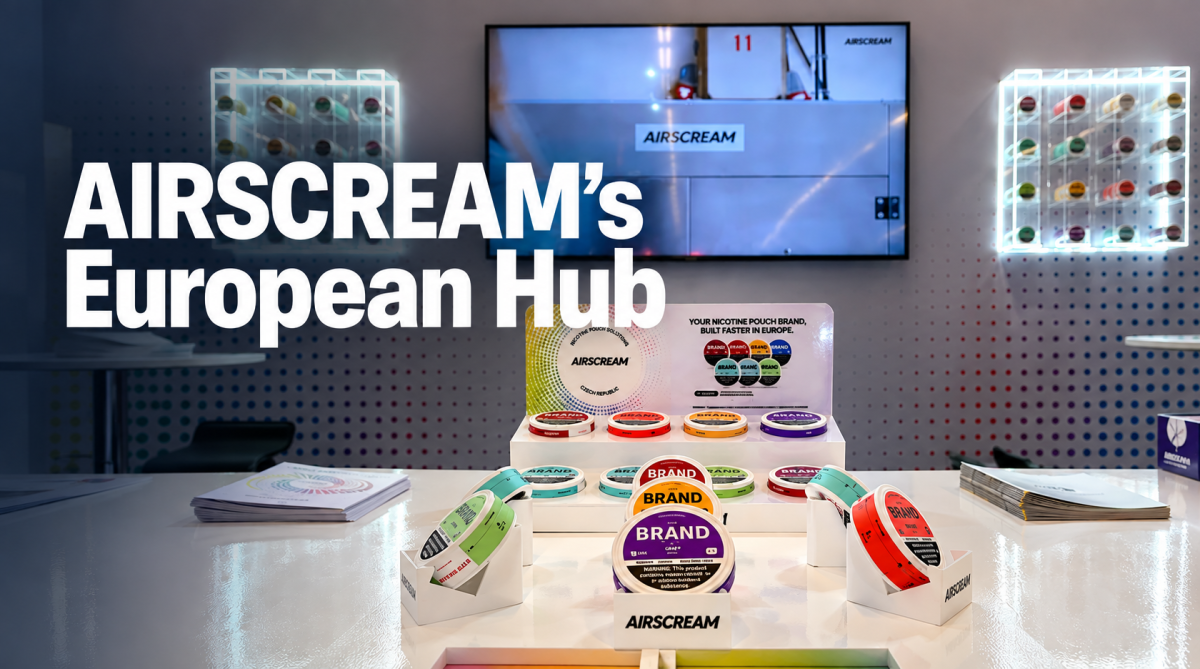
China Tobacco Yunnan files patent for cellulose-free nicotine pouch scaffold to replace microcrystalline cellulose
China Tobacco Yunnan Industrial Co., Ltd. has filed a patent application for a cellulose-free scaffold material for nicotine pouches, proposing a combination of bioceramic material, polydextrose and sugar alcohols to replace conventional microcrystalline cellulose and cellulose derivatives. The filing aims to address issues including powdery mouthfeel, residue and limited release control, while also reducing reliance on existing cellulose-based patent portfolios. In patent examples, one fast-release formulation reached a nicotine release rate of 50% at 10 minutes and more than 90% at 20 minutes.
Sep.02
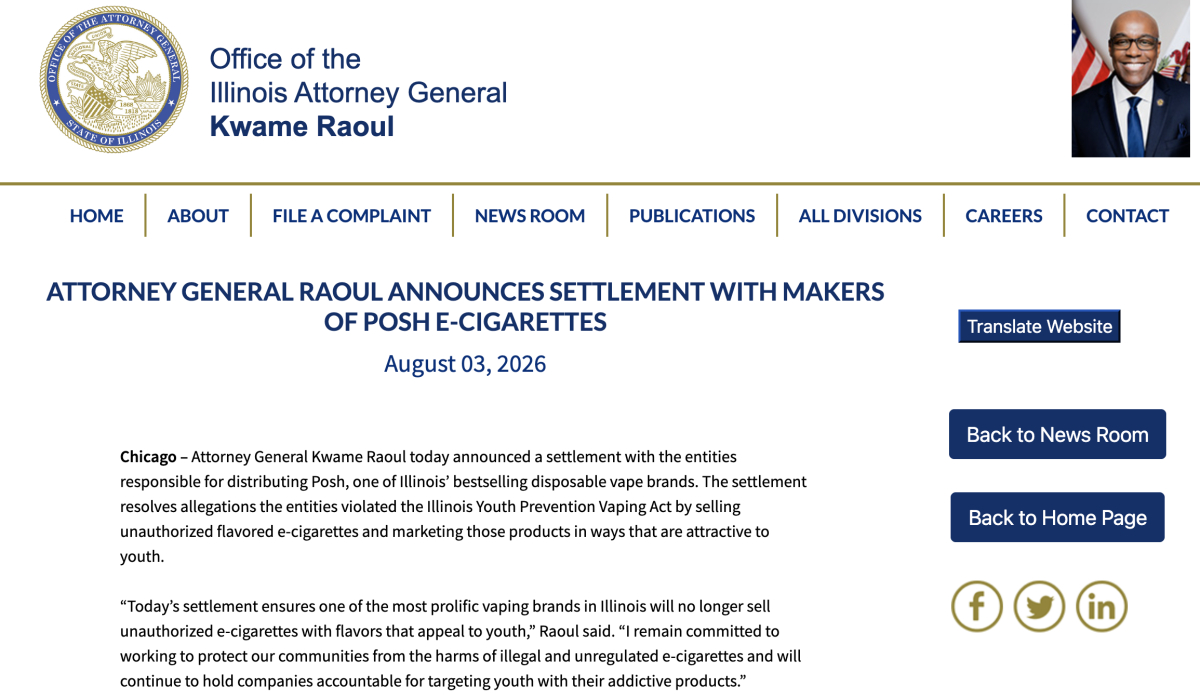
 $20 Million, a Permanent Injunction and Distributor Controls: Posh Deal Tightens Illinois Vape Compliance
$20 Million, a Permanent Injunction and Distributor Controls: Posh Deal Tightens Illinois Vape Compliance
An Illinois court ordered three companies tied to Posh vapes to pay $20 million and permanently restricted the sale, marketing and distribution in Illinois of products lacking required FDA authorization. The consent order also imposes downstream distributor controls, age-verification measures and social-media marketing limits, creating a new state-level compliance benchmark for disposable vape businesses.
Regulations
Aug.05
Product | PMI Japan Launches SENTIA Passion Fruit Capsule, Expanding the IQOS ILUMA Flavor Portfolio
Philip Morris Japan (PM Japan) has introduced SENTIA Passion Fruit Capsule, a new tobacco stick designed for the IQOS ILUMA heated tobacco platform. Featuring a crush-activated capsule, the product combines menthol with passion fruit flavor to provide an additional flavor experience. The product launched in Japan from August 3, 2026, through IQOS official channels, convenience stores and tobacco retailers.
Aug.04
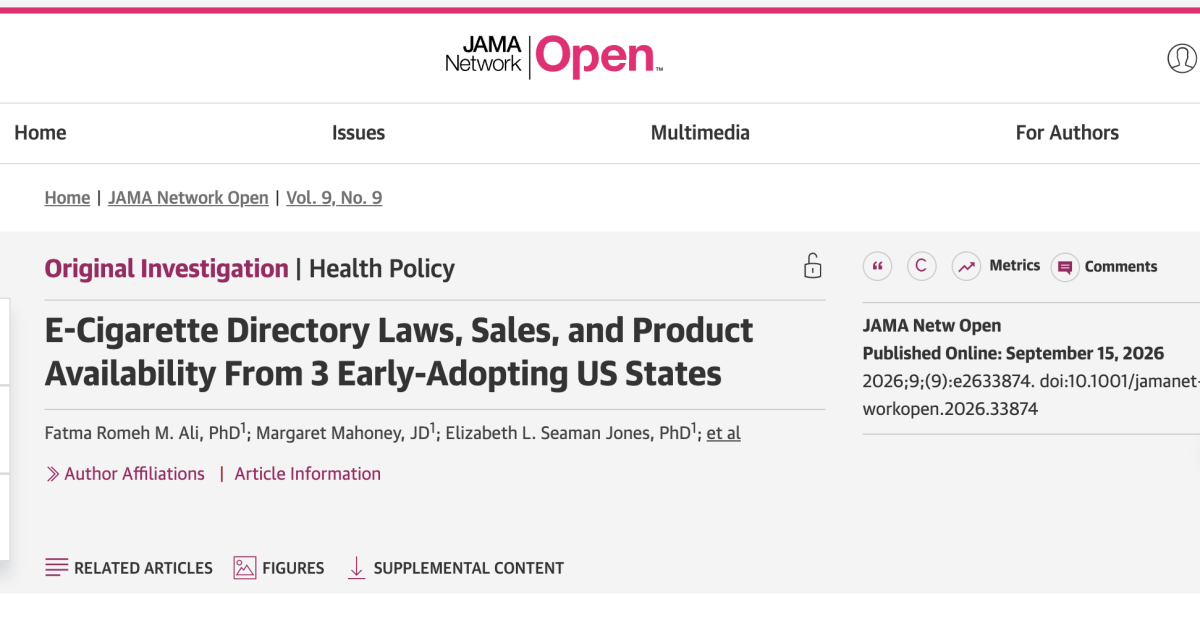
JAMA Study: U.S. Vape Directories Fail to Sustainably Curb Unlisted Sales as Product Shifts May Redistribute Brand Share 2Firsts Recommended
A study by CDC Foundation researchers found no sustained decline in e-cigarette sales across Alabama, Oklahoma and Louisiana, the first three U.S. states to implement e-cigarette directory laws. Louisiana initially saw a significant sales decline, followed by a rebound and a persistent reduction in product availability. Sales also shifted from nontobacco-flavored disposables toward prefilled cartridges, with Vuse Alto driving much of the increase in menthol cartridges. By April 2025, unlisted products still accounted for more than half of e-cigarette nicotine sales in all three states.
Sep.18
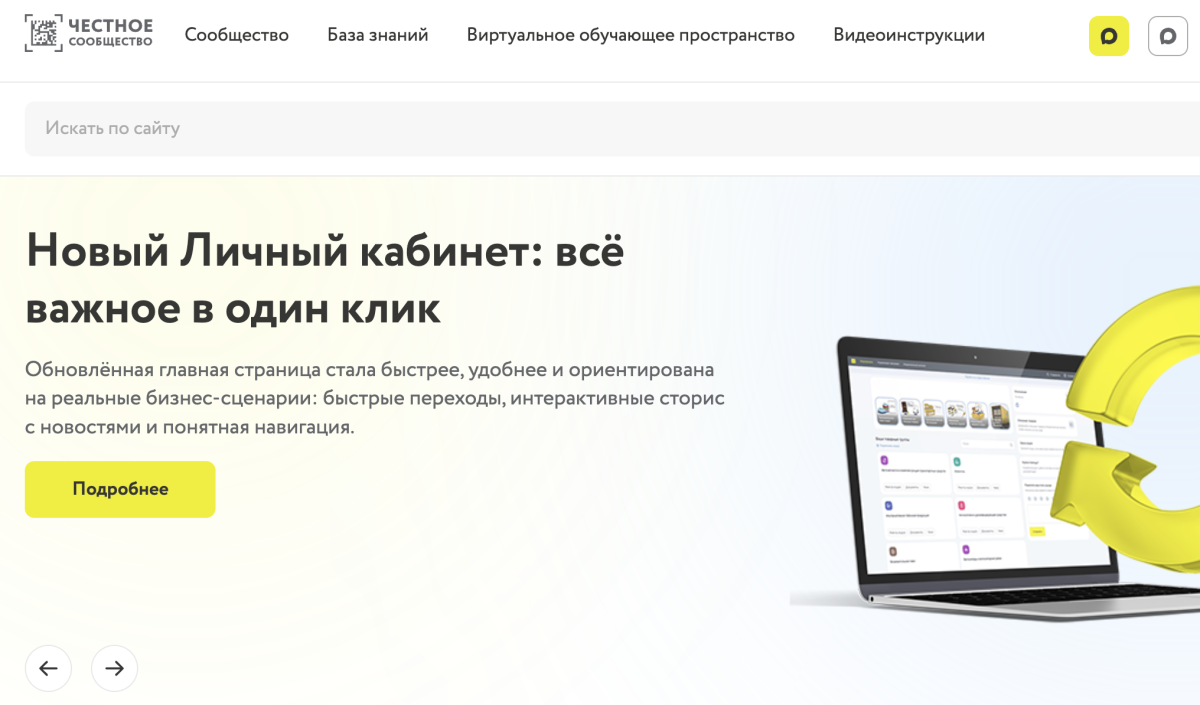
Russia’s Vape Device Labeling Regime Enters Force: Registration Starts in September, Mandatory Coding in December
Russia's digital labeling regime for reusable e-cigarettes and similar personal vaping devices entered its first mandatory phase in September 2026. From September 1, manufacturers, importers and other market participants must register with the national Chestny ZNAK tracking system. From December 1, newly manufactured and imported covered devices will be required to carry digital identification codes and be reported as entering circulation. Russia has also issued new operational guidance for imports, marking the transition from a voluntary pilot to phased mandatory implementation.
Sep.15