STMA Fines Three Domestic E-Cigarette Brands Nearly $700,000 for Selling Products Inconsistent with Pre-Market Review

Nov.13.2024
STMA Fines Three Domestic E-Cigarette Brands Nearly $700,000 for Selling Products Inconsistent with Pre-Market Review
STMA has fined three Chinese e-cigarette brands—Mirui, Boulder, and Mevol—nearly $700,000 for selling products that were inconsistent with the information submitted during their pre-market approval process. This move underscores the STMA’s commitment to maintaining order in the domestic market and combating illegal products.

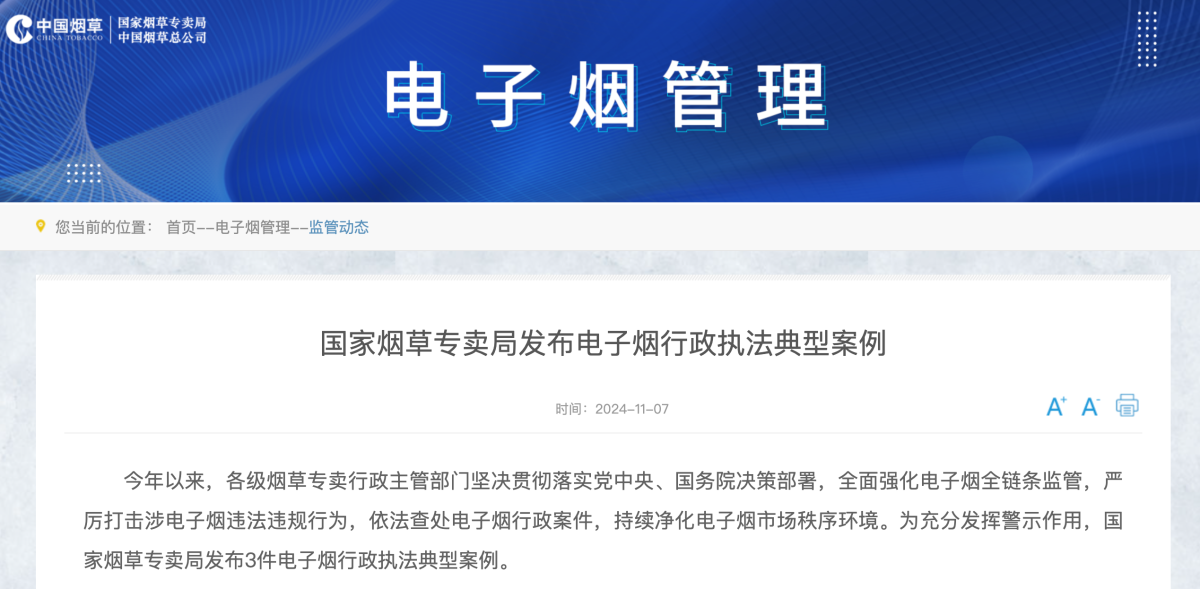
On November 7, 2024, China’s State Tobacco Monopoly Administration (STMA) announced fines totaling nearly $700,000 for three Chinese e-cigarette brands—Mirui, Boulder, and Mevol—for selling products that were inconsistent with the details provided during their pre-market review.


Since May 1, 2022, the STMA has enforced the Measures for the Administration of E-cigarettes, which explicitly stipulate in Article 19 that e-cigarette products that have not passed technical reviews are prohibited from being marketed or sold. Additionally, the information provided for products on the market must align with the approved details submitted during the review process.


However, the three licensed Chinese e-cigarette brands were found to have sold products that deviated from their approved formulas and contained unauthorized substances. As a result, the STMA imposed fines and penalties to emphasize the importance of complying with these regulations. This action also reflects the STMA’s commitment to maintaining market order and preventing the distribution of illegal products.


Here are the details of the three enforcement cases:


1. Zhejiang Mirui : Fined $140,000 for Unauthorized Ingredients 


Zhejiang Mirui Electronic Technology Co., Ltd. was found to have added unauthorized substances to its e-cigarette products, causing them to deviate from the approved formulas and the details submitted during the technical review process.


As a result, the sale of non-compliant e-cigarettes was deemed illegal. The company was ordered to cease sales of the affected products, pay a fine of approximately $140,000, and forfeit any illegal profits.


2. Shenzhen Boulder: Fined $440,000 and Suspended for Non-Compliance


Boulder (Shenzhen) Technology Co., Ltd. was penalized for adding unauthorized ingredients to its products, causing discrepancies between the products and their approved formulas. This deviation resulted in the sale of non-compliant e-cigarettes.


Additionally, Boulder lacked the necessary license to produce e-liquids but continued to manufacture and export them. As a result, the company was fined nearly $440,000, ordered to cease sales of non-compliant products, and suspended from operations for two months.


3. Shenzhen Mevol: Fined $112,000 for Non-Compliant Sales


Shenzhen Mevol Chuangxin Technology Co., Ltd. was found to have knowingly continued to sell e-cigarette products that did not match the approved formulas. Despite being aware that some products were inconsistent with the information provided during the technical review process, the company continued to market them.


This resulted in the sale of non-compliant e-cigarettes. The STMA imposed a fine of nearly $112,000, ordered the cessation of sales, and required the destruction of the non-compliant products.

 

Exclusive|Logistics Operators Warn of Possible New U.S. Border Crackdown on Illicit Vapes
Recent inspections and cargo disruption have led some logistics operators in the China-U.S. vape trade to see early signs of another U.S. border crackdown on illicit e-cigarettes. With late April to early May viewed as a key risk window, the market is watching closely. The bigger question is not only whether enforcement will tighten, but whether it can be sustained.
Special Report
Apr.09
Australia’s NSW Finds Lower Vaping Rates Among Teenagers Aged 14 to 17
A new report from Cancer Council’s Generation Vape research project shows that fewer teenagers in New South Wales are trying vaping after the state government introduced tougher vaping goods laws. Among surveyed NSW teenagers aged 14 to 17, the proportion who had tried vaping fell from 29.6% in April 2024 to 20.1% in October 2025.
Mar.17 by 2FIRSTS.ai
Spain’s Galicia Moves First: Under-18 Vape and Energy Drink Sales and Use Banned
Galicia will implement a new “Minor Health Protection and Addictive Behaviors Prevention” law this Saturday, becoming the first region in Spain to ban the sale and use of vapes for people under 18.
Mar.09 by 2FIRSTS.ai
KT&G Moves Ahead With Oral Nicotine Product Development and Pilot Line Preparation
According to a Korean media report, KT&G is developing a smokeless nicotine product that delivers nicotine through oral absorption and is preparing a pilot production line for research and development.
Apr.08 by 2FIRSTS.ai
South Korea’s Revised Tobacco Business Act to Take Effect, With Penalties for Unauthorized Sales
With the revised Tobacco Business Act set to take effect on April 24, synthetic nicotine e-cigarettes will be included within the legal definition of tobacco in South Korea. According to information released by Ongjin County, businesses wishing to sell these products must obtain tobacco retailer designation from the relevant authority.
Mar.25 by 2FIRSTS.ai
Virginia Restricts Vape Sales to Products Listed in State Directory From April 1
From April 1, vape shops in Virginia may sell only liquid nicotine and vapor products listed in the state directory. The Office of the Attorney General has recommended that commonwealth attorneys begin enforcing the 2024 law.
Apr.02 by 2FIRSTS.ai