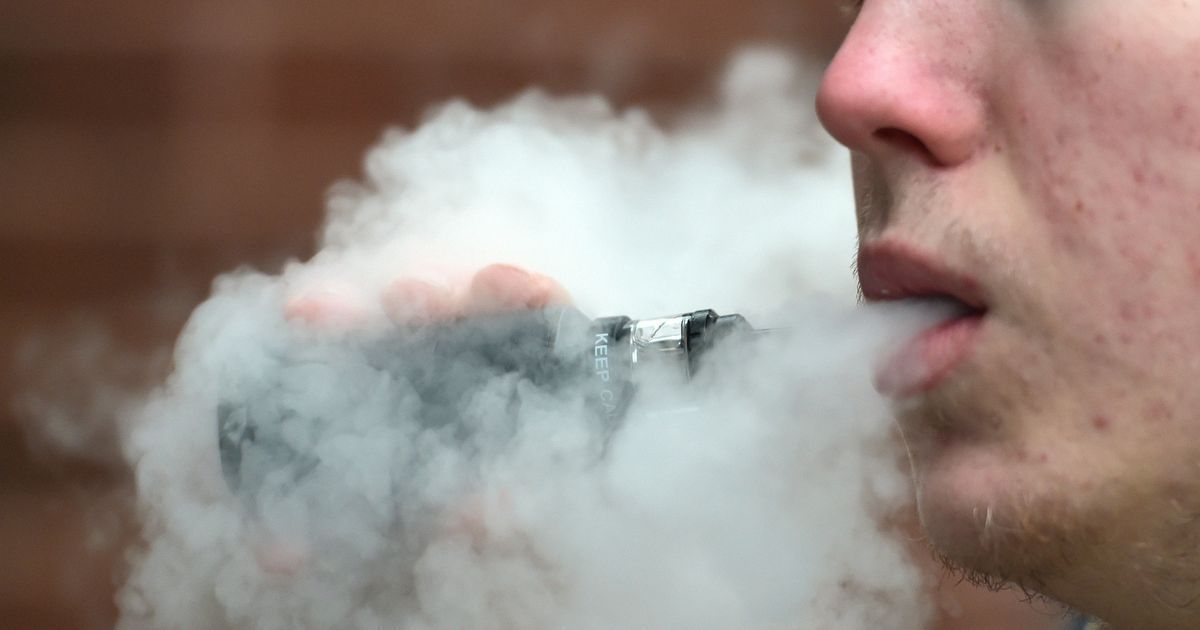
According to a report by WalesOnline on May 16th, some students at a high school in Powys City experienced discomfort after using an e-cigarette containing cannabis and were subsequently suspended indefinitely by the school. The students in question each smoked a cannabis e-cigarette and then left the school without informing any staff members. Parents stated that these students had used the drug through an e-cigarette before heading to school.
Parents have expressed that their children were suspended from school for five days and no further action was taken. The school did not notify other students. One female student felt extremely unwell and called her parents. "She left without signing out or notifying any teachers that she was leaving," said her parents. A male student was so sick and panicky that he couldn't walk steadily and he described what they had done to a PE teacher. "This is definitely not a typical nicotine e-cigarette.
According to the school, aside from the punishment of temporarily suspending classes, no further action has been taken against these students. Parents who were willing to disclose information revealed that the significant repercussions of the incident led to a female student calling her parents for help because of an extreme physical reaction, and a male student confessing the truth to the school's physical education instructor because he was too unwell to stand during class.
In response to the recent marijuana e-cigarette incident, school principal Claire Jones stated that the school has always placed a strong emphasis on preventive education for young people and constantly adjusts its health and welfare curriculum to reflect societal behavior patterns and any incidents that occur at the school. Some students involved in this incident have already raised awareness of the harmful effects of e-cigarettes through extensive education and media coverage.
The Welsh government has expressed deep concern over the current trend of teenagers using e-cigarettes, and is working closely with the UK government to address the issue. The latest data shows that 20% of students aged 11 to 12 have tried e-cigarettes, and 5% use them at least once a week.
Researchers have also found that over half of Welsh secondary school students using e-cigarettes may be using illicit products. Recently, the BBC reported that in Wales, illegal e-cigarettes are being sold in toy stores alongside action figures and toys.
The high school principal, Claire Jones, added that although the use of e-cigarettes is quite common in schools across the UK, it is very rare at their high school. This is due to the school's strict preventive measures and the prompt, serious, and effective response to each case.
We welcome news tips, article submissions, interview requests, or comments on this piece.
Please contact us at info@2firsts.com, or reach out to Alan Zhao, CEO of 2Firsts, on LinkedIn
Notice
1. This article is intended solely for professional research purposes related to industry, technology, and policy. Any references to brands or products are made purely for objective description and do not constitute any form of endorsement, recommendation, or promotion by 2Firsts.
2. The use of nicotine-containing products — including, but not limited to, cigarettes, e-cigarettes, nicotine pouchand heated tobacco products — carries significant health risks. Users are responsible for complying with all applicable laws and regulations in their respective jurisdictions.
3. This article is not intended to serve as the basis for any investment decisions or financial advice. 2Firsts assumes no direct or indirect liability for any inaccuracies or errors in the content.
4. Access to this article is strictly prohibited for individuals below the legal age in their jurisdiction.
Copyright
This article is either an original work created by 2Firsts or a reproduction from third-party sources with proper attribution. All copyrights and usage rights belong to 2Firsts or the original content provider. Unauthorized reproduction, distribution, or any other form of unauthorized use by any individual or organization is strictly prohibited. Violators will be held legally accountable.
For copyright-related inquiries, please contact: info@2firsts.com
AI Assistance Disclaimer
This article may have been enhanced using AI tools to improve translation and editorial efficiency. However, due to technical limitations, inaccuracies may occur. Readers are encouraged to refer to the cited sources for the most accurate information.
We welcome any corrections or feedback. Please contact us at: info@2firsts.com